
Victorian Transferware Ceramics
Victorian transferware ceramics bring nineteenth-century domestic scenes and landscapes to the table through durable printed earthenware.
Victorian Transferware Ceramics
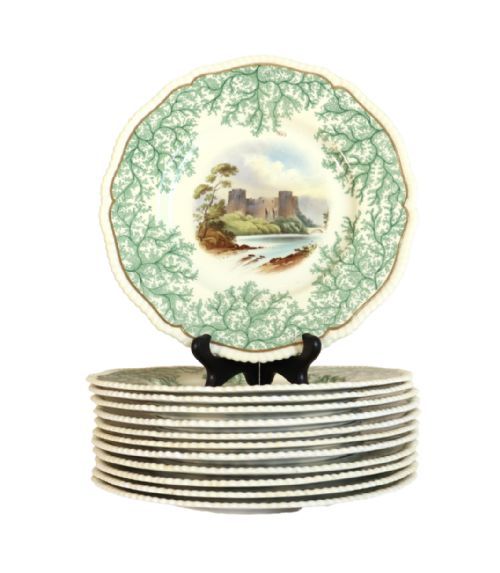
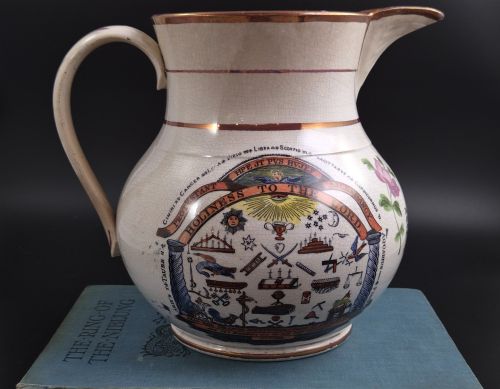
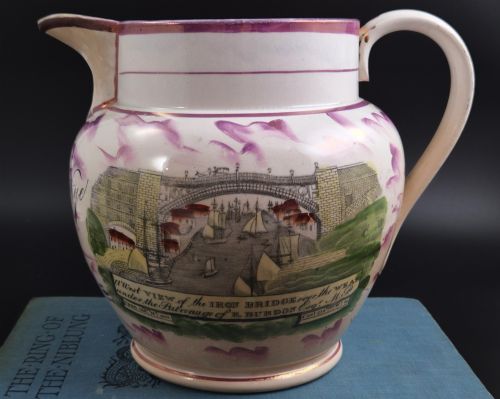
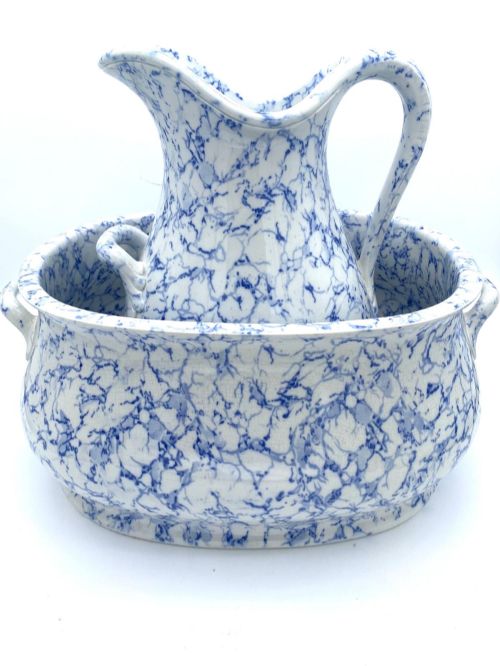
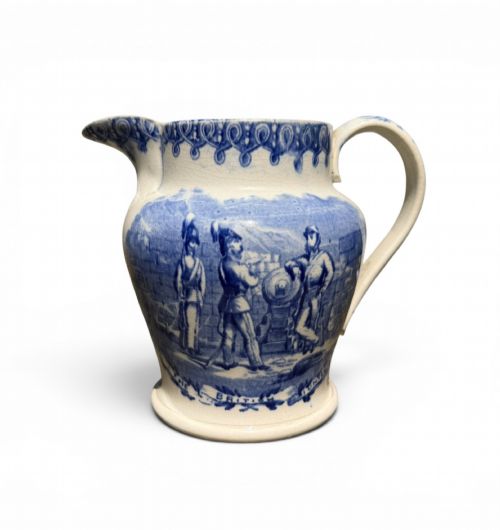
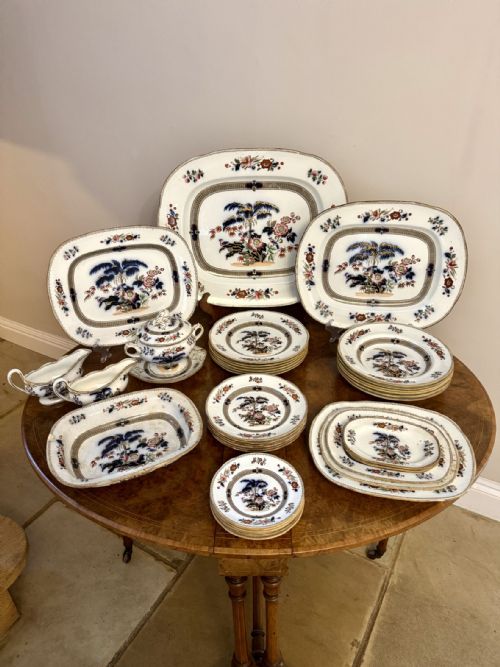
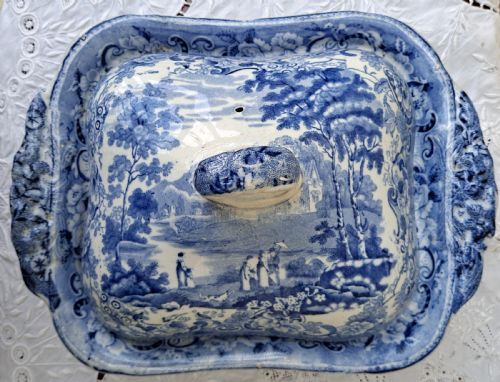
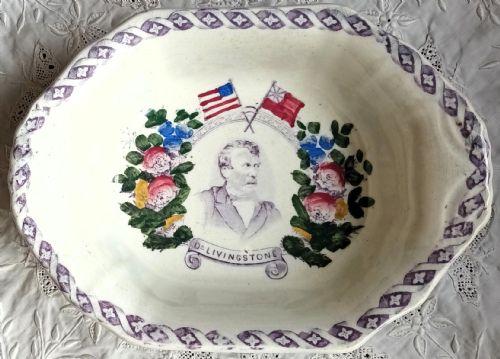
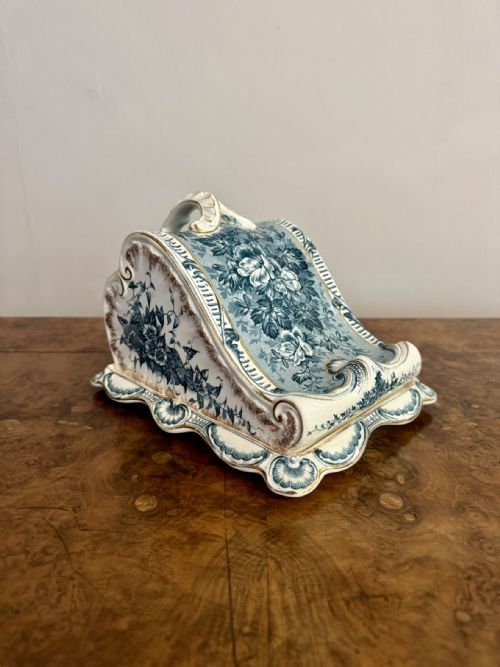
Victorian transferware ceramics encompass a broad selection of nineteenth-century tableware and decorative pieces, including serving platters, jugs, dinner services, and commemorative vessels. Buyers seek these items for their intricate blue, white, mulberry, and polychrome printed scenes depicting landscapes, historical events, and rural architecture.
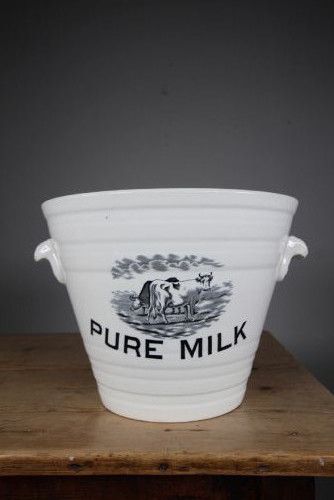
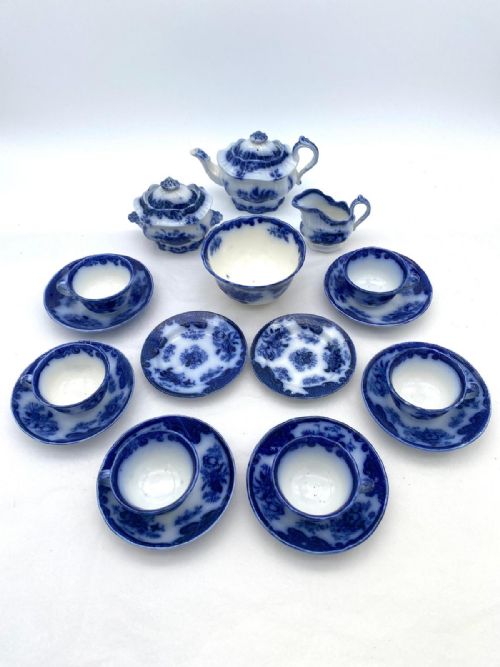
The pieces appearing on this page originate predominantly from nineteenth-century English potteries spanning the 1840s to the 1900s, covering periods from early Victorian to Edwardian production. Forms range from large meat platters and footbaths down to child's tea services, dairy pails, and frog mugs.
Makers and regional potteries utilised specific patterns such as flow blue, seaweed borders, and scenic transfer prints on earthenware, ironstone, and creamware bodies. These items served functional roles in households as well as commemorating public figures, institutions, and events.
Materials and production techniques
Potters constructed these objects using earthenware, ironstone, and creamware bodies, finished with a transparent glaze that sealed the ceramic material. Manufacturers applied the decorative imagery by transferring copperplate engravings onto the unfired or biscuit pottery using coloured oxides.
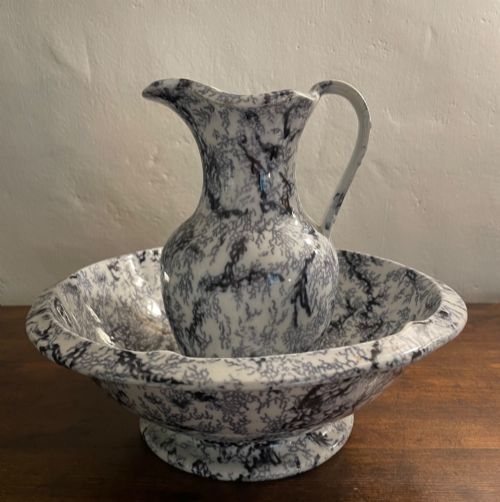
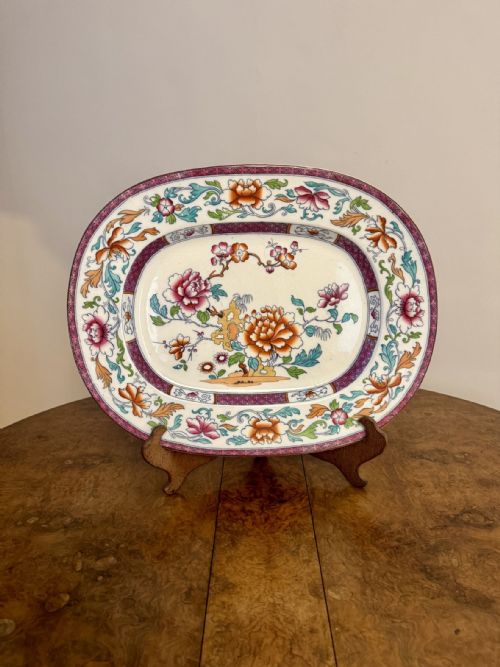
Pigments such as cobalt blue, pink, mulberry, and black bonded with the glaze during kiln firing, producing deep hues that occasionally bled into the surrounding surface to create the distinctive flow blue effect. Enamel colours, gilt, and splash lustre additions appeared on specific commemorative jugs and decorative plates after the primary transfer firing.
Listings feature earthenware, ironstone, and creamware bodies decorated with transfer prints in blue, mulberry, pink, and black.
Judging quality and execution
Quality rests in the crispness of the transfer print, the alignment of patterns across complex vessel forms, and the clarity of the underlying ceramic glaze. Superior examples maintain sharp detail in intricate borders and scenic vignettes without blurring or excessive pigment pooling.
The weight, density, and durability of the ceramic body distinguish standard domestic ironstone and earthenware from finer porcelain-like creamwares and specialised commemorative wares. Comprehensive services and large matched dinner sets demonstrate superior original curation compared to scattered single pieces.
Spode·Minton·Copeland·Wedgwood·James Wallace And Co·Doulton Burslem
The Victorian Transferware Ceramics Glossary
- Transferware
- Pottery decorated by applying a printed design from an engraved copper plate onto the ceramic surface using tissue paper and metallic oxides. This technique allowed potteries to mass-produce detailed pictorial scenes efficiently.
- Flow Blue
- A nineteenth-century ceramic style where cobalt blue pigment intentionally bled into the surrounding white glaze during kiln firing. This produced a misty, soft-edged aesthetic popular on plates, jugs, and footbaths.
- Ironstone
- A heavy, durable type of earthenware patented in the nineteenth century to rival true porcelain. It provided a sturdy white body well-suited for everyday heavy-use tablewares and large meat platters.
- Pratt Ware
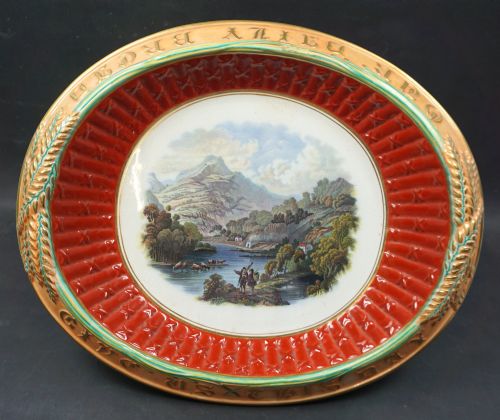
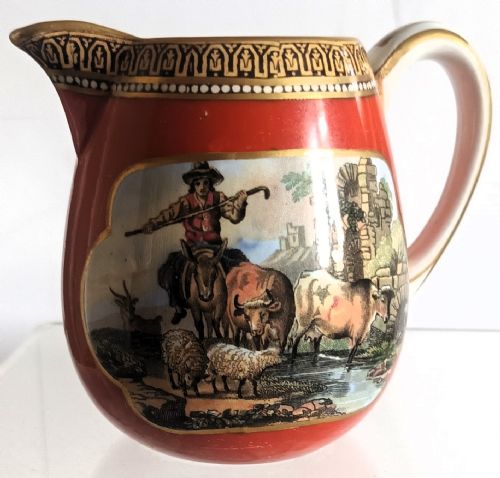
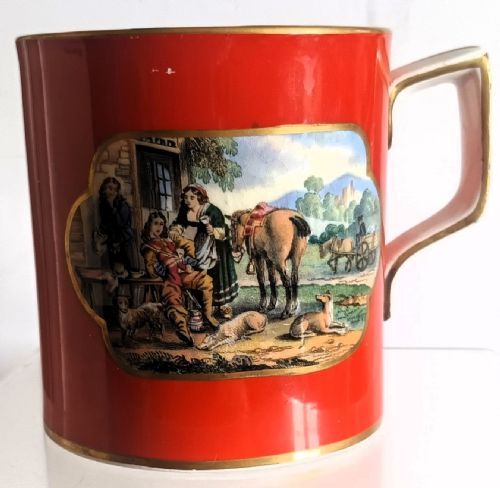
- Ceramics associated with nineteenth-century multicolored underglaze printing, often featuring historical figures, landscapes, and literary scenes. These items utilised specific polychrome oxide palettes.
- Footbath
- A large ceramic vessel designed for washing feet, repurposed in modern settings as a decorative planter or wine cooler. They frequently feature deep transfer-printed rural or architectural scenery.
Victorian Transferware Ceramics: Frequently Asked Questions
What is Victorian transferware?
Victorian transferware consists of ceramic tablewares and decorative vessels printed with pictorial scenes using engraved copper plates and metallic oxides.
These pieces showcase a variety of colours, including classic blue and white, mulberry, pink, and polychrome enamel.
How were frog mugs used?
Frog mugs were traditional drinking vessels featuring a ceramic frog modeled inside the base, designed to surprise the drinker as the liquid lowered.
They often included hunting scenes, poems, or commemorative text and served social roles in nineteenth-century taverns.
How do I date these ceramics?
Dating relies on maker marks, registration stamps, style periods, and the specific chemical composition of the earthenware or ironstone bodies.
Nineteenth-century pieces frequently display impressed or printed registry marks that indicate the exact year or batch of production.
Can I use these plates daily?
Most Victorian transferware ceramics are robust enough for gentle everyday dining, provided they are washed by hand rather than placed in modern dishwashers.
Earthenware and ironstone bodies tolerate regular use, though gilt and enamel highlights require extra care to prevent fading.