




Blue Transfer Printed Plates
Blue transfer printed plates bring topographical scenes and storytelling patterns to the table in crisp cobalt.
Blue Transfer Printed Plates
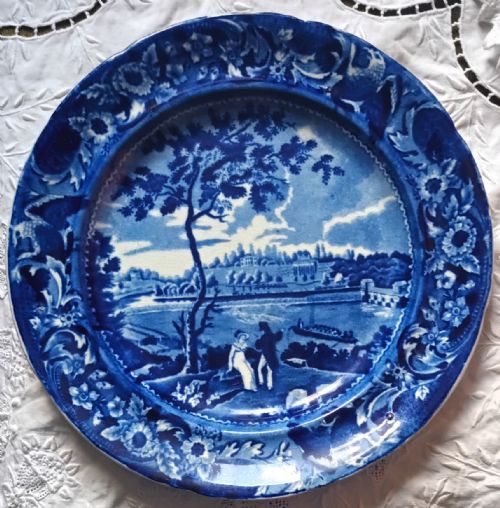
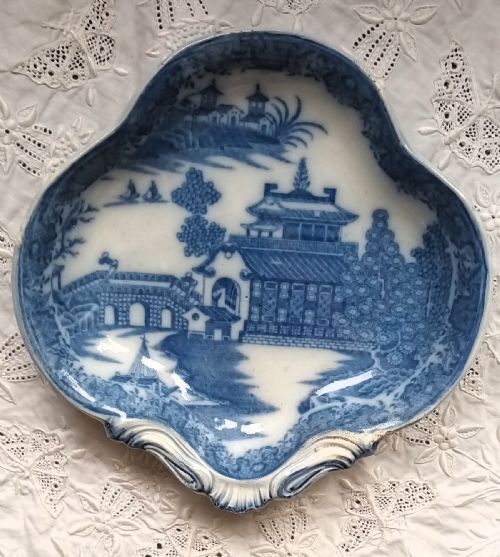
Blue transfer printed plates present pictorial and Chinoiserie subjects across earthenware and pearlware surfaces, spanning the Georgian, Regency, and Victorian periods. These pieces range from substantial meat platters and serving dishes to cabinet plates and child's sets.
The form most frequently met on this page is the 19th century Staffordshire plate, carrying named topographical views, classical ruins, or pastoral vignettes in rich cobalt pigment.
Makers such as Stubbs, Thomas Lakin, Brameld and Co., and John Rogers and Son produced these wares, alongside unmarked potteries that recorded contemporary landscapes and romantic motifs.
Quality and execution
The depth and clarity of the cobalt pigment separate superior plates from weaker impressions, where the transfer may blur or smudge across the ceramic surface.
Early pearlware bodies and sharp, detailed copperplate engravings indicate a higher standard of manufacture than later, mass-produced Victorian equivalents.
Listings feature Georgian, Regency, and Victorian periods across earthenware, pearlware, and ceramic glaze.
Stubbs·Thomas Lakin·Brameld and Co·John Rogers and Son·Spode
The Blue Transfer Printed Plates Glossary
- Transfer printing
- A method of decorating ceramics by pulling an engraved copperplate impression onto paper and pressing it onto the ware.
- Pearlware
- A refined earthenware body developed by Josiah Wedgwood, featuring a bluish glaze that pooled in recesses to mask the yellowish clay beneath.
- Chinoiserie
- A Western decorative style reflecting European interpretations of Chinese art and scenery, frequently seen on early 19th-century plates.
- Staffordshire
- The principal English region for ceramic production, encompassing numerous potteries that issued blue and white printed wares throughout the 19th century.
Blue Transfer Printed Plates: Frequently Asked Questions
How were these plates used?
These pieces served practical functions at the dining table for meat, bread, and general serving, as well as decorative display in domestic interiors.
Larger platters accommodated joints of meat, while smaller plates and child's sets handled daily dining and lighter courses.
Can I use them for dining?
Most buyers choose to display these plates rather than use them for regular meals, preserving the historic glaze and transfer print from modern dishwashers and cutlery.
Gentle hand washing suits occasional use, though early pearlware and earthenware warrant careful handling due to their age.
How do I date a blue and white plate?
Dating relies on body composition, pattern styles, and known maker marks stamped or impressed into the ceramic base. Pearlware bodies and early Georgian architectural views typically point to the early 19th century, while denser Victorian ironstone dates later.
What is the difference between pearlware and earthenware?
Pearlware contains a small amount of cobalt in the glaze to create a whiter appearance over the cream-colored earthenware body.
This subtle blue tint pools around foot rims and edges, helping distinguish Regency-era wares from standard 19th-century earthenware.