
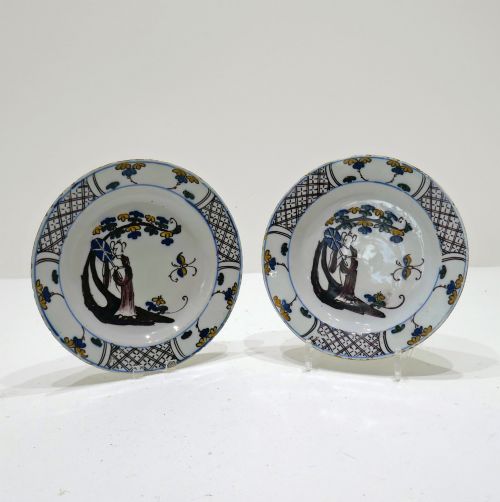


English Pottery Plates Pair
An english pottery plates pair brings centuries of domestic history to your table, offering matched sets crafted in tin glaze and ironstone.
English Pottery Plates Pair
When you search for an english pottery plates pair, you find dual arrangements of earthenware and ceramic vessels spanning the eighteenth and nineteenth centuries. These items encompass Georgian blue and white delftware alongside later ironstone and transferware productions.
The most common examples on this page are eighteenth century delft plates featuring hand-painted cobalt pigment or polychrome decoration. You also encounter nineteenth century dessert dishes and serving platters from major makers.
Forms vary from small delft plates to large decorative plates and side dishes. Origins range from English centres like Bristol and Lambeth to broader European influences.
Materials and Manufacture
Potters shaped native clay into plates and serving dishes before applying specialised coatings. Tin glaze provided an opaque white surface suitable for absorbing cobalt pigment and polychrome paints.
Later nineteenth century pieces utilised dense ironstone and refined ceramic bodies designed for durability. Makers applied transfer printing techniques to transfer intricate blue and white patterns onto the clay before firing.
Materials documented across the inventory include cobalt pigment, clay, and ironstone.
Evaluating Quality
Quality rests in the crispness of the painted or transfer-printed decoration and the stability of the glaze. Early tin-glazed earthenware displays subtle variations in thickness and surface pooling that mark manual potting.
The precision of the cobalt pigment brushwork or transfer alignment distinguishes standard domestic items from finer display pieces. Preservation of the original glaze surface across both plates in a matched pair determines desirability.
Masons Patent Ironstone China·Spode·Minton
The English Pottery Plates Pair Glossary
- Tin Glaze
- An opaque white ceramic coating containing tin oxide, providing a smooth canvas for painted decoration. This finish is typical of eighteenth century delftware.
- Cobalt Pigment
- A blue mineral colourant used under the glaze to create deep blue designs. It withstands high firing temperatures without losing intensity.
- Ironstone
- A dense, durable type of ceramic patented in the nineteenth century to imitate Chinese porcelain. It resists chipping and staining.
- Polychrome
- Multi-coloured painted decoration utilising several pigments alongside blue. This style appears on eighteenth century Bristol and Lambeth plates.
- Transferware
- A pottery decoration technique where a design is printed from a copper plate onto tissue paper and then transferred onto the ceramic body.
English Pottery Plates Pair: Frequently Asked Questions
What is an english pottery plates pair?
An english pottery plates pair consists of two matching ceramic dishes made in England during the Georgian, Regency, or Victorian eras. They include tin-glazed delftware and ironstone serving pieces.
Collectors value these matched sets for their decorative appeal and historical connection to domestic dining traditions.
How were antique plates used?
Earlier delftware plates served primarily for display or light table use due to the soft nature of tin-glazed earthenware. Later ironstone and transferware versions handled heavier daily dining.
Matched pairs often functioned as side dishes or dessert services for guests during formal meals.
How do I date a delft plate?
Dating relies on stylistic clues, glaze characteristics, and potting techniques. Eighteenth-century pieces often show typical tin-glaze irregularities and hand-painted cobalt or polychrome motifs.
Later nineteenth-century ceramics feature denser ceramic bodies and mechanical transfer-printed designs.
How do I care for antique plates?
Antique pottery requires gentle hand washing with mild soap and warm water. Avoid modern dishwashers, harsh chemicals, and extreme temperature changes.
Display them securely using padded plate hangers or dedicated plate stands to protect the edges.