

19th Century Stand
When you search for a 19th century stand, you enter a diverse field of utilitarian and display pieces crafted to hold everything from umbrellas to books.
19th Century Stand
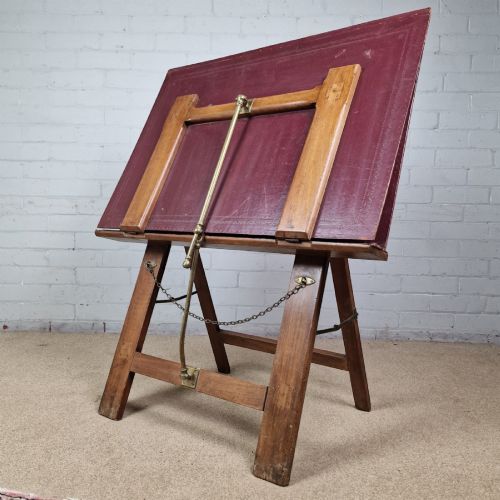
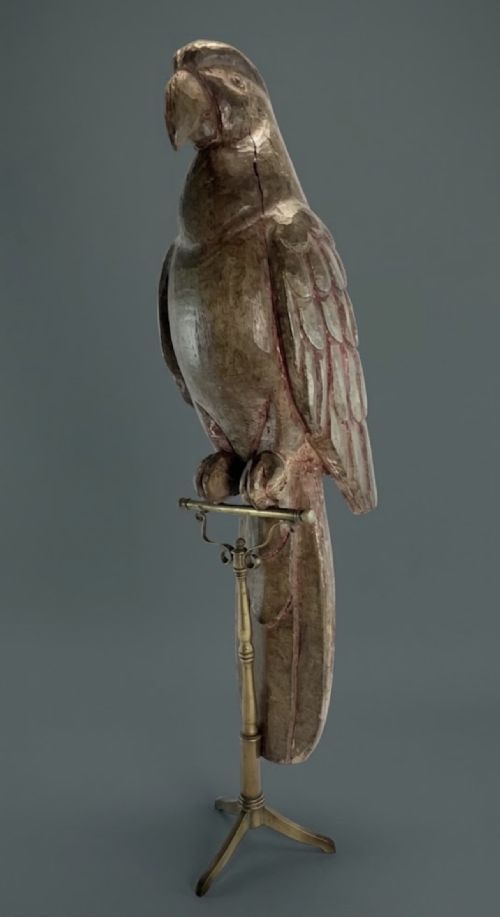
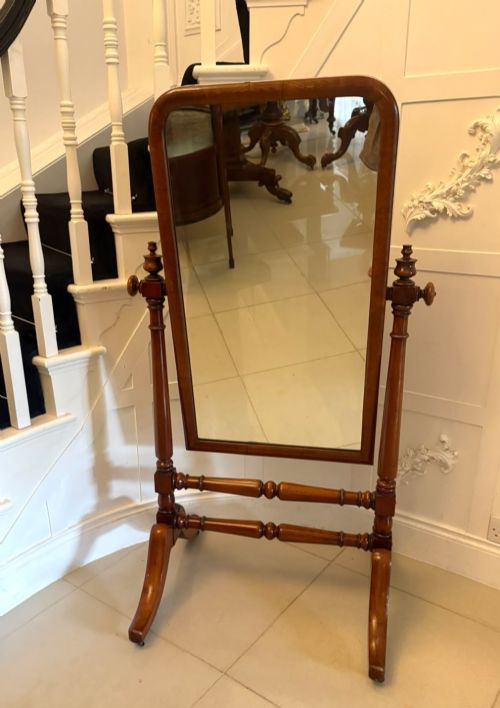
A 19th century stand covers a wide functional range, extending from umbrella and hall stands to plant holders, reading desks, and basins.
Forms vary from sturdy utility pieces meant for coats and sticks to delicate display furniture like tazzas, folios, and plant tables.
Materials and construction methods
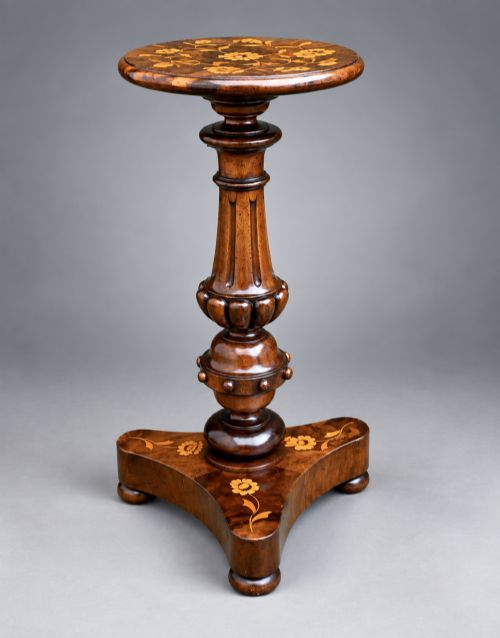
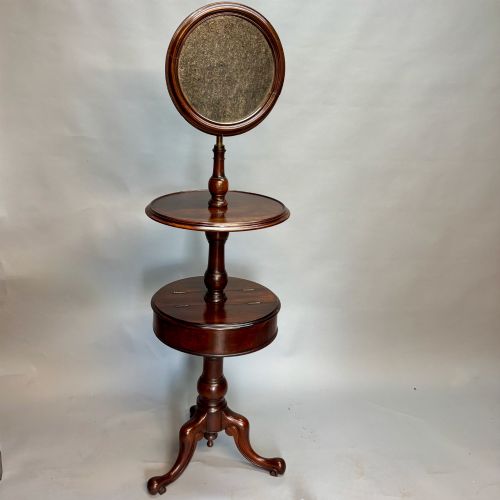
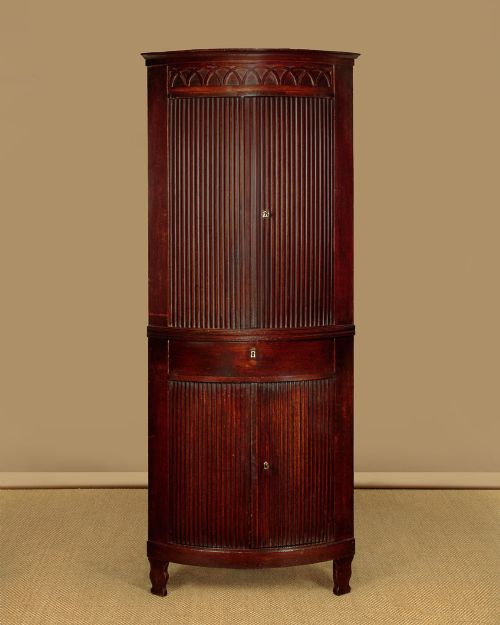
Cabinetmakers relied heavily on dense timbers such as mahogany and rosewood, often utilising turning, carving, and dovetailing to ensure structural stability under weight.
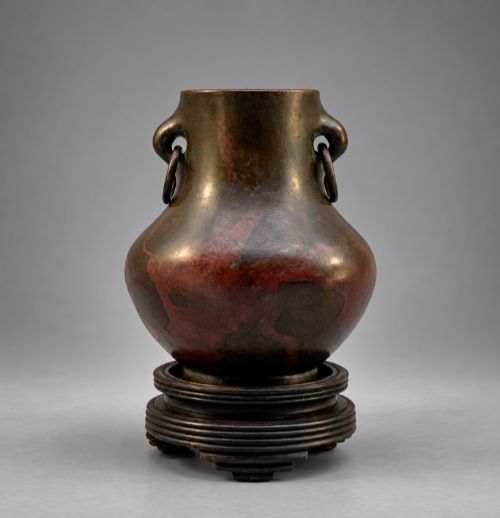
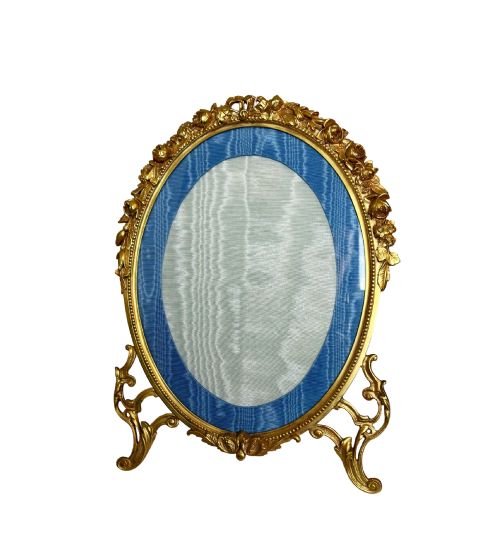
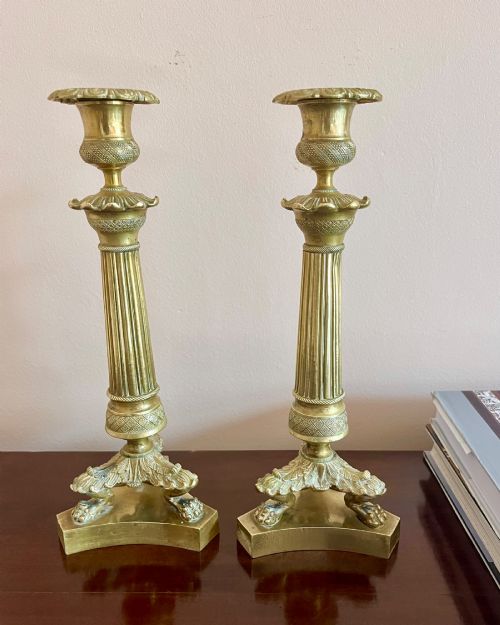
Metal elements incorporate cast iron, brass, or gilt bronze, sometimes featuring champlevé enamel or ormolu collars for decorative emphasis.
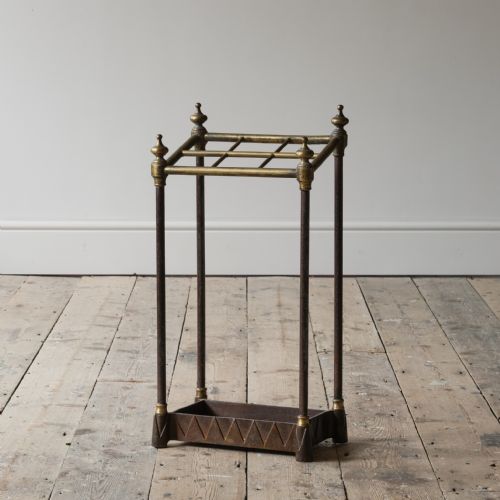
Utility pieces integrate zinc or tole trays to catch water from umbrellas and plants, combining practical metalworking with traditional woodwork.
Listings feature diverse materials including solid oak, mahogany, rosewood, cast iron, and gilt bronze across the 19th century.
Judging quality in 19th century stands
Quality rests in the crispness of carved details, the choice of timber figuring, and the structural integrity of joints rather than surface shine alone.
Better examples maintain original hardware, such as brass hooks, castors, or liners, without later replacements or mismatched components.
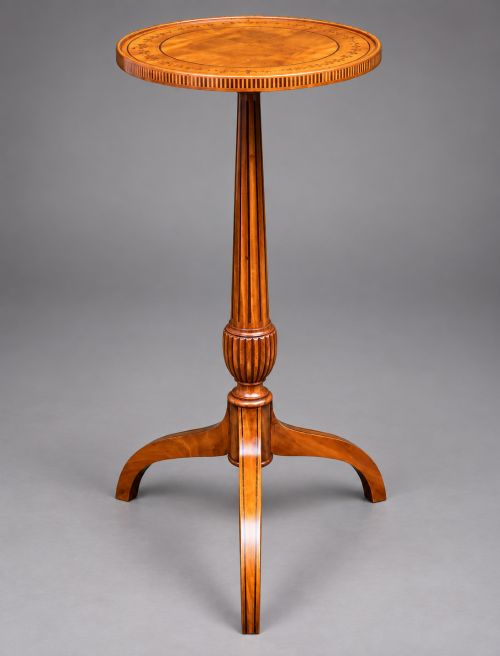
Finer construction is demonstrated by balanced proportions and thoughtful detailing, such as paterae inlays or hand-painted botanical grounds.
Hendrie Ogg·D. Straiton·Corneau Frères·Gabriel Viardot·Coalport·H & R Daniel
The 19th Century Stand Glossary
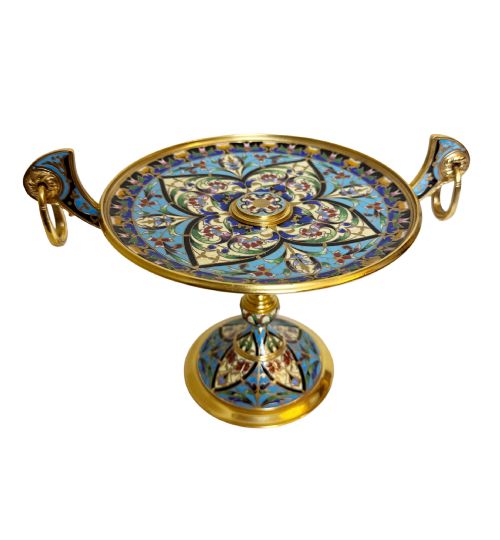
- Tazza
- A shallow bowl or plate mounted on a stem and foot, typically utilised for serving or display. These decorative pieces often appear in bone china, glass, or gilt bronze.
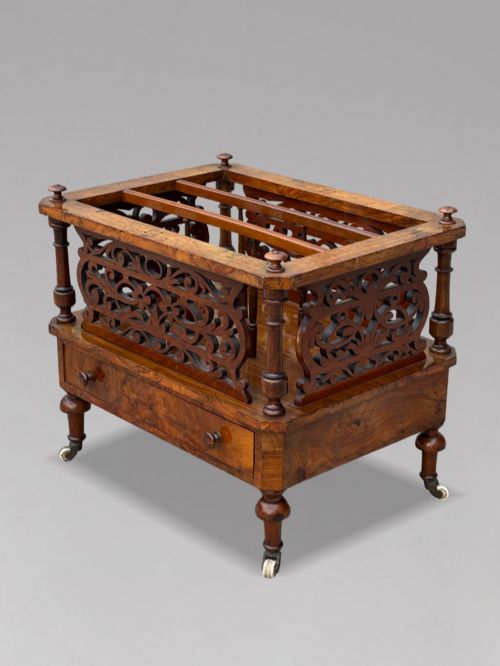
- Canterbury
- A small piece of furniture designed for holding sheet music, folios, or books, usually fitted with vertical partitions. They frequently feature turned wooden legs and castor wheels.
- Standish
- A small desk inkstand or tray holding inkwells, pen holders, and sanders. These tabletop accessories were common in brass or bronze.
- Jardiniere
- An ornamental pot or stand for holding plants or flowers. They appear in majolica, bronze, or ceramic forms.
- Paterae
- Small circular decorative motifs resembling flat rosettes or discs, often carved into wood or inlaid as classical ornamentation.
19th Century Stand: Frequently Asked Questions
What was a hall stand used for?
Hall stands provided a designated entryway station for coats, hats, walking sticks, and wet umbrellas. They kept entranceways tidy in large homes.
Many incorporated mirrors, small drawers for gloves, and zinc trays at the base to catch drips from wet gear.
How do I care for a wooden stand?
Keep wooden pieces away from direct heat sources and strong sunlight to prevent the timber and veneer from splitting or fading. Regular dusting with a dry cloth maintains the surface.
Apply high-quality beeswax occasionally to nourish the polish, avoiding silicone sprays that damage historic finishes.
Were plant stands used indoors?
Indoor plant stands allowed homeowners to display ferns and exotic potted plants within drawing rooms and parlours. They elevated greenery to catch better light.
Materials ranged from carved rosewood and bamboo to heavy cast iron, depending on whether the stand was intended for a formal room or a conservatory.
How do I distinguish Regency from Victorian stands?
Regency stands generally display restraint, drawing inspiration from classical Greek and Roman forms with clean lines and rosewood or mahogany grains. They date from the early part of the century.
Victorian pieces often introduce heavier proportions, darker walnut timbers, and more exuberant ornamentation such as Gothic Revival carvings or elaborate cast iron.