








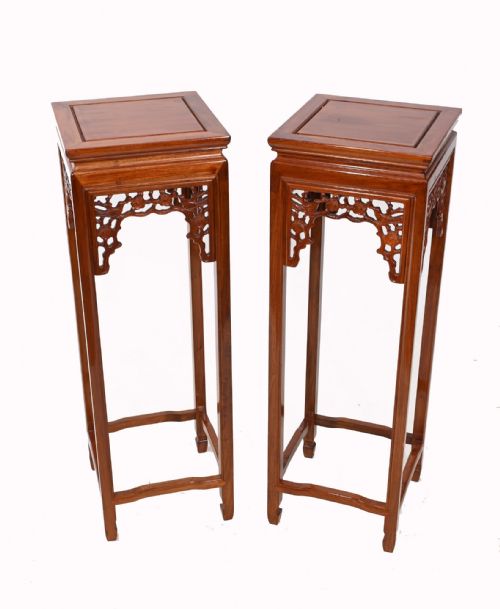



Rosewood Urn Stand
A rosewood urn stand provides a sturdy, elegant platform for display, and collectors seek them for their rich grain and intricate carving.
Rosewood Urn Stand
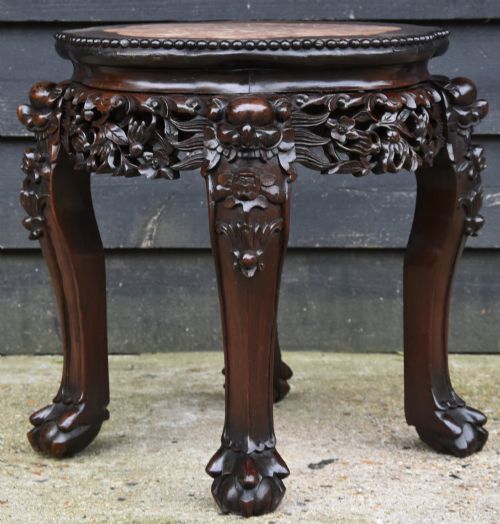
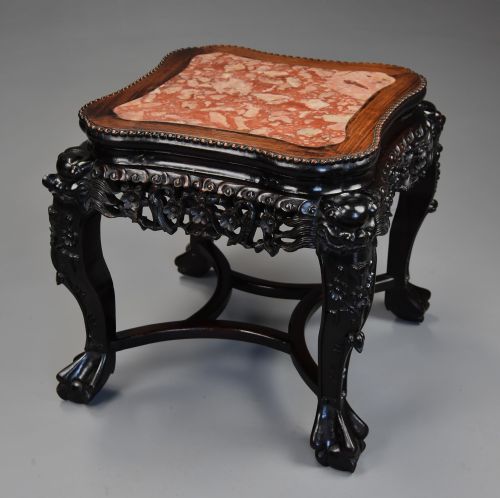
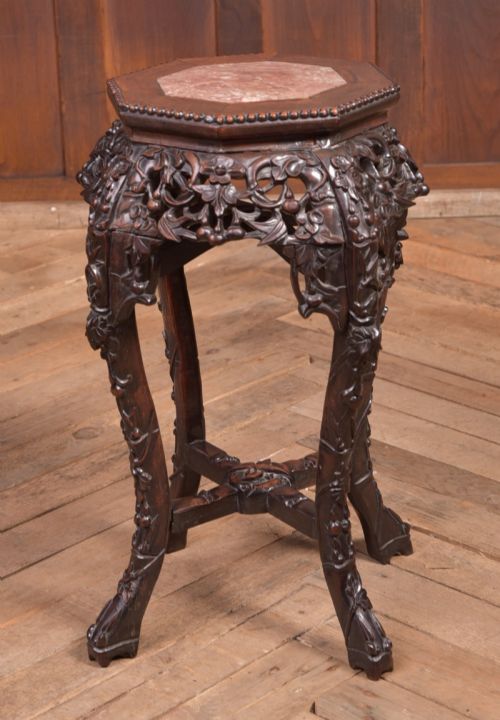
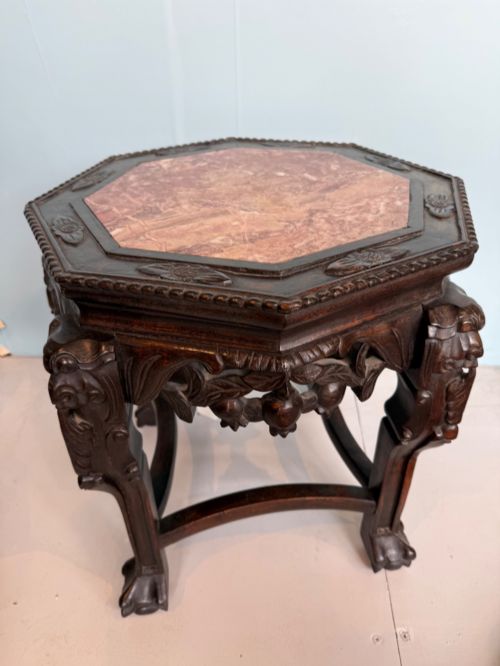
A rosewood urn stand is a compact table designed specifically to elevate vases, planters, and decorative urns within a room. The items found in this selection span the nineteenth century and the Edwardian era, predominantly showcasing traditional Chinese export designs alongside occasional British interpretations.
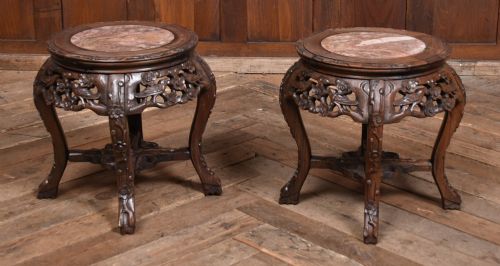
Buyers will frequently encounter low tables, square pot stands, and pedestal forms featuring inset stone panels. These pieces served practical functions in period interiors by protecting sensitive wooden floors and furniture from moisture and heavy ceramic vessels.

How they were made
Cabinetmakers utilised dense timbers such as rosewood, padouk, and hongmu, often carving the structural frames with deep relief work and openwork foliage. The joinery relied on traditional framing techniques to accommodate the natural movement of heavy tropical hardwoods over decades of use.
Many examples incorporate polished marble or rouge marble inserts fitted directly into the timber top to create a durable, heat-resistant surface for heavy ceramic urns and jardinières. Occasional pieces also integrate mother-of-pearl inlay within the dark wood ground for decorative contrast.
Rosewood Urn Stand Retail Price Guide 2026
Typical asking prices for rosewood urn stand among the pieces listed under this phrase on Sellingantiques today, from the lower quarter to the upper quarter. They describe what is for sale here now, not the wider market.
What varies in quality
The distinction between standard examples and the finest work lies in the depth and crispness of the hand-carved decoration. Superior items display undercut foliage and balanced proportions without relying on applied mouldings to conceal structural joints.
Material selection dictates much of the overall merit, particularly the uniformity of the timber grain and the absence of repairs to the inset marble panels. Well-matched pairs and pieces retaining their original polish command greater attention from discerning collectors.
Gillows
The Rosewood Urn Stand Glossary
- Jardiniere stand
- A tall or low table intended to hold a decorative ceramic plant pot or flower bowl. These items often feature water-resistant tops made of marble.
- Torchere
- A tall stand designed to support a candle lamp or light source. They typically feature slender vertical proportions.
- Hongmu
- A category of dense, dark tropical hardwood utilised in traditional Chinese furniture manufacturing. It is valued for its weight and ability to take a fine carved finish.
- Padouk
- A heavy, durable reddish-brown tropical timber used for nineteenth-century export furniture. It possesses natural strength well suited to intricate joinery.
- Mother of pearl
- The iridescent inner layer of certain mollusc shells, shaped into thin pieces and set into wooden surfaces for ornamentation.
Rosewood Urn Stand: Frequently Asked Questions
What is a rosewood urn stand used for?
These compact stands were originally built to elevate heavy decorative urns, porcelain vases, and indoor plant pots off the floor. They allowed homeowners to display prized ornaments at a comfortable viewing height.
Today, they function well as side tables for lamps or as focal points for sculptural objects in both traditional and modern rooms.
How do I date a rosewood urn stand?
Dating relies on examining the timber species, construction methods, and stylistic cues such as nineteenth-century Chinese export carvings or Victorian turnery. The presence of dense tropical hardwoods like hongmu or padouk typically points towards specific nineteenth-century manufacturing traditions.
Secondary indicators include the finish of the wood and the type of marble inset used in the top surface.
Are these stands sturdy enough for heavy pots?
Most pieces were specifically engineered to bear the substantial weight of large ceramic vessels and wet soil. The dense nature of rosewood and traditional mortise and tenon joinery provide inherent stability.
It remains wise to check that the frame remains tight and the internal joints show no excessive movement before placing heavy items on top.
Why do many stands have marble tops?
Marble inserts provided a cool, durable, and water-resistant surface that protected the surrounding wooden frame from dampness leaking out of plant pots. This practical feature also added a pleasing textural contrast to the dark carved timber.
Smooth stone tops made cleaning up spilled water easy for household staff in period interiors.