



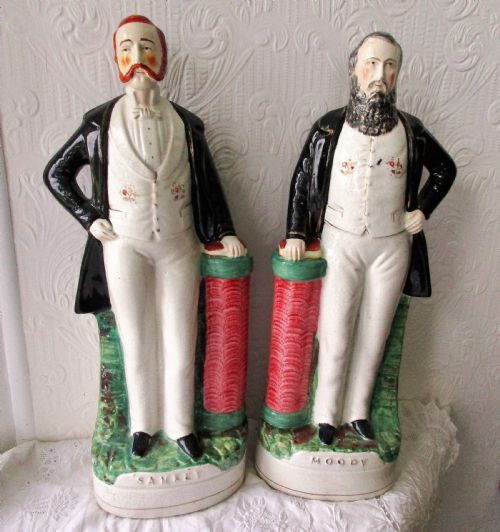
19th Century Staffordshire Figure
These 19th century staffordshire figure pieces bring centuries of domestic history and character into a room through earthenware models of animals, people, and buildings.
19th Century Staffordshire Figure
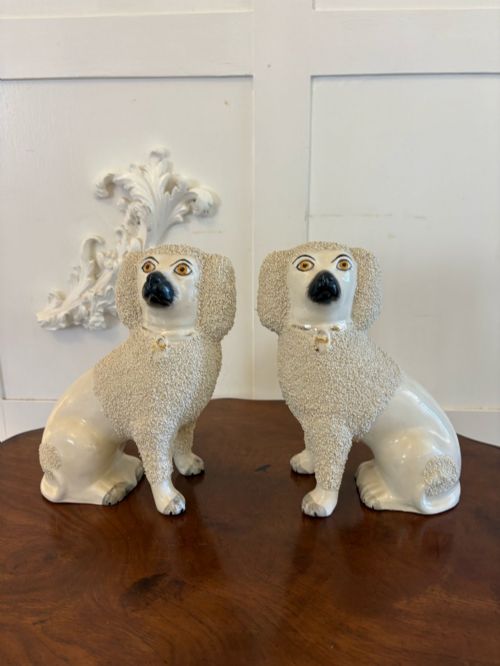
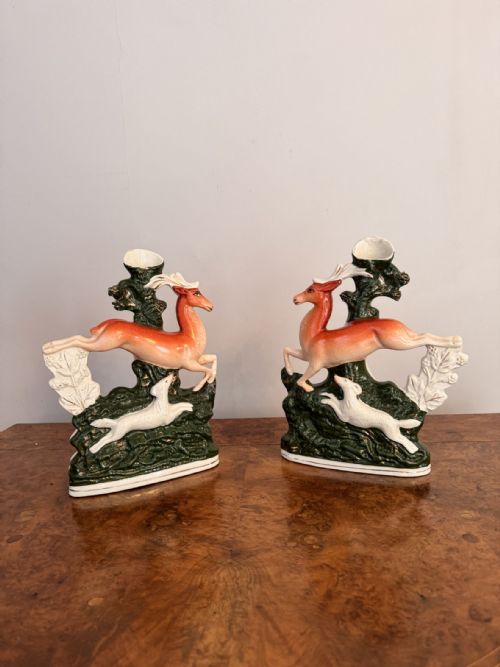
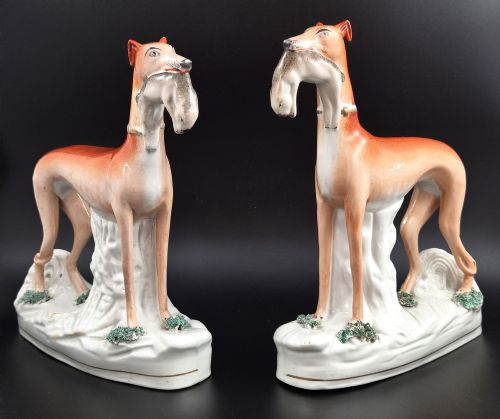
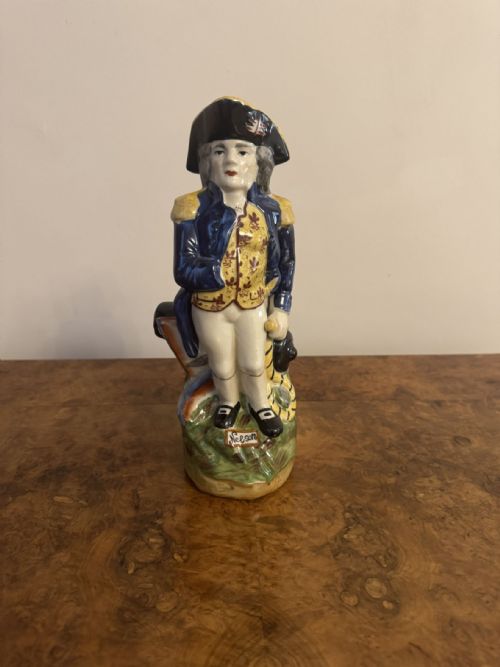
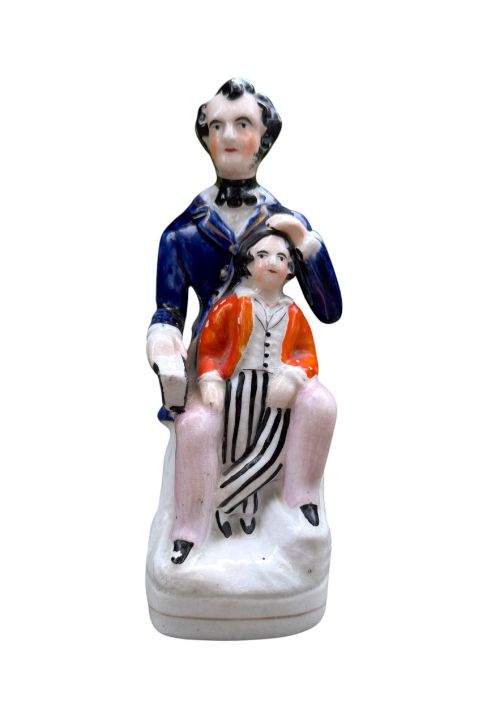
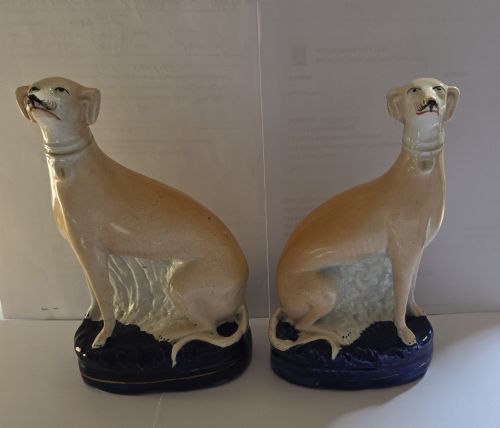
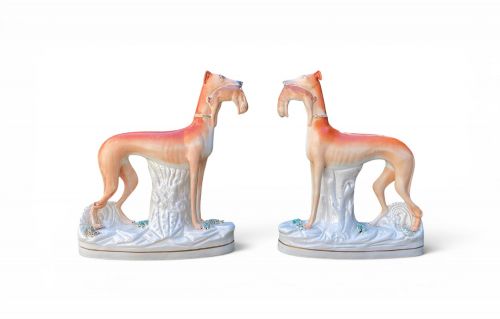
A 19th century staffordshire figure encompasses earthenware figurines, spill vases, portrait models, and animal groups produced across the Victorian and Georgian eras. Collectors encounter spaniels, greyhounds, lions, deer, and historical figures designed as decorative mantel ornaments.
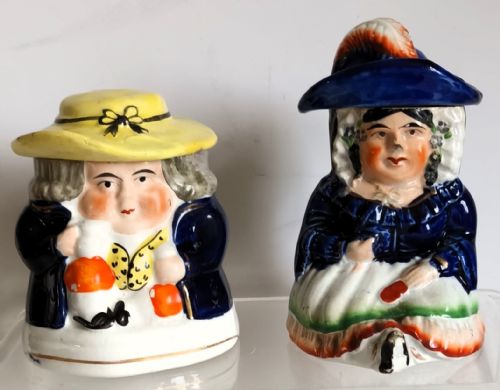
The selections span from early pearlware examples down to late Victorian flatbacks and toby jugs. Makers modelled domestic pets, literary characters, royalty, and architectural cottages to suit the tastes of nineteenth-century households.
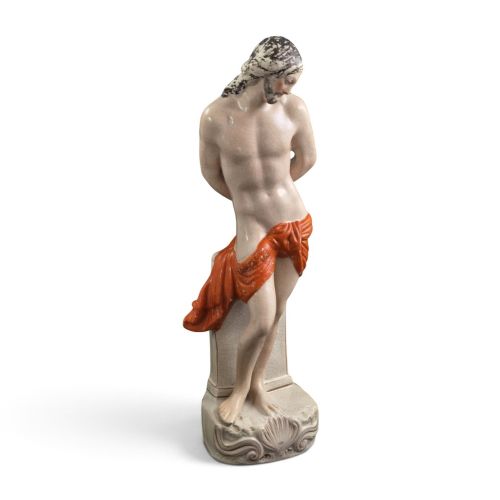
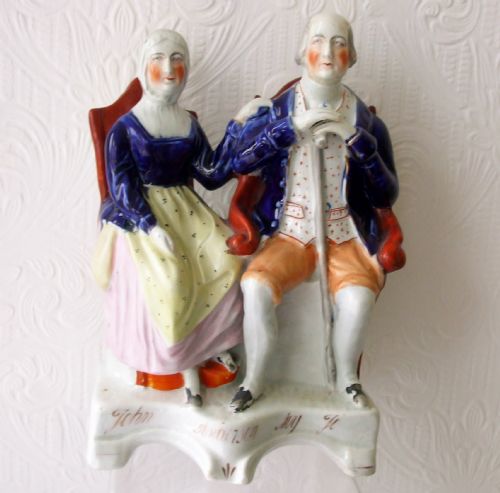
Most items survive as matched pairs or single decorative pieces intended for display on shelves and mantelpieces. Subjects range from simple country couples to detailed depictions of historical events and religious scenes.
How they were made
Potters utilised earthenware, ceramic, and pearlware bodies shaped by press-moulding or slip-casting. Pieces received lead glaze, enamel paints, and occasional gilt highlights before firing in kilns.
Flatback figures were constructed with unglazed or simply finished backs intended to face away from the room toward the wall. Hand-painting added details to faces, clothing, and animal coats over the fired glaze.
19th Century Staffordshire Figure Retail Price Guide 2026
Typical asking prices for 19th century staffordshire figure among the pieces listed under this phrase on Sellingantiques today, from the lower quarter to the upper quarter. They describe what is for sale here now, not the wider market.
Listings feature earthenware, pearlware, and porcelain materials spanning the Georgian and Victorian eras.
What varies in quality
The refinement of hand-painted enamel detail and facial expression distinguishes finer pieces from simpler commercial output. Early pearlware examples and marked works demonstrate superior modeling and glaze depth.
Thomas Parr·John Bevington
The 19th Century Staffordshire Figure Glossary
- Flatback
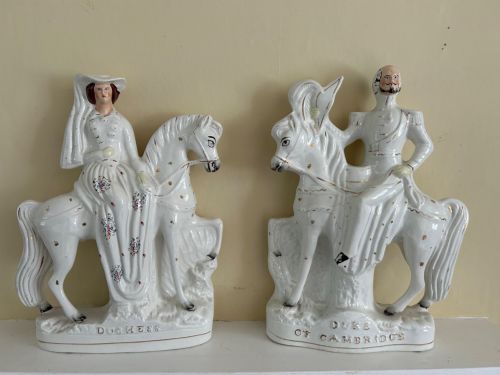
- A figure moulded with a flat, largely unpainted reverse side designed to sit flush against a wall or mantelpiece. This style became dominant during the Victorian period.
- Spill vase
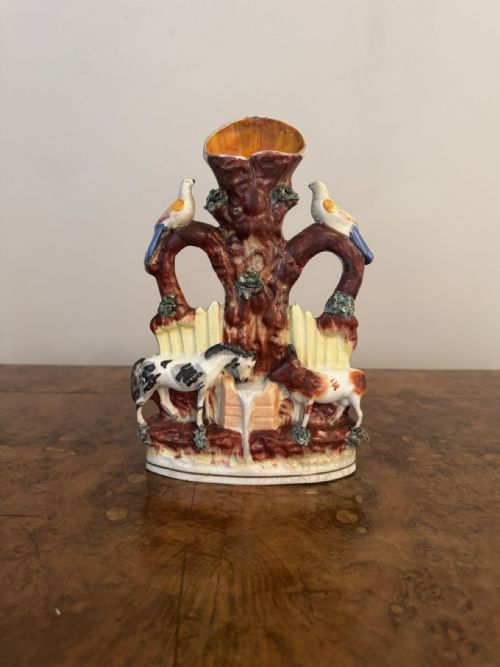
- A hollow ceramic figure incorporating an attached cylinder designed to hold wooden spills for lighting fires or candles. Animals and tree trunks frequently form the vase structure.
- Pearlware
- A refined earthenware developed in the late eighteenth century featuring a thin glaze with a slight bluish tinge. It served as a precursor to later Victorian ceramic bodies.
- Toby jug
- A pottery jug modelled in the form of a seated stout person, typically holding a mug and a pipe. These drinking vessels often depict historical figures or caricatures.
19th Century Staffordshire Figure: Frequently Asked Questions
What are Staffordshire flatback figures?
Staffordshire flatback figures are earthenware ornaments modelled with finished fronts and plain backs designed to sit on mantelpieces.
Potters produced them in large numbers during the Victorian era to depict royalty, animals, and theatrical scenes.
How do I identify a spill vase?
A spill vase includes an integrated hollow cylinder alongside the main figural subject. These receptacles held wooden spills used to transfer flames from a hearth to candles.
They commonly feature animals such as deer, lions, or dogs framed by foliage.
What is the difference between pearlware and earthenware?
Pearlware is an earlier refined earthenware featuring a subtle blue-tinted glaze over a white body. Standard Victorian earthenware utilises different glaze formulations and heavier bodies.
Earlier pieces often date from the Georgian period into the early nineteenth century.
How should I display Staffordshire figures?
These ceramic figures suit placement on mantelpieces, bookshelves, or dedicated display cabinets away from direct heavy traffic. Their flat backs allow them to rest securely against walls.
Pair figures traditionally face inward toward one another when arranged on a mantel.