

19th Century Rosewood Credenza
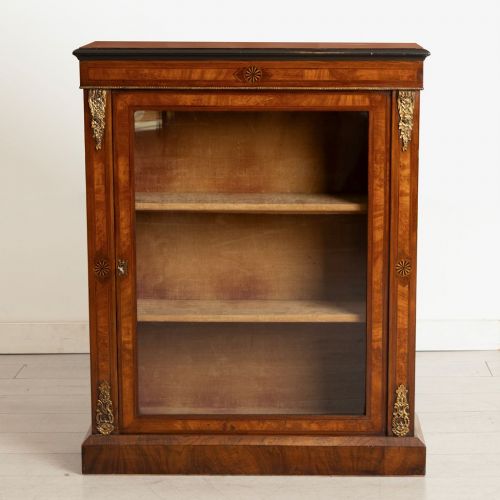
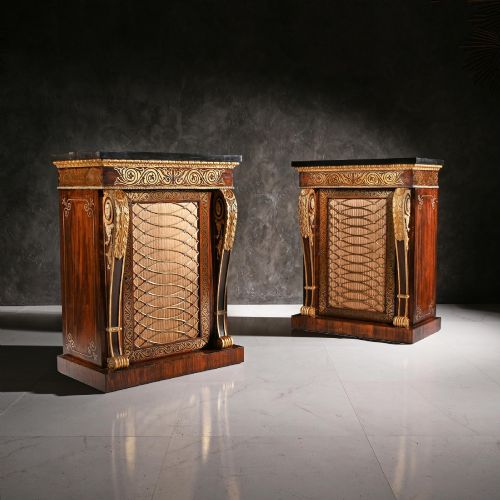
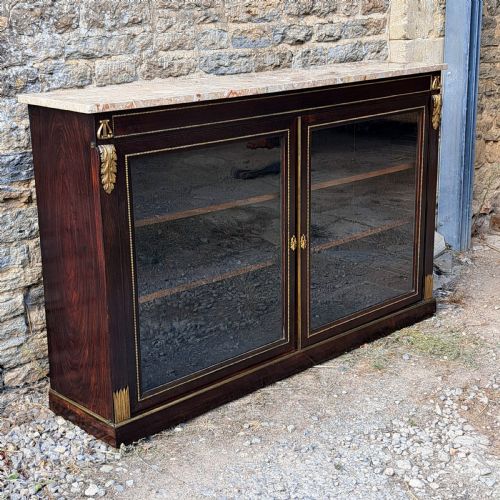
A 19th century rosewood credenza brings rich, dark grain and substantial presence to a room, offering both display space and concealed storage.
19th Century Rosewood Credenza
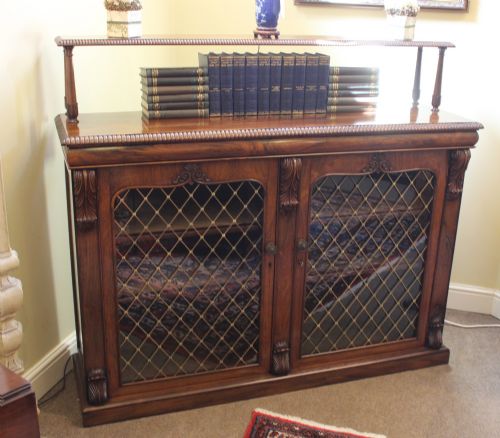
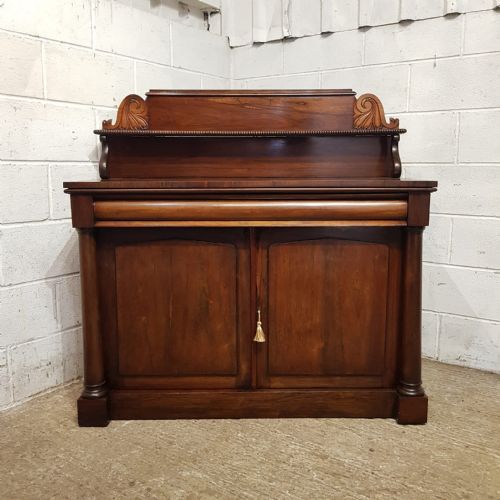
A 19th century rosewood credenza encompasses a variety of low, elegant storage furniture designed for the principal rooms of a home, frequently appearing as chiffoniers, side cabinets, and bookcases.
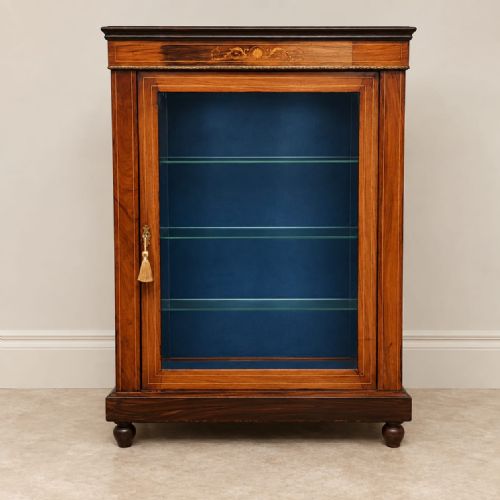
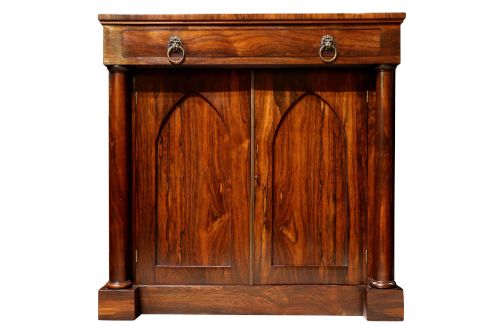
The pieces on this page span several distinct periods, most notably the Regency and Victorian eras, alongside William IV and George IV examples.
Makers such as Gillows, Holland & Sons, and Robert Strahan occasionally sign these works, elevating them from standard domestic furniture to sought-after collector pieces.
Materials and Construction
Craftsmen utilised dense rosewood veneers over solid carcases, often selecting timber with striking figuring for the primary display surfaces.
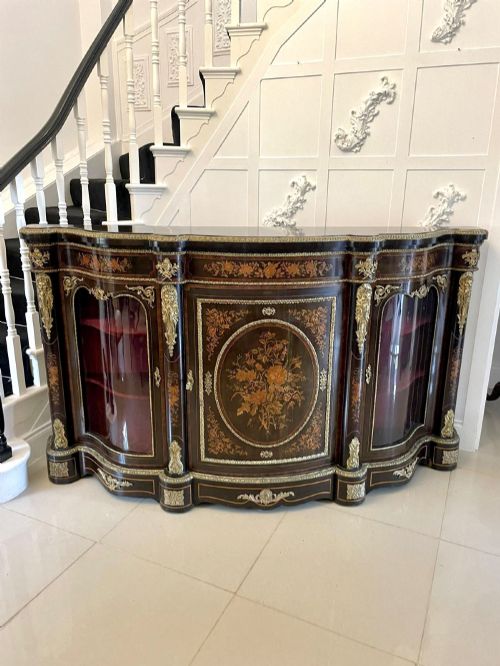
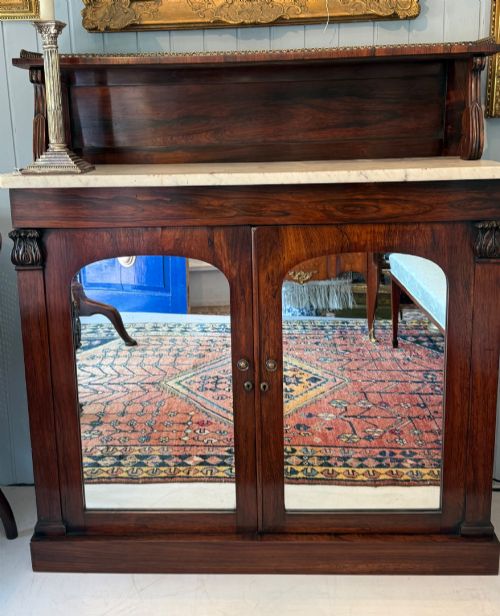
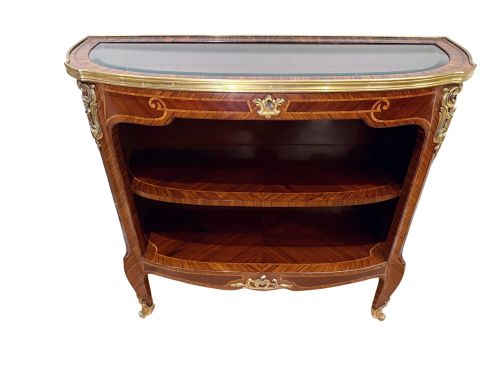
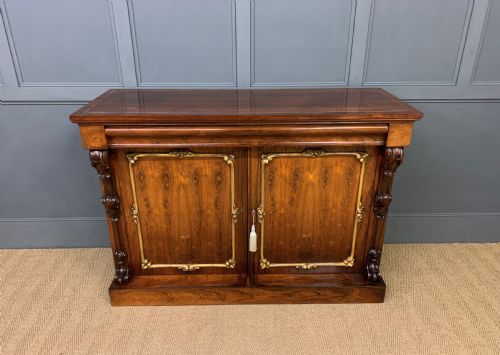
Decoration relied heavily on brass inlay, ormolu mounts, and delicate marquetry, complemented by mirror glass panels and marble tops.
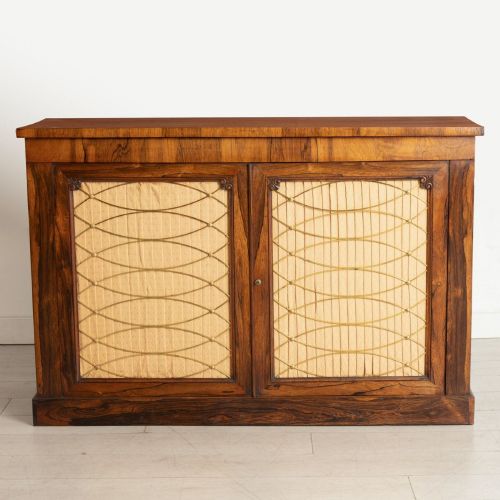
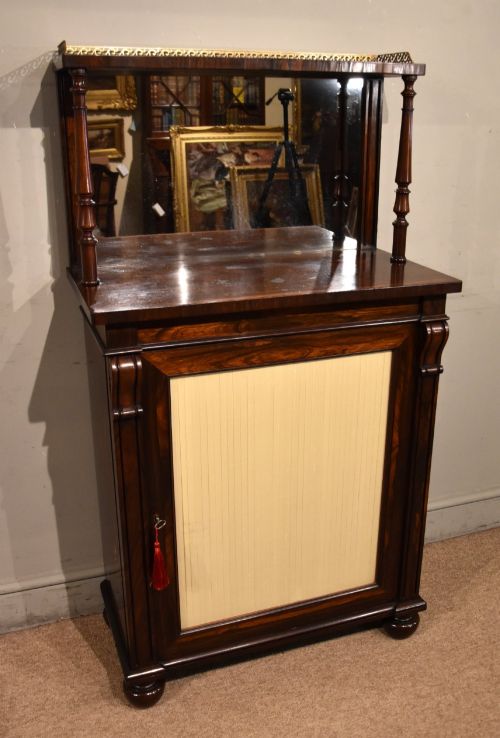
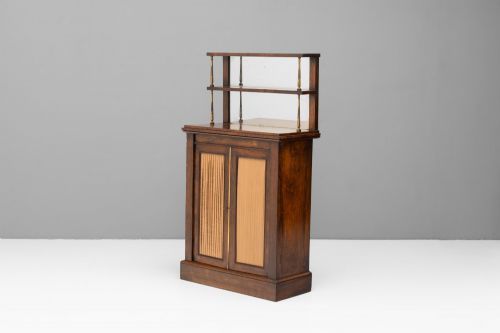
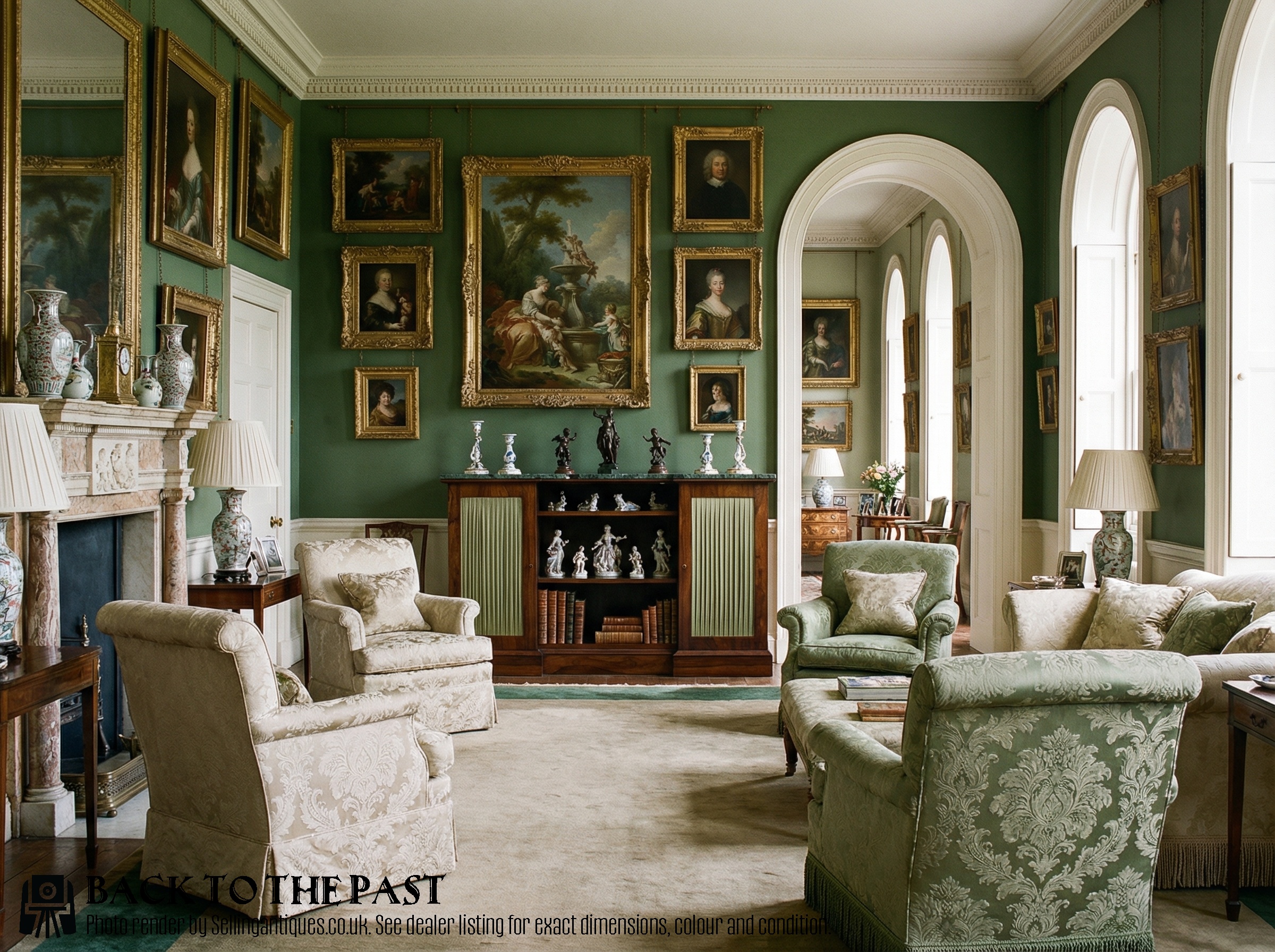
Interiors frequently incorporated adjustable shelving behind glazed or fabric-backed doors, utilising pleated silk or cotton panels in traditional chiffonier designs.
Some Regency chiffoniers feature clever painted pine carcasses disguised as genuine exotic rosewood to fool contemporary guests.
Assessing Craftsmanship
The refinement of the brass inlay and the precision of the ormolu mounts distinguish standard production from exceptional workshops.
Timber selection plays a major role, with continuous grain matching and deep, lustrous natural polishing indicating superior cabinet-making.
Structural integrity, particularly the movement of heavy marble tops and the alignment of doors fitted with original locks and keys, separates everyday survivors from museum-grade specimens.
Gillows·Holland & Sons·Robert Strahan·Louis Constantin Le Gaigneur
The 19th Century Rosewood Credenza Glossary
- Chiffonier
- A low cabinet featuring a shelf on the back and cupboards below, traditionally used for holding china or serving dishes.
- Ormolu
- Gilded bronze mounts applied to furniture for decorative enrichment, common in mid-Victorian revival pieces.
- Marquetry
- Inlaid wood designs forming pictorial or floral patterns, requiring immense skill to cut and fit into the rosewood ground.
- Vitrine
- A glass-fronted display cabinet designed to showcase porcelain and small objets d'art.
- Simulated rosewood
- Pine or lesser timbers painted to imitate the grain and colour of genuine rosewood during periods of material scarcity.
19th Century Rosewood Credenza: Frequently Asked Questions
How do I date a 19th century rosewood credenza?
Dating relies on architectural motifs and hardware, moving from the classical restraint of the Regency period towards the heavier, ornate carving of the Victorian era.
Examining secondary timbers inside the carcase and the style of the door construction helps narrow the decade of manufacture.
Where were these cabinets placed in a Victorian home?
These pieces typically stood against the main wall of a dining room or drawing room to hold glassware, silver, and table linen.
In reception rooms, pier cabinets were specifically designed to occupy the narrow wall space between tall windows.
How should I care for rosewood furniture?
Rosewood benefits from a stable environment away from direct sunlight and central heating vents, which can cause the dense timber to split.
Occasional application of high-quality beeswax maintains the lustre of the French polished surface without building up residue.
What is the difference between a chiffonier and a side cabinet?
A chiffonier traditionally includes a raised superstructure with one or two small shelves supported by pillars above the main credenza body.
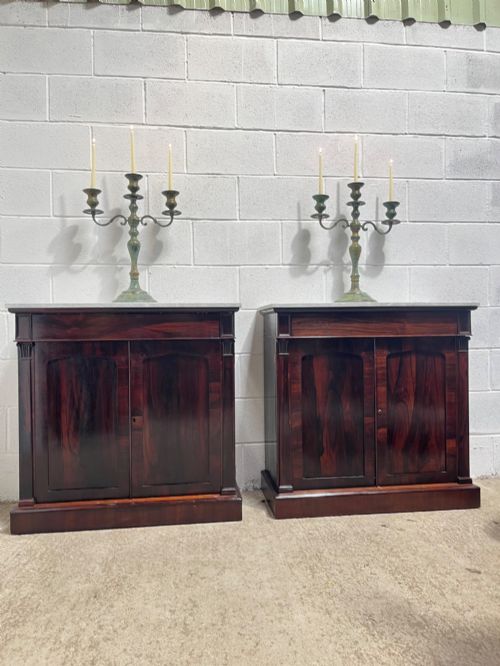
Side cabinets offer a flat top surface, frequently finished with marble or mirrored backs, focusing entirely on enclosed cupboard storage.