




19th Century Pottery Jars
These 19th century pottery jars range from utilitarian French confit vessels and British stoneware to ornate Japanese Imari vases and Italian apothecary jars, offering robust utility and decorative presence.
19th Century Pottery Jars
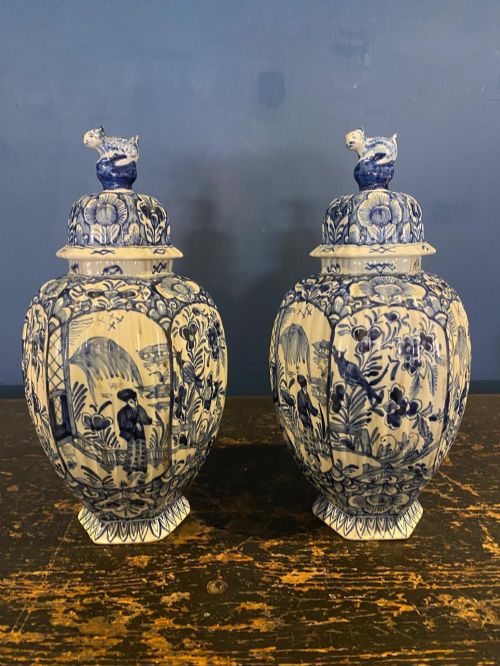
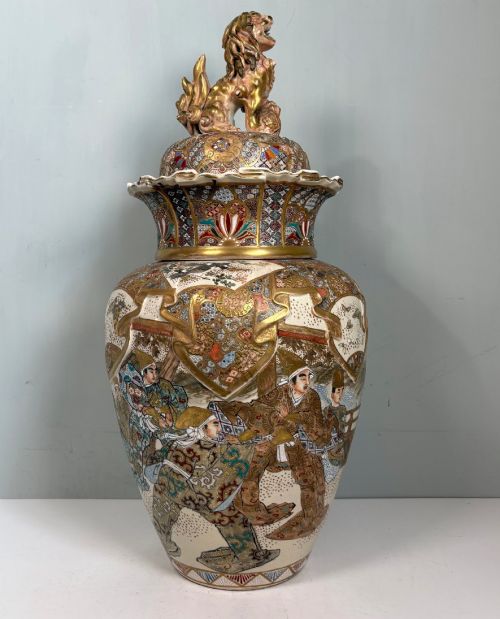
When you search for 19th century pottery jars, you encounter a diverse gathering of utilitarian kitchen vessels, pharmaceutical containers, and ornamental display pieces from European and Asian kilns. The selection spans humble French green confit pots alongside elaborate Chinese Famille Rose jars and large Japanese Satsuma lidded vases.
The most frequent examples on this page are sturdy earthenware storage jars, apothecary albarelos, and ceramic vases bearing the stylistic marks of the Victorian period and international workshops. These objects bridge everyday domestic function and the decorative arts of the 1800s.
Materials and production methods
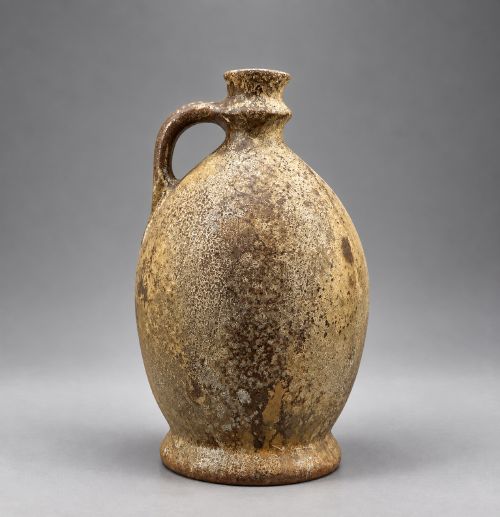
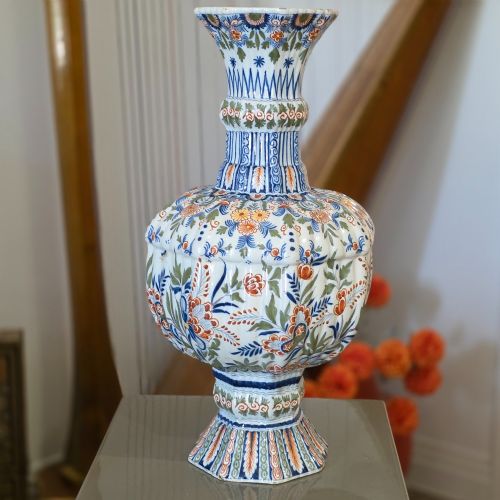
Potters of this era relied on earthenware, stoneware, and porcelain bodies, shaped by hand or on the wheel before receiving tin glazes, salt glazes, or lead glazes. Many pieces incorporate polychrome enamel decoration, gold leaf, or underglaze blue painting applied prior to high-temperature firing.
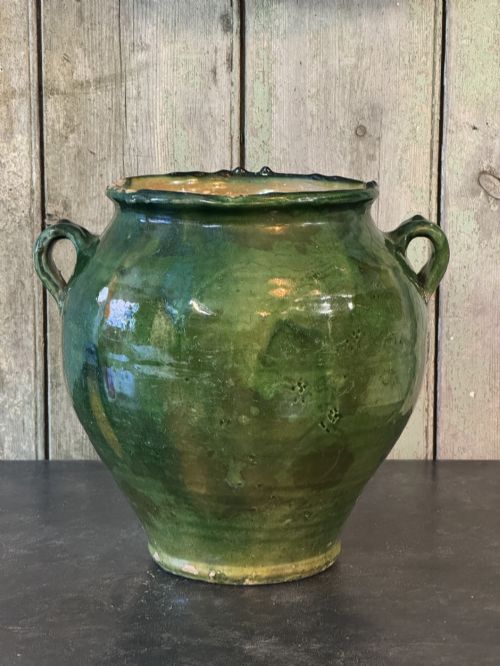
Italian and French domestic jars often display rich lead-glazed surfaces over terracotta or local clay bodies, while Asian export pieces utilise fine porcelain and dense ceramic clays painted with intricate hand-drawn motifs.
The listings span earthenware, stoneware, terracotta, porcelain, and tin-glazed ceramics originating from European and Asian traditions.
Distinctions in craftsmanship and survival
Quality rests upon the precision of the potter's hand, the stability of the glaze during firing, and the crispness of painted or sprigged details. Superior examples exhibit balanced proportions, controlled pigment application, and minimal kiln distortion.
Condition and completeness heavily influence the standing of a piece, particularly for lidded vessels, pharmacy jars, and confit pots where original covers or intact surface glazing determine historical integrity.
C & A Painter·Port Dundass
The 19th Century Pottery Jars Glossary
- Albarello
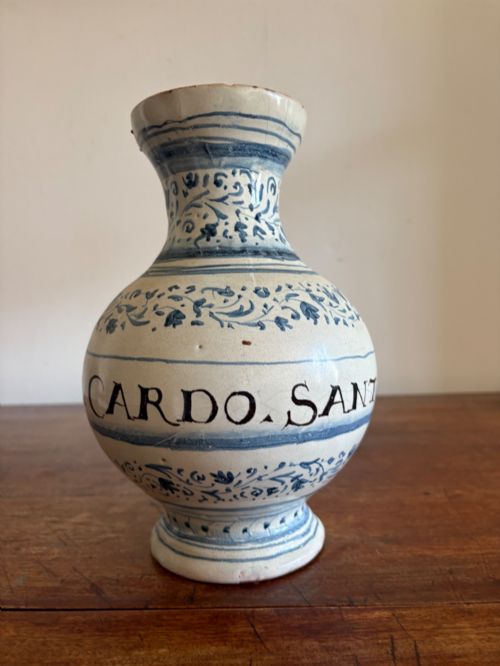
- A type of majolica pharmacy jar designed to hold dry or viscous medicinal drugs. These cylindrical earthenware vessels typically feature an incurved waist for easy handling on apothecary shelves.
- Confit Pot
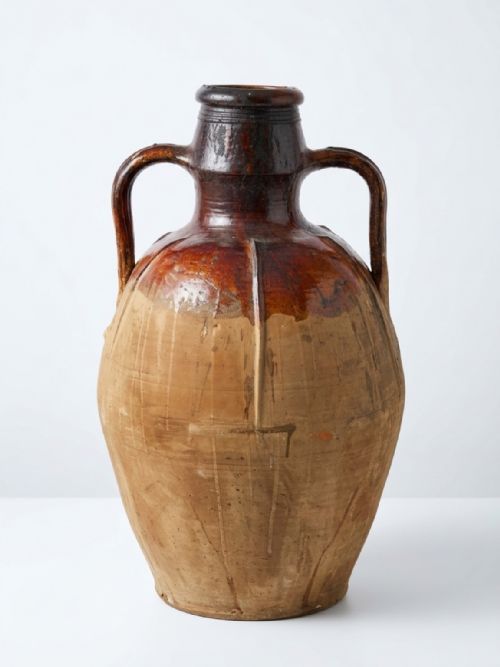
- A French utilitarian earthenware jar finished with a lead glaze, traditionally utilised for preserving meats. They feature two loop handles and partial glazing over a terracotta body.
- Tin Glaze
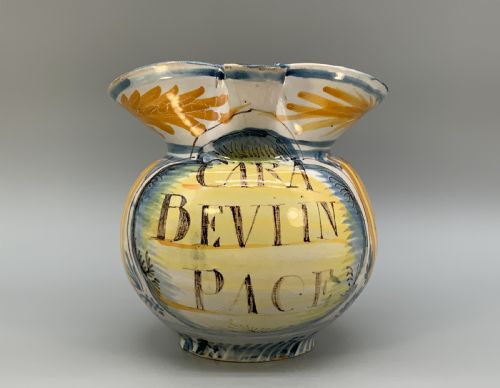
- An opaque white ceramic coating achieved by adding tin oxide to lead glaze, providing a smooth canvas for painted polychrome or blue designs. It characterises majolica, delftware, and faience.
- Salt Glaze
- A vitreous texture created by throwing common salt into the kiln during high-temperature firing. The sodium reacts with the clay body to form a durable, pitted finish resembling orange peel.
- Famille Rose
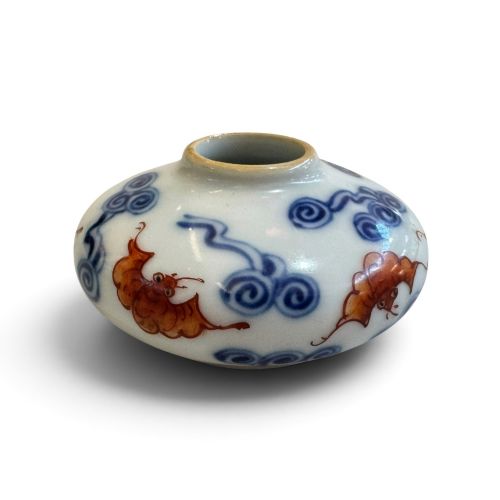
- A Chinese porcelain palette introduced in the Qing dynasty, distinguished by opaque pink enamel colours. This decorative scheme often covers ginger jars and large ceremonial vases.
19th Century Pottery Jars: Frequently Asked Questions
What were 19th century pottery jars used for?
These vessels served diverse roles ranging from storing preserved meats, oils, and dry goods in European kitchens to holding medicines in apothecaries. Many others were created purely for decorative display in parlours and halls.
Larger specimens functioned as umbrella stands, garden ornaments, or centrepiece urns, reflecting the era's demand for both practical utility and elaborate interior decoration.
How do I distinguish French confit pots from other vessels?
French confit pots are instantly recognisable by their characteristic terracotta bodies, horizontal strap handles, and partial green or yellow glazes. They were designed specifically for burying fat and confit in domestic pantries.
The unglazed lower sections contrast with the glossy upper wells, setting them apart from fully glazed apothecary jars and decorative Asian vases.
How should I display pottery jars at home?
Large stoneware and terracotta jars suit rustic floors, hearths, or heavy wooden furniture where their substantial weight and earthy tones anchor the room. Smaller apothecary jars and porcelain pieces work well on open shelving or mantels.
Keep delicate glazed surfaces away from direct, harsh sunlight and areas of heavy foot traffic to protect their historic finishes.