


Gaudy Welsh Pottery
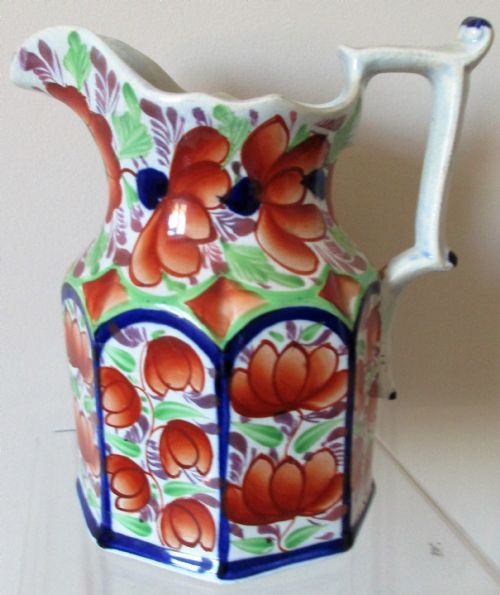
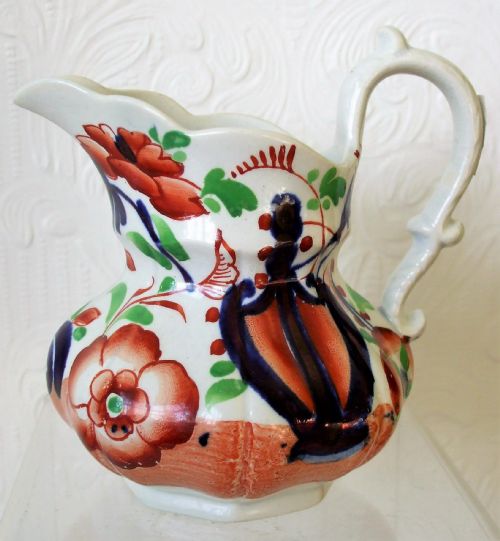
Gaudy Welsh pottery brings together bold cobalt glaze, copper lustre and enamel on earthenware for domestic display.
Gaudy Welsh Pottery
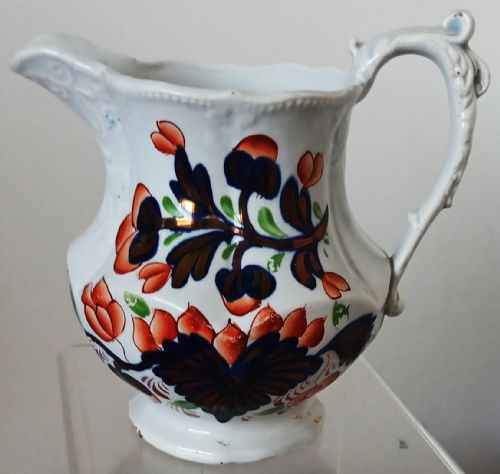
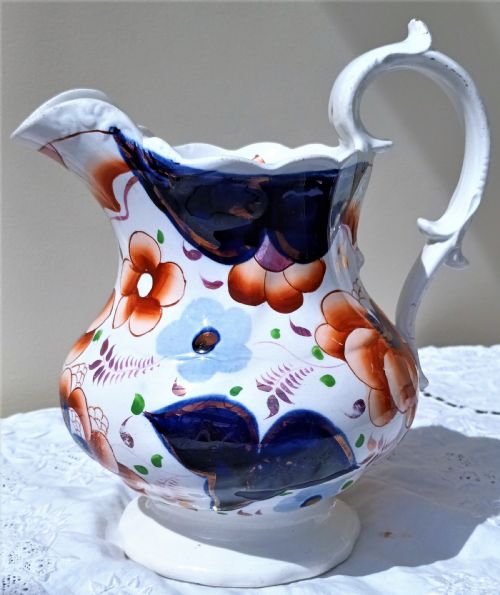
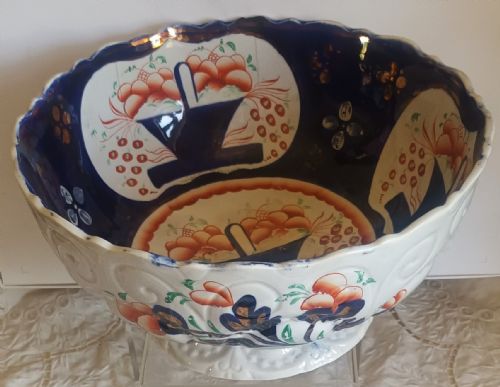
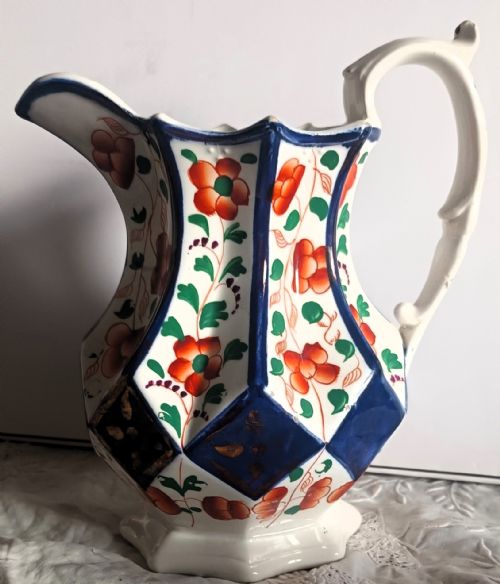
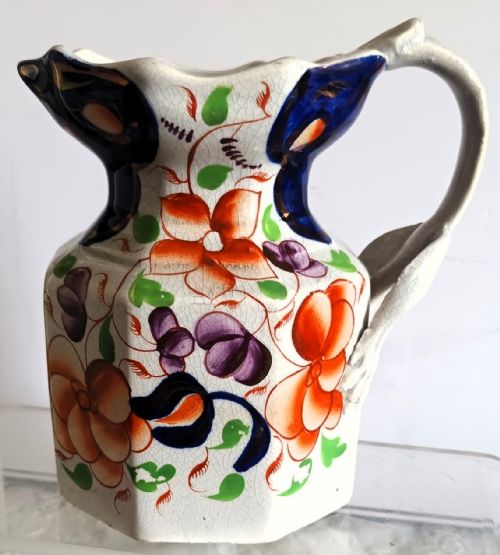
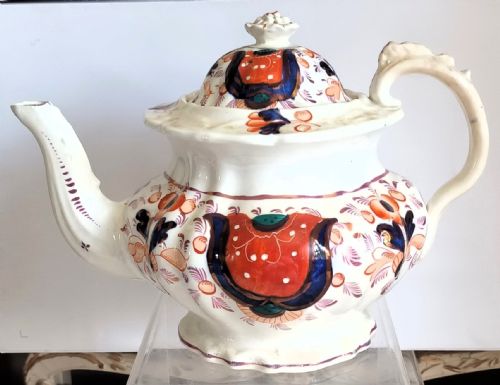
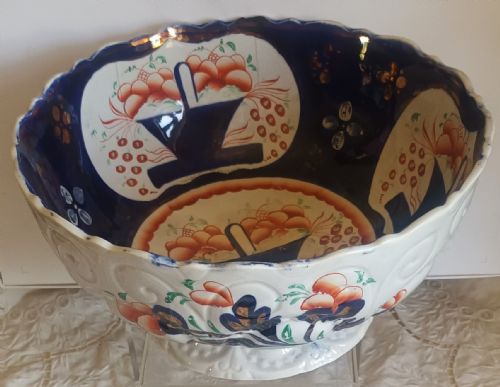
When you search for gaudy welsh pottery, you encounter vibrant domestic wares produced across the nineteenth century in Georgian and Victorian styles. These pieces include jugs, pitchers, footed bowls, decorative bowls, tobacco jars, teapots, basins, and trumpet vases designed for everyday use and display.
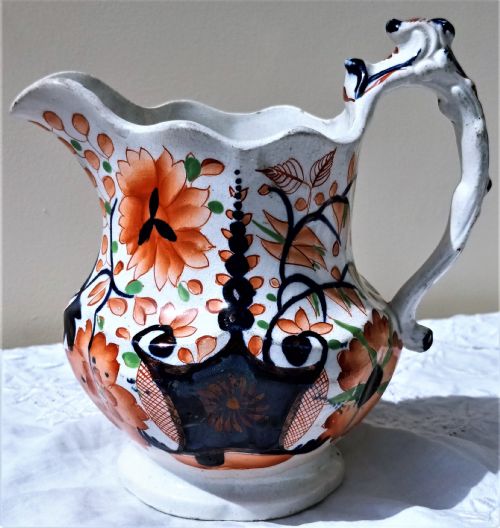
The most common forms on this page are jugs and pitchers bearing named patterns such as Pagoda, Harlech, Gwent, and Celyn. Buyers also find larger items like toilet basins alongside smaller objects such as mugs and tobacco jars.
The range draws upon Victorian folk art traditions alongside standard nineteenth century domestic ceramic production. Each piece reflects regional British tastes of the period through distinct pattern names that evoke local places and decorative motifs.
How they were made
Potters shaped these objects from earthenware and ironstone, building forms like footed bowls, teapots, and basins before firing the ceramic body. Glaze was then applied to seal the surface in preparation for hand decoration.
Makers applied cobalt glaze, enamel colours, and copper lustre to create the characteristic palette of these nineteenth century wares. Patterns such as Grape, Basket of Flowers, and Pagoda were hand-painted or transferred onto the glazed ceramic before a final fixative firing.
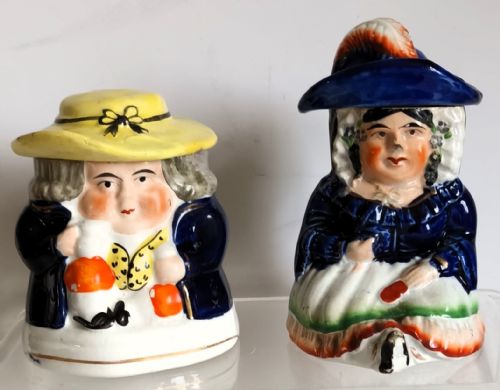
Some tobacco jars survive in matched pairs depicting a Victorian lady and gentleman keeping guard over the leaf.
What varies in quality
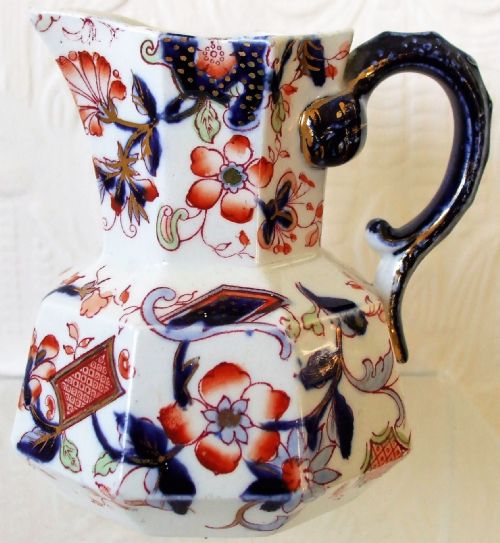
The clarity and saturation of the cobalt glaze and copper lustre separate standard production from more accomplished examples. Rich application of enamel colours creates depth in pictorial patterns like Lady and Gentleman or Oriental / Coloured Hexagon.
Mould crispness in three-dimensional forms, such as footed bowls and tobacco jars, determines the strength of the profile. Sharp definition in patterned jugs and basins indicates careful handling during the forming and decorating stages.
Keeling And Co
The Gaudy Welsh Pottery Glossary
- Copper lustre
- A metallic glaze application that leaves a coppery sheen over parts of the ceramic body. This technique defines the metallic highlights seen on many nineteenth century jugs.
- Cobalt glaze
- A deep blue colouring agent fired into the ceramic surface to create strong contrasting outlines and backgrounds. It forms the base of the characteristic palette found on these wares.
- Ironstone
- A dense, durable type of earthenware developed in the nineteenth century to resist chipping. It provides a sturdy foundation for heavily decorated teapots and jugs.
- Enamel
- Opaque glass-like paint applied over the fired glaze to introduce bright secondary colours. Enamels supply the vivid reds, greens, and yellows seen in floral and architectural patterns.
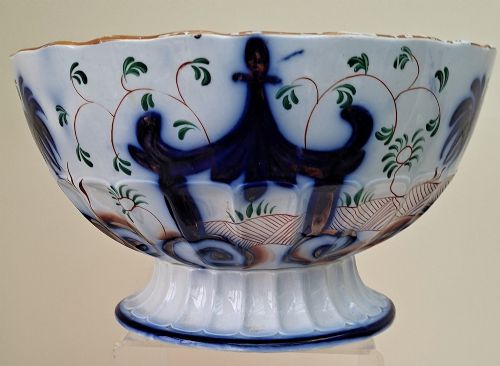
- Footed bowl
- A vessel elevated on a short pedestal base to lift the decorative bowl body off the table surface. These forms often feature architectural patterns like Pagoda.
Gaudy Welsh Pottery: Frequently Asked Questions
What is gaudy welsh pottery?
Gaudy welsh pottery refers to nineteenth century earthenware and ironstone items decorated with cobalt glaze, enamel, and copper lustre. These pieces span various domestic forms including jugs, teapots, and tobacco jars.
Most items date from the Victorian period and feature named patterns like Pagoda, Harlech, and Basket of Flowers. They were produced primarily for household use rather than fine display.
How were these pieces used?
These ceramic items served practical domestic functions in nineteenth century households. Jugs and pitchers held liquids, while basins were used for washing and teapots for serving tea.
Footed bowls and decorative bowls held fruit or served as centrepieces on tables. Tobacco jars kept smoking leaf dry, combining utility with colourful decoration.
How do I identify patterns?
Patterns are identified by traditional names assigned to specific decorative layouts, such as Grape, Bethesda, or Celyn. These names reflect the specific floral, architectural, or pictorial motifs painted on the ceramic.
Examining the combination of cobalt glaze, enamel colours, and copper lustre helps connect a piece to its recorded nineteenth century pattern name.
Are these pieces ironstone or earthenware?
The listings include both standard earthenware and ironstone bodies from the nineteenth century. Ironstone offers a heavier, more durable ceramic fabric suited to daily utility wares.
Both materials received the same characteristic glazed and enamelled treatments, making visual distinction reliant on the weight and density of the object.
How do I care for gaudy welsh ceramics?
These nineteenth century pieces require gentle handling to preserve their delicate enamel decorations and copper lustre finishes. Hand washing in warm water without harsh abrasives protects the glaze.
Displaying them away from direct heat sources and abrasive surfaces ensures the enamel colours remain stable over time.