


19th Century Miniature Cabinet
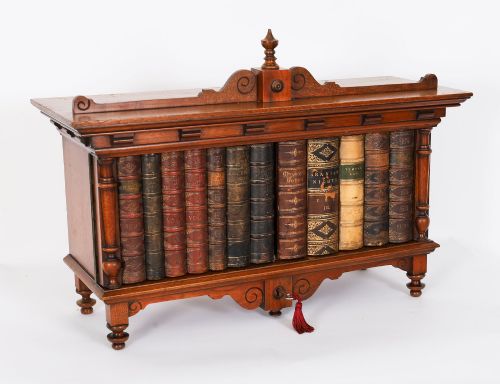
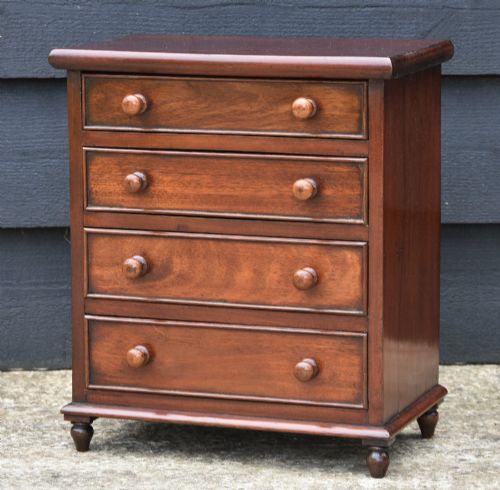
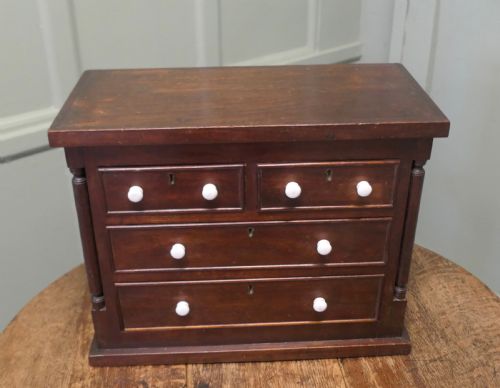
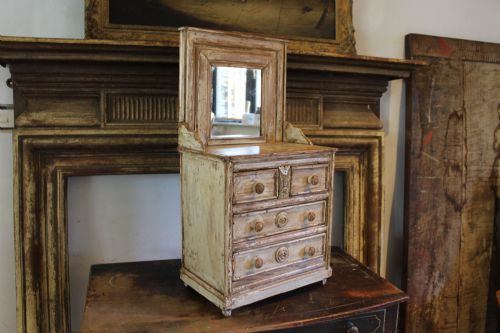
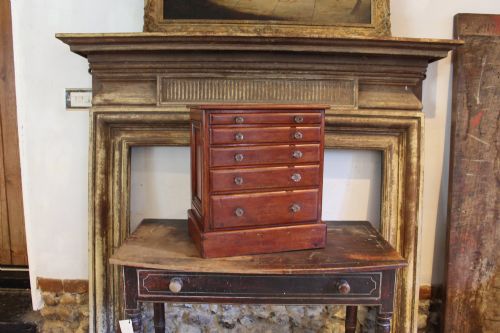
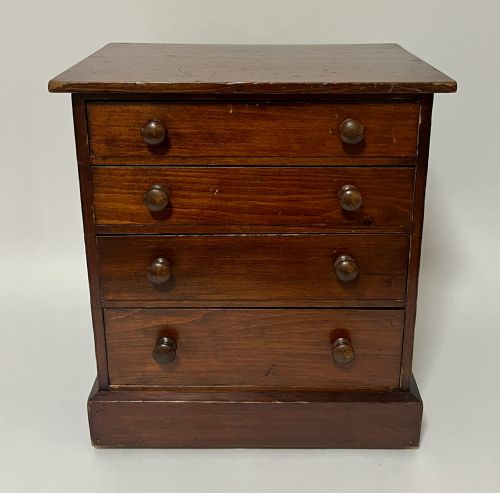
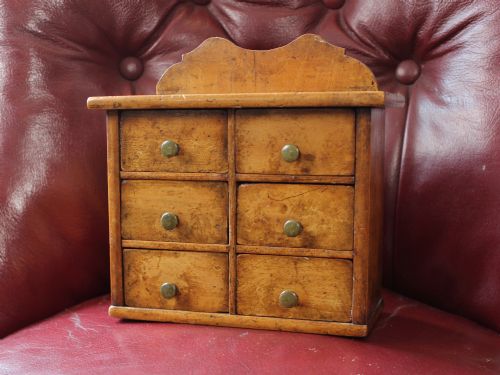
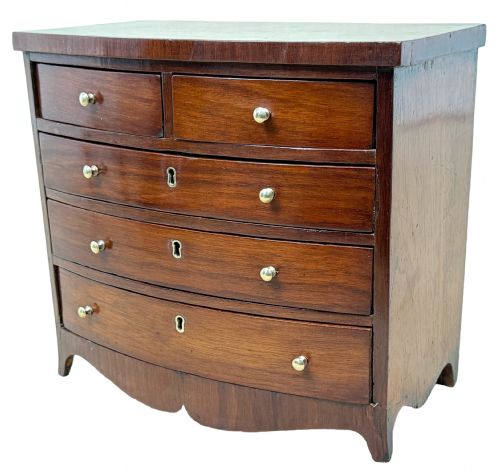
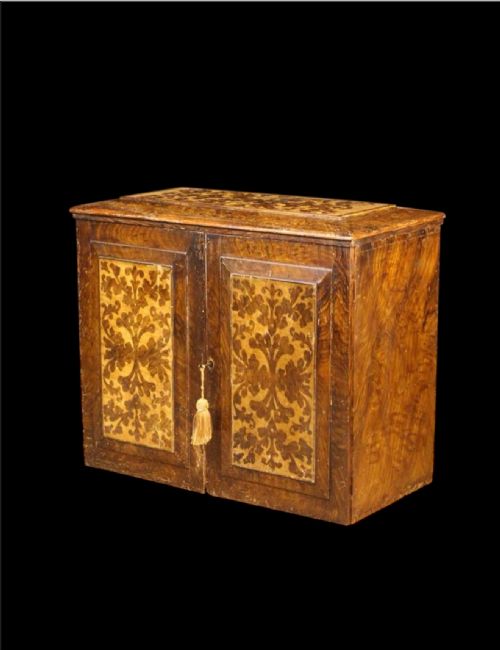
A 19th century miniature cabinet brings the intricate proportions of larger furniture into a compact tabletop scale.
19th Century Miniature Cabinet
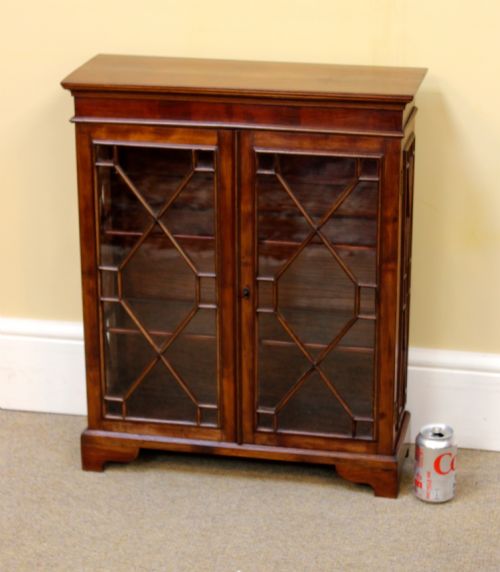
A 19th century miniature cabinet encompasses table chests, collectors' cases, and apprentice pieces designed for display or desktop storage.
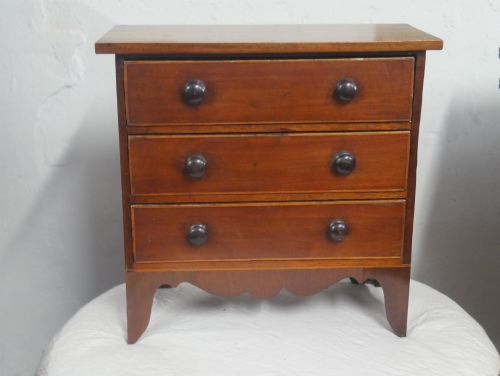
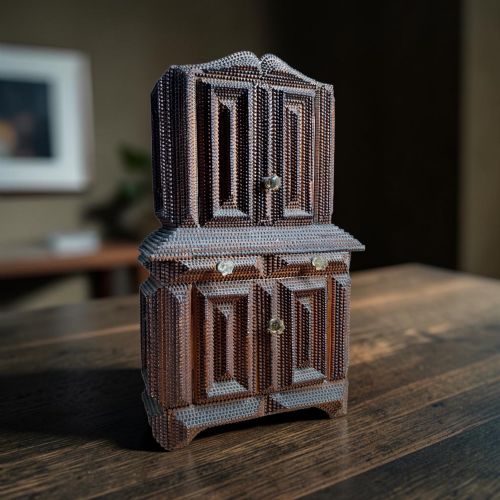
Mahogany chests of drawers and walnut table cabinets dominate the selection, alongside regional variations such as Scotch chests and French tramp art buffets.
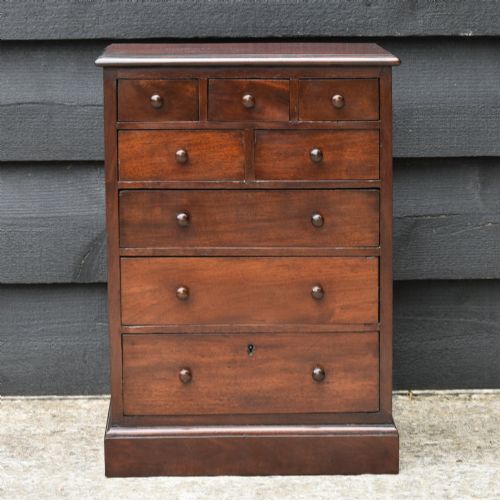
Makers also produced specialised pieces like spice drawers, Wellington chests, and specimen cases for domestic or professional use.
Materials and construction
Cabinetmakers utilised hardwoods including mahogany, walnut, and oak, frequently paired with secondary woods like pine for internal partitions.
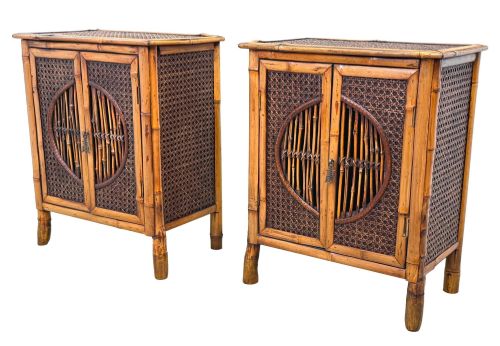
Decorative surfaces display varied techniques, ranging from mother of pearl inlay and gold leaf to painted finishes and carved bamboo.
Joinery techniques mirror full-scale furniture production, incorporating flush drawers, secret compartments, and fitted brass hardware.
The selection includes styles ranging from Regency and Rococo Revival to Aesthetic Movement and Arts and Crafts.
Assessing quality
Superior examples demonstrate meticulous attention to proportional scaling and timber selection, displaying an even, aged patina across the wood.
The sophistication of internal fittings, such as secret drawers, dovetailed joints, and original locks, separates standard workshop output from exceptional work.
Condition of surface decoration, whether applied lacquer, delicate inlay, or carved folk art motifs, defines the overall integrity of the piece.
The 19th Century Miniature Cabinet Glossary
- Apprentice piece
- A small-scale item demonstrated to a guild by a craftsman seeking master status. These objects display advanced joinery and miniature proportions.
- Wellington chest
- A tall, narrow chest of drawers secured by a locking hinged pilaster on one side. This form originates from the nineteenth century.
- Tramp art
- Folk art created by carving notched wooden layers, often utilising discarded cigar boxes. Makers built small boxes and furniture in this distinct textured style.
- Bowfront
- A convex curved cabinet or chest front popular in nineteenth-century design. This contour softens the profile of tabletop storage units.
- Specimen case
- A shallow-drawer cabinet designed to house natural history objects like insects or minerals. Collectors utilised these fitted boxes for classified organisation.
19th Century Miniature Cabinet: Frequently Asked Questions
What were 19th century miniature cabinets used for?
These small cabinets served practical domestic roles for storing jewellery, documents, or personal trinkets on a desk or dressing table. Many specialised variants also functioned as desktop storage for watchmakers, spice merchants, or natural history collectors.
Craftsmen additionally created certain items as trade samples or qualification pieces to showcase technical skill to potential patrons and guilds.
Where should I place a table cabinet?
Table cabinets suit prominent surfaces where their scale and detailing remain visible, such as sideboards, desks, or low console tables. Their enclosed compartments protect delicate contents from dust and light exposure.
Placement should avoid direct sunlight and rapid temperature fluctuations to safeguard older timber and applied veneers.
How do I distinguish regional chest styles?
Regional pieces display distinct structural characteristics rooted in local cabinetmaking traditions. Scottish and Scotch chests feature specific drawer configurations and timber choices, while French examples incorporate distinct carved motifs or painted finishes.
English designs tend to rely on classical mahogany proportions, whereas continental or Asian export pieces utilise local woods, lacquer, and metalwork.