


Dark Wood Jewellery Chest
A dark wood jewellery chest holds your small valuables with deep tones and secure compartments.
What these pieces are
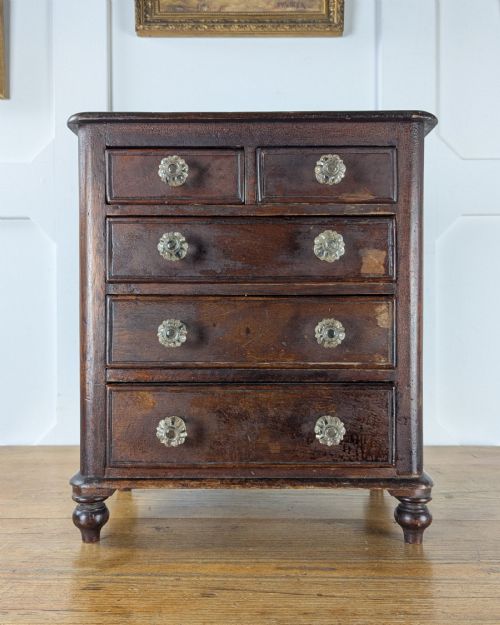
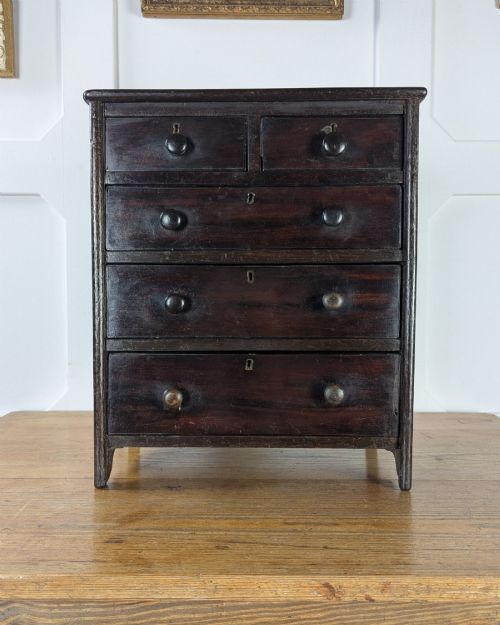
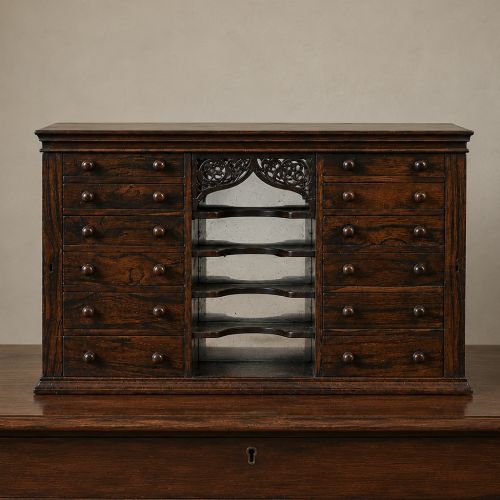
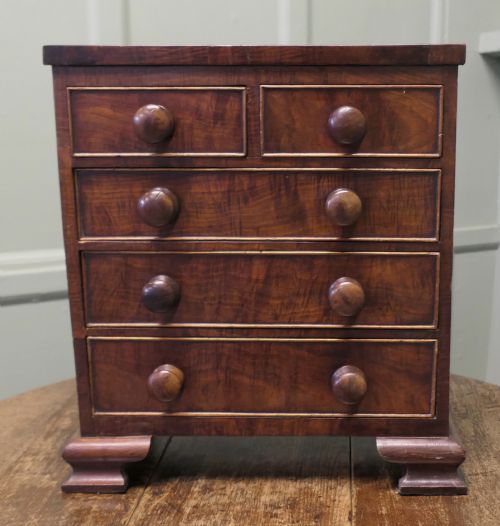
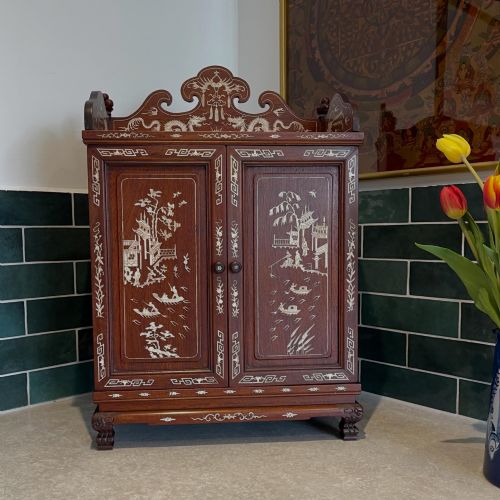
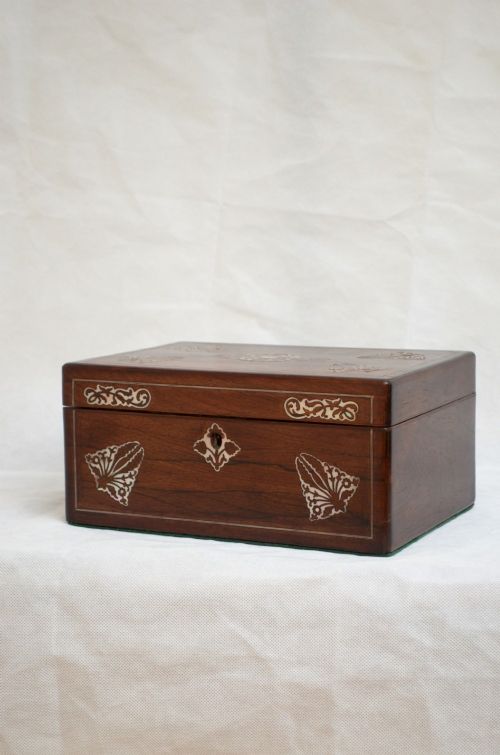
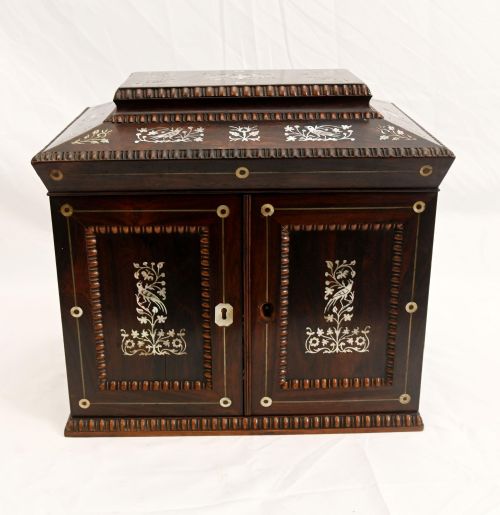
A dark wood jewellery chest spans several distinct forms including table cabinets, fitted boxes, and miniature drawer units. These pieces serve to store precious items while offering rich timber grains and traditional construction.
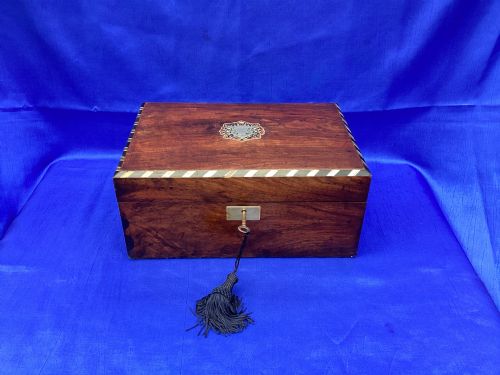
The selections on this page draw from the nineteenth century, the Victorian era, and nineteen twenty, featuring rosewood, mahogany, and contrasting brass or mother-of-pearl details. Buyers frequently encounter rosewood travelling vanity and jewellery combinations alongside compact table cabinets.
Origins range across British Victorian workshops and Chinese production from nineteen twenty. Each object provides a solid timber housing designed for tabletop placement and daily utility.
How they were made
Craftsmen built these pieces using dense hardwoods such as rosewood and mahogany, often selecting timber for rich natural grain and deep colour. Surfaces receive careful smoothing and polishing to achieve a fine patina.
Many examples incorporate decorative inlays or escutcheons in brass and mother-of-pearl, set flush into the timber lids and drawer fronts. Interior spaces feature custom fitted compartments and linings designed to hold small valuables securely.
Retail Price Guide 2026
Typical UK retail prices for dark wood jewellery chest, calculated from the Sellingantiques database of over a million retail prices indexed since 2003. This retail price guide relies exclusively on Sellingantiques data; no external sources or auction records are used, so the figures do not describe the wider market.
Travelling vanity boxes from the Victorian era were built to accompany owners on horse-drawn carriages across rough roads.
What varies in quality
Quality rests upon the selection of timber and the precision of the joinery, distinguishing simple storage boxes from refined miniature furniture. Superior pieces display unbroken veneer surfaces, subtle patination, and tightly fitted internal partitions.
Decorative embellishments also dictate the grade of an object. Delicately integrated brass hardware and neatly pinned mother-of-pearl inlay elevate a standard box into a masterwork of cabinetmaking.
The Dark Wood Jewellery Chest Glossary
- Patina
- The deep surface sheen developed through years of handling and waxing. This gentle lustre distinguishes genuine age from modern reproduction.
- Escutcheon
- A protective plate surrounding a keyhole, usually cast in brass. It prevents the timber from splitting around the lock.
- Veneer
- A thin layer of superior wood applied over a secondary timber base. This technique allows cabinetmakers to utilise striking grain patterns economically.
- Bow front
- A convex curved drawer section popular in nineteenth-century furniture. It softens the geometric lines of a miniature chest.
Frequently Asked Questions
What is a dark wood jewellery chest used for?
These chests provide secure storage for rings, necklaces, and small personal valuables. They sit neatly upon dressing tables or sideboards.
Their internal compartments keep items organised and protected from dust and light.
How do I date a Victorian jewellery box?
Examine the construction methods, lining materials, and exterior hardware styles. Victorian pieces frequently utilise rosewood and brass inlays.
Contemporary locks and machine-cut screws indicate later production periods.
Are miniature chests of drawers sturdy?
Miniature chests utilise traditional dovetail joinery and solid mahogany frames. They function as robust storage units despite their reduced scale.
The heavy timbers used in their construction ensure long-term durability.
How should I clean rosewood furniture?
Dust the surface regularly with a soft, dry cloth to prevent dirt accumulation. Avoid harsh chemical sprays and excess water.
Apply a quality beeswax periodically to maintain the timber's natural moisture and shine.