


Rosewood Vanity Case
A rosewood vanity case brings the rich grain of tropical timber and precise brass work straight to a dressing table.
Rosewood Vanity Case
A rosewood vanity case sits squarely in the tradition of portable dressing boxes, combining compartments for cosmetics, jewellery and writing implements. The pieces on this page span the Georgian, Regency, Victorian and Edwardian eras, alongside French campaign styles and Chinese Hongmu examples.
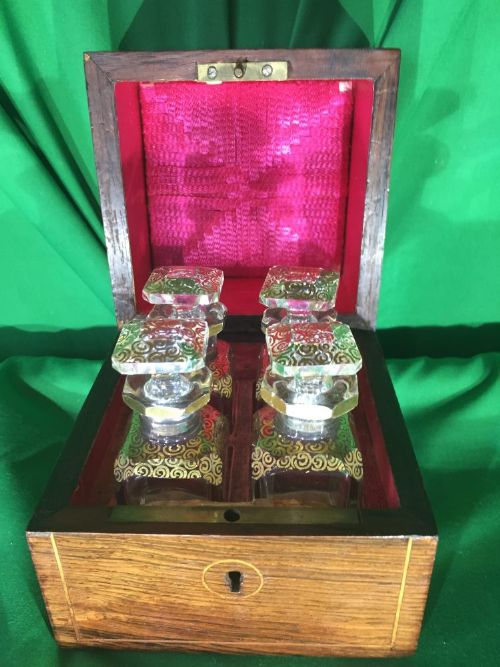
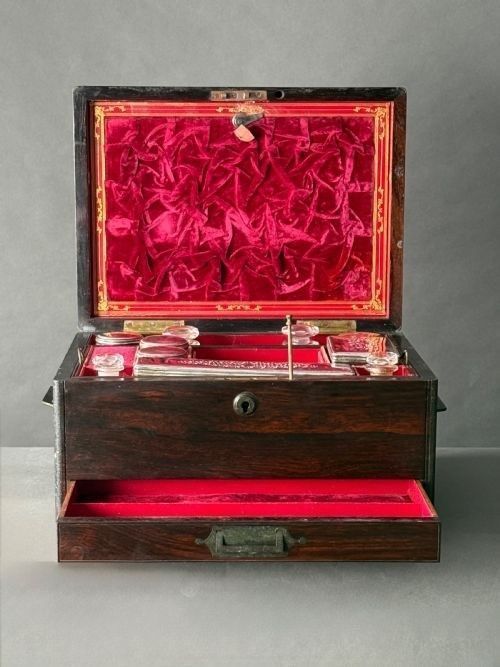
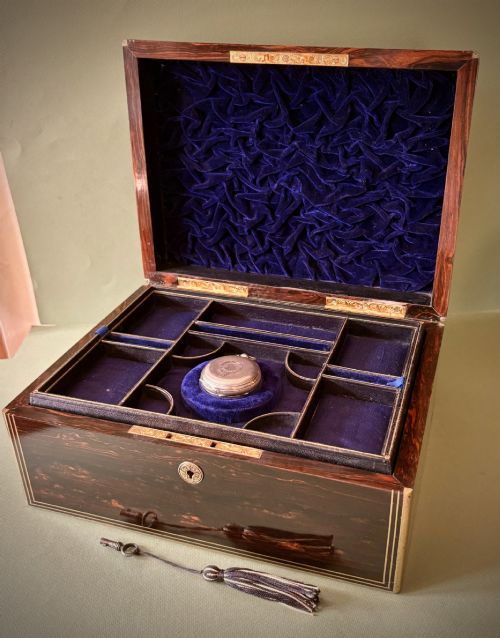
Most items you will meet on this page belong to the Victorian period, frequently featuring brass banding or mother of pearl inlay. Interiors are typically lined with velvet, silk or leather, and many include fitted glass scent bottles or compartments for specific dressing table items.
Materials and construction methods
Cabinetmakers built these boxes using dense rosewood timbers, often cut to display striking grain patterns across the lid and sides. Brass inlay, stringing and corner brackets provided both structural reinforcement and decorative contrast against the dark wood.
Internal spaces required complex carpentry to create concealed drawers, secret compartments and removable trays. Linings of velvet, leather and silk were carefully fitted by hand to protect glass scent bottles and metal vanity tools.
Some Victorian travelling boxes hide secret drawers behind false compartment walls, designed to keep family heirlooms entirely out of sight.
Judging execution and preservation
Quality rests on the precision of the brass inlay, the snugness of the internal joinery and the survival of original interior fittings. Superior examples maintain intact silk or velvet linings and fully functioning locks with working keys.
The choice of rosewood grain and the subtlety of mother of pearl embellishment distinguish finer workshop outputs from standard production pieces. Replacement linings and restored brass work alter the original character of a box.
Promoli & Hausburg
The Rosewood Vanity Case Glossary
- Rosewood
- A dense, heavily figured timber prized for its dark colour and distinct aroma when worked. It provides the primary exterior structure for these boxes.
- Mother of pearl
- An iridescent inner shell layer used for decorative inlay and escutcheons. Craftsmen cut thin sections to form geometric patterns or floral motifs.
- Campaign box
- A portable piece of furniture designed for travel, featuring brass protective corners and recessed carrying handles. These items were built to withstand movement.
- Writing slope
- A hinged writing surface built into a box interior, often accompanied by inkwells and pen trays. Many vanity cases integrated this function alongside jewellery storage.
Rosewood Vanity Case: Frequently Asked Questions
What is a rosewood vanity case used for?
These boxes served travellers and homeowners as portable dressing stations for jewellery, cosmetics and small personal items. They kept valuable possessions secure while moving between residences.
Today, they function as decorative storage on dressing tables or sideboards, holding modern trinkets and small accessories while displaying period craftsmanship.
How do I date a rosewood vanity case?
Dating relies on stylistic clues such as brass banding, escutcheon shapes and internal layout configurations. Regency and Georgian boxes often feature simpler lines, while Victorian examples lean toward heavy brass inlay and mother of pearl.
Checking for maker marks, lock stamps and construction methods helps narrow the decade of manufacture. Archive records show pieces ranging from the early nineteenth century through the Edwardian era.
Are the interiors original?
Many surviving boxes retain their original silk, velvet or leather fitted interiors, though textile linings frequently show wear from use. Some pieces feature professionally renewed linings to restore their display appearance.
Examining the glue residue, fabric ageing and compartment fit helps determine whether an interior dates to the original manufacture or represents a later restoration.
How do I care for rosewood and brass?
Rosewood benefits from occasional polishing with suitable cabinet wax to preserve the moisture and depth of the timber grain. Avoid placing wooden boxes in direct sunlight or near heat sources to prevent warping.
Brass elements can be cleaned gently with a soft cloth to maintain their lustre without disturbing the surrounding wood finish.