


19th Century Meat Platter
A 19th century meat platter brings substantial scale and transfer-printed narrative to the table, offering durable earthenware, ironstone or silver plate for serious service.
19th Century Meat Platter
A 19th century meat platter serves as the central vessel for carving and presenting large joints at the dining table. These pieces emerge across Georgian, Regency, William IV and Victorian periods, taking forms from simple platters to large dishes fitted with drainers, mazarines or matching dish covers.
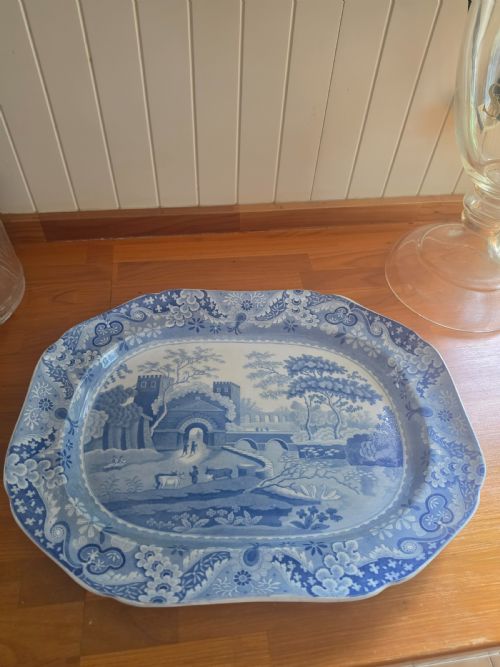
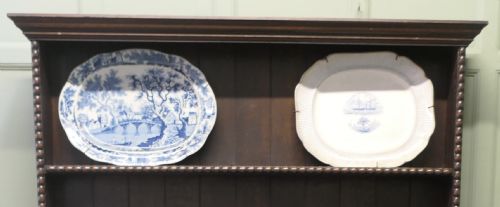
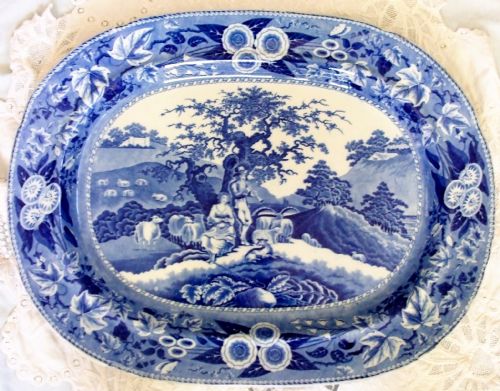
The version most commonly met on this page is the blue and white transfer-printed earthenware or ironstone platter. Makers applied cobalt pigment under the glaze to render scenic views, pastoral themes, and topographical series on heavy ceramic bodies.
Beyond earthenware, collectors encounter silver-plated examples, sometimes combined with copper or paired with Old Sheffield plated meat domes. These metallic serving trays often incorporate reservoirs and draining trays designed to manage juices during carving.
How they were made
Potters shaped earthenware, pearlware, and ironstone by pressing clay into large moulds to achieve the heavy, rigid bases necessary for holding heavy joints of meat without warping. Cobalt pigment was applied using copper plate transfer printing before glazing and firing, locking complex topographical and figurative patterns beneath a glossy surface.
Silver-plated platters and mazarines were produced by fusing thin sheets of silver to a base metal such as copper, or by plating white metal alloys. Details like armorial crests, coats of arms, and cast borders were added separately, while matching domes utilised heavy metal spinning and applied cast handles.
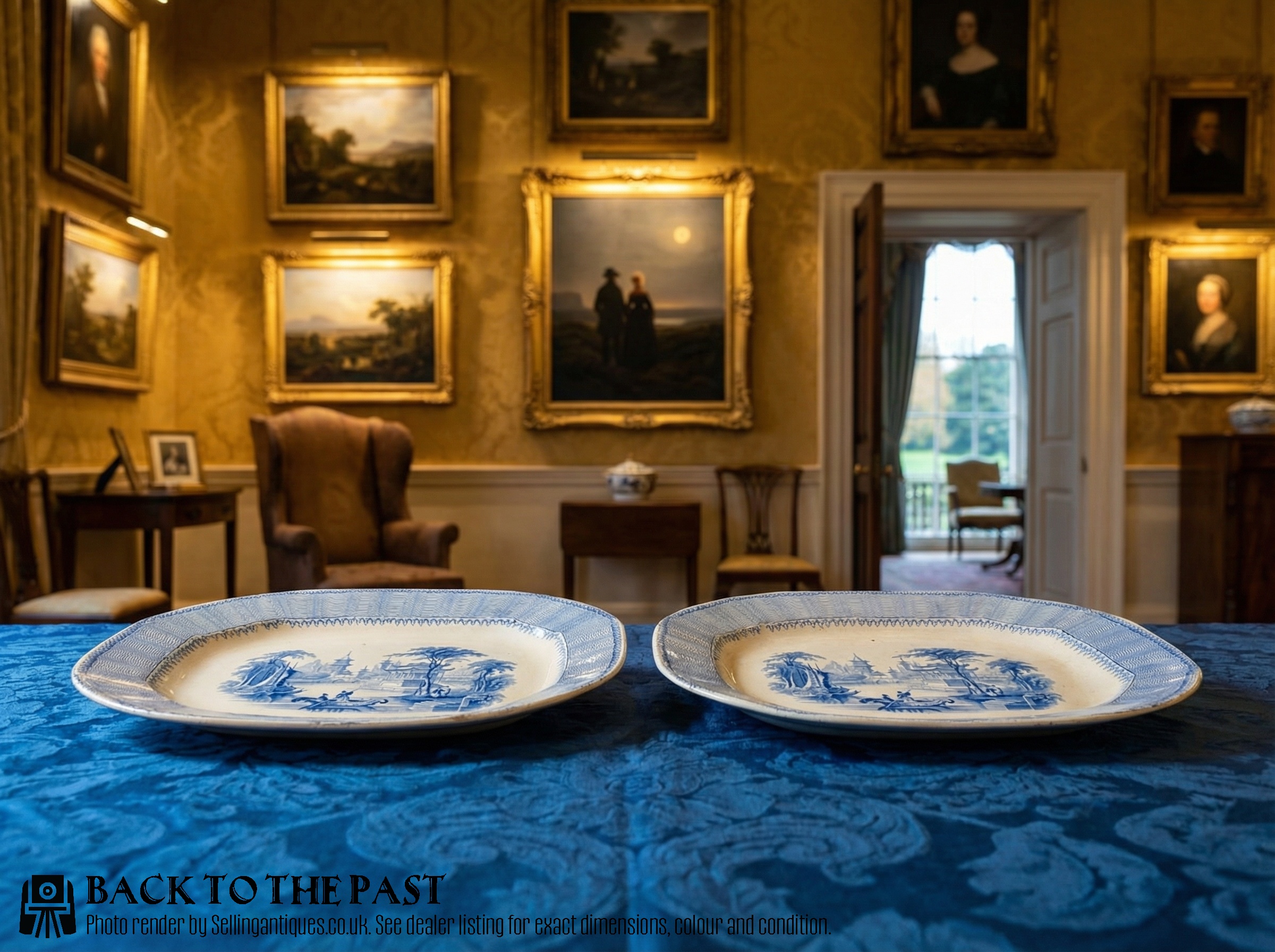
Blue and white transfer-printed motifs include topographical views, shipping battles, and Chinese garden scenes.
What varies in quality
The clarity and depth of the cobalt transfer print separate standard production from superior pieces. Crisp lines in complex patterns like topographical views or figurative scenes indicate a well-maintained copper plate and careful pressing.
Body density and weight dictate the durability of the ceramic, with ironstone providing a heavier, more resilient substrate than standard earthenware. In silver plate, the retention of the original plating layer over copper or base metal determines the integrity of the surface.
Spode·Copeland and Garrett·Don Pottery·Minton·Mason's·Henry Wilkinson·Durand
The 19th Century Meat Platter Glossary
- Transfer print
- A method of applying intricate designs to ceramics by engraving a copper plate, inking it with cobalt pigment, and transferring it via tissue paper to the biscuit fired clay before glazing. This technique allowed factories to produce complex pictorial scenes consistently across large serving dishes.
- Ironstone
- A dense, durable type of heavy ceramic patented in the early nineteenth century to withstand hard use in the dining room. It combines earthenware properties with added slag and feldspar to resist chipping.
- Mazarine
- A pierced draining tray or insert that sits inside a meat platter to keep the joint elevated above accumulated juices during carving. These are frequently found in silver plate or matched ceramic sets.
- Pearlware
- A refined earthenware body developed in the late eighteenth century featuring a subtle bluish glaze that pooled in recesses to mask the natural cream colour of the clay. It served as the canvas for many early nineteenth-century blue and white scenic patterns.
- Old Sheffield plate
- A composite material formed by fusing a thin sheet of silver to a thicker copper core under heat and pressure. Items made this way often reveal faint traces of copper showing through along high points of wear.
19th Century Meat Platter: Frequently Asked Questions
How were 19th century meat platters used?
These large vessels sat at the head of the dining table to hold substantial roasts and joints of meat during formal meals. Carving took place directly on the platter surface.
Many pieces included integrated wells, reservoirs, or separate draining inserts to catch and channel juices away from the meat as it was sliced.
What is ironstone and how do I spot it?
Ironstone is a heavy, opaque, and highly vitrified ceramic developed to resist the rigours of daily Victorian dining. It feels noticeably heavier than standard earthenware and rings with a duller tone when tapped.
platters made from this material often display minimal crazing compared to softer pearlware bodies from earlier decades.
Why do some platters have metal domes?
Large silver-plated or plated-copper domes were placed over the meat platter to keep joints warm between the kitchen and the dining table. They also maintained presentation standards during extended courses.
Matching sets often featured engraved family crests or coats of arms shared with the platter beneath.
How do I care for antique ceramic platters?
Wash these pieces gently by hand using warm water and mild detergent rather than placing them in a dishwasher. Harsh cycles can damage nineteenth-century glazes and weaken historical ceramic bodies.
Store them vertically in plate racks with protective padding between pieces to prevent edge chipping on heavy ironstone or earthenware rims.