
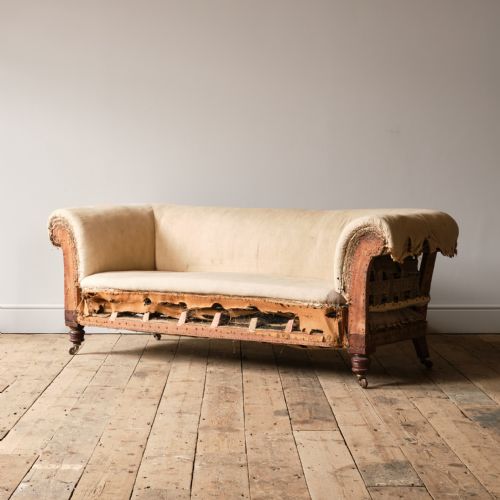
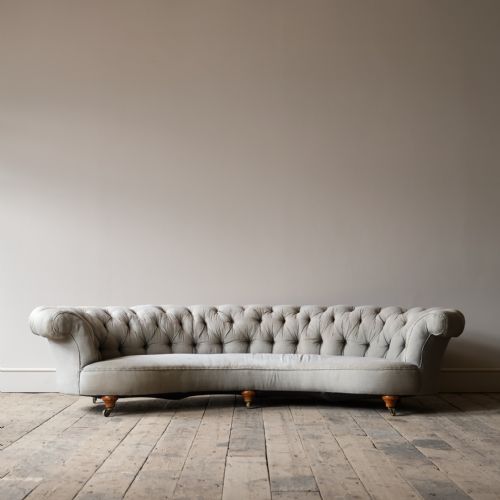
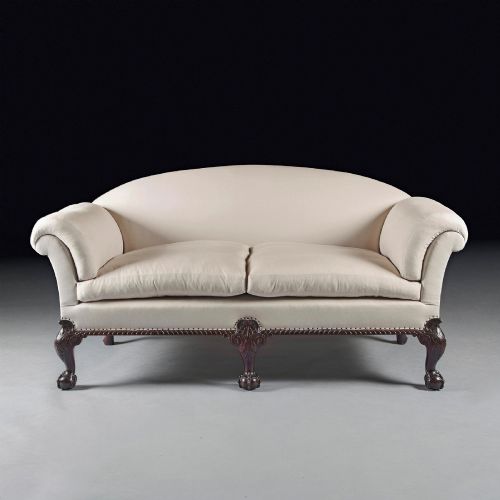
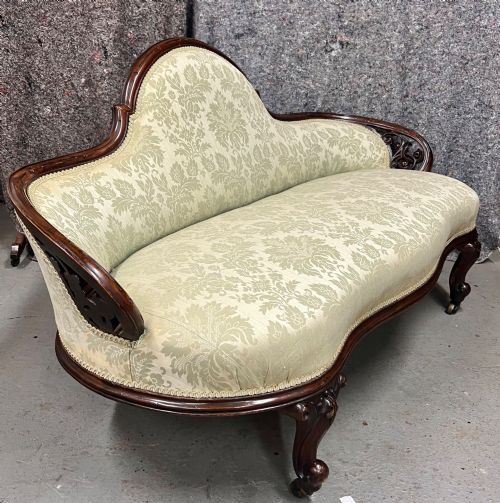
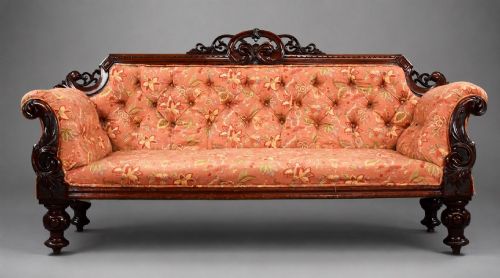
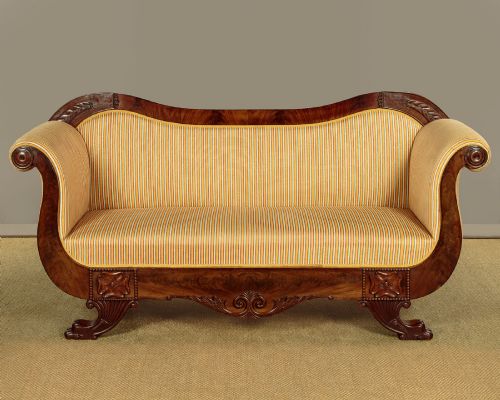
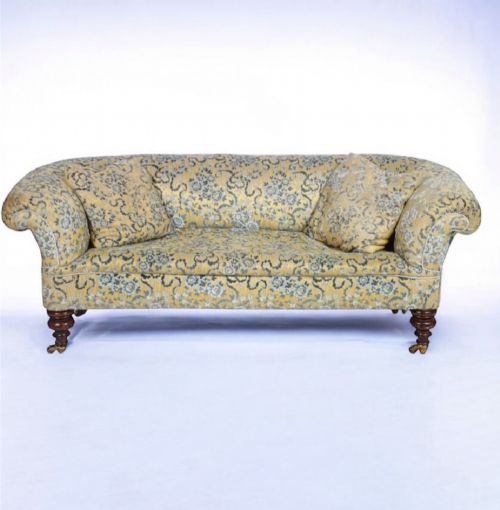
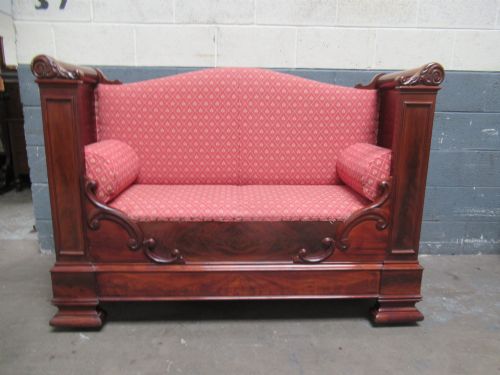

19th Century Mahogany Settee
A 19th century mahogany settee brings the rich timber frames and classic upholstery of the period directly into a modern interior.
19th Century Mahogany Settee
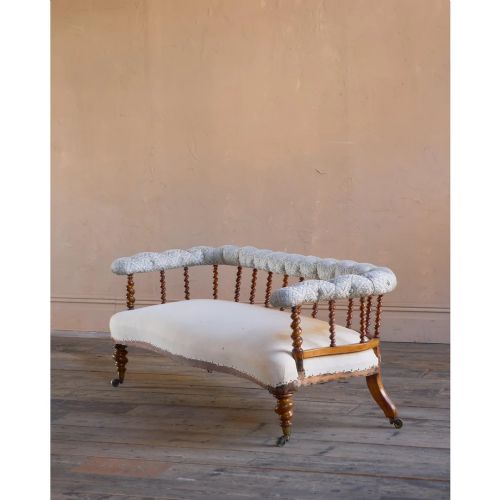
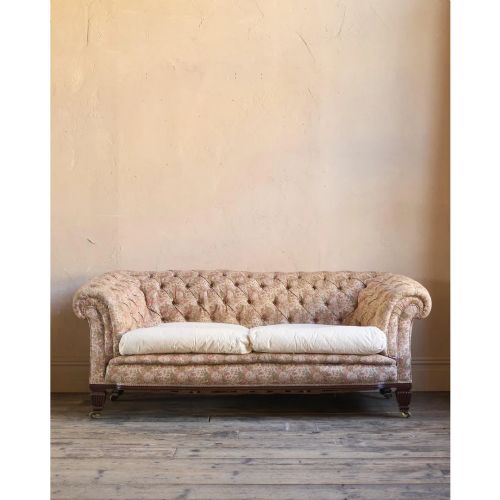
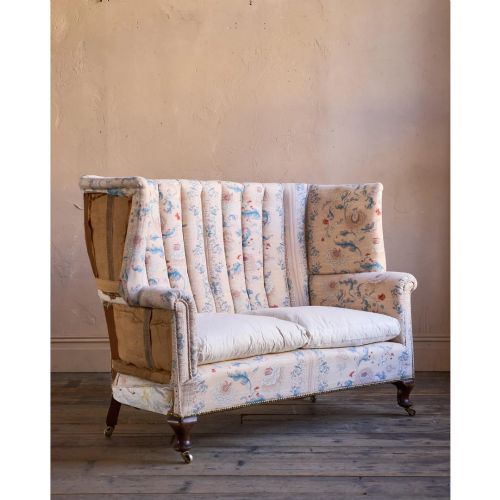
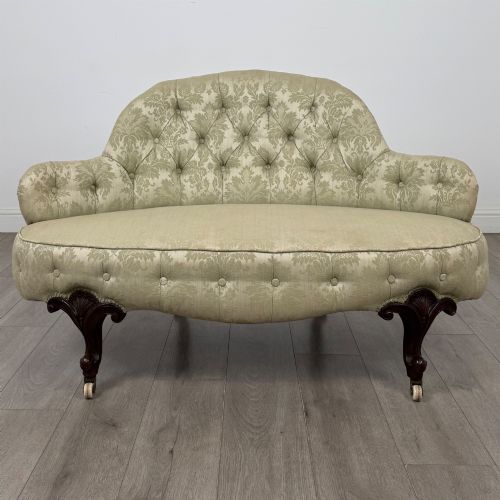
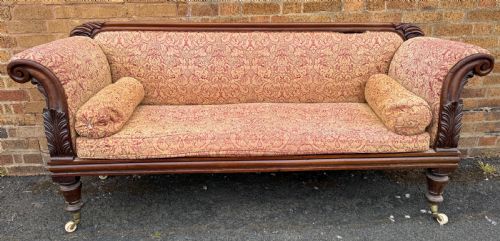
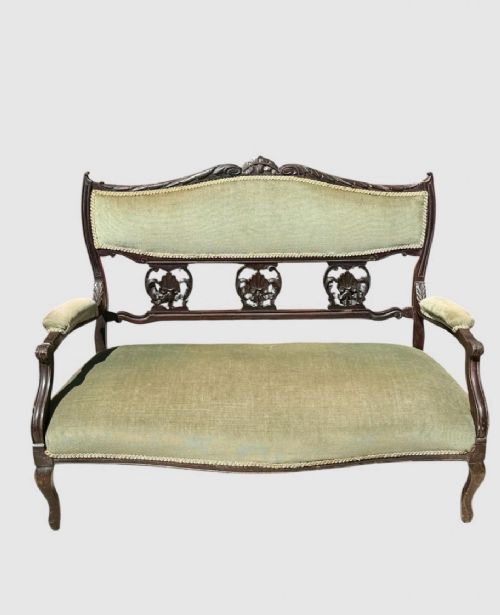
A 19th century mahogany settee encompasses a variety of seating forms designed during the Victorian and Regency eras, including scroll end couches, camel back sofas, and double-ended settees. These seating options emerge from periods spanning the early nineteenth century through to the 1880s, reflecting diverse regional tastes from English country houses to Irish workshops.
The pieces appearing on this page most frequently present mahogany show wood frames combined with upholstered seating in fabrics such as damask, velvet, hessian, and calico. Buyers encounter forms ranging from compact two-seater settees and salon sofas to larger reception pieces and chaise longues.
Materials and Construction
Cabinet makers utilised solid mahogany for the structural frames, often carving details into scroll arms, show wood surrounds, and legs fitted with brass castors. Timber surfaces were shaped into specific regional and stylistic profiles, from William IV carved elements to Chippendale revival fretwork.
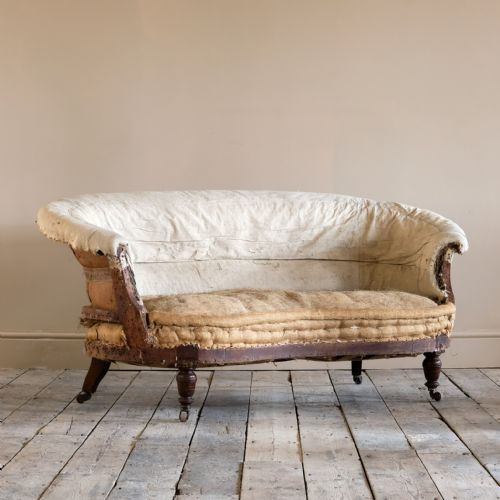
Internal construction relied on traditional upholstery methods employing hessian, calico, and stuffing beneath top covers of velvet, damask, or leather. Frames accommodated both tight-upholstered forms and loose cushion designs depending on the specific nineteenth century workshop.
Listings feature mahogany frames combined with velvet, damask, calico, and brass fittings across the 1850 to 1880 periods.
Craftsmanship and Proportion
The standard of carving on the mahogany frame distinguishes standard production from exceptional examples, with crisp hand-carved scrollwork and detailed show wood indicating higher workshop provenance. Proportions also dictate distinction, particularly in pieces replicating George III or Hepplewhite manners.
Attribution to documented makers such as Howard and Sons, Holland and Sons, or Hampton and Sons elevates a piece, as does the survival of original upholstery foundations and hand-dyed leathers.
Howard and Sons·C. Hindley and Sons·Hampton and Sons·Holland and Sons·Jas Shoolbred·Morison and Co
The 19th Century Mahogany Settee Glossary
- Mahogany
- A durable tropical hardwood utilised extensively for nineteenth century furniture frames. Its rich grain accepts polished finishes well.
- Scroll end
- A sweeping, curved arm or terminal found on Regency and Victorian sofas. This design mimics classical scroll motifs.
- Show wood
- Exposed timber framing on an upholstered piece of furniture. It displays the carved mahogany structure around the fabric.
- Calico
- A plain-woven textile used as an inner lining or base layer for upholstery before applying top fabrics like damask or velvet.
19th Century Mahogany Settee: Frequently Asked Questions
What defines a 19th century mahogany settee?
These pieces combine solid mahogany woodwork with period upholstery styles produced across the Victorian and Regency eras.
They appear in forms ranging from scroll-end couches to camel-back settees.
How do I identify a Regency settee?
Regency examples often feature distinct architectural lines, lyre shapes, or scroll ends reflecting early nineteenth-century design.
They rely on mahogany framing without the heavier ornamentation seen later in the century.
Where were these settees originally used?
Pioneering pieces sat within formal drawing rooms, reception spaces, and grand English country houses.
They served as primary seating for entertaining guests or reclining in private chambers.
How do I care for mahogany frames?
Maintain the timber by dusting with a dry cloth and avoiding direct sunlight to protect the polished finish.
Condition the wood periodically using appropriate natural wax.