
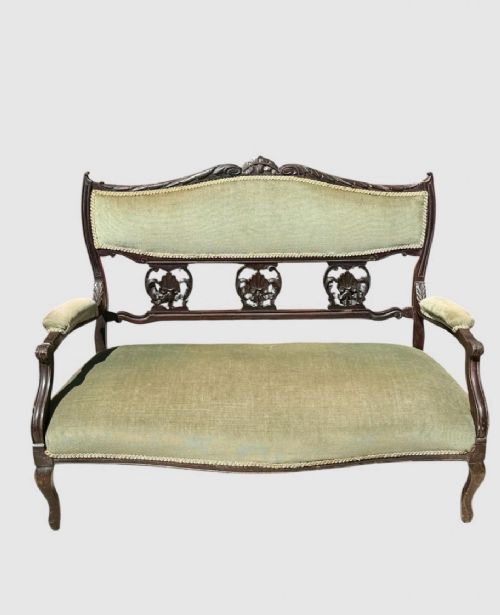


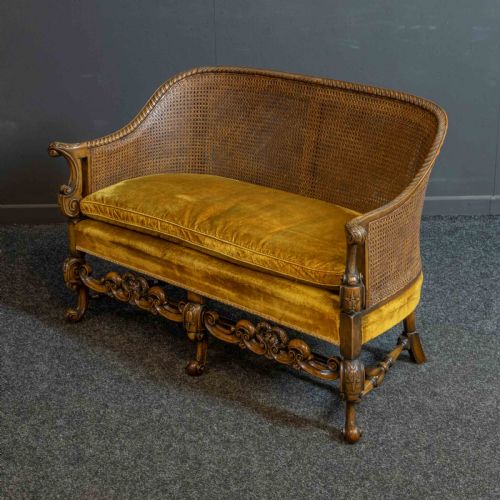

Antique Double Chairback Settee
These antique double chairback settee examples are timber-framed seats uniting two backrest units, offering structured comfort shaped by centuries of revival design.
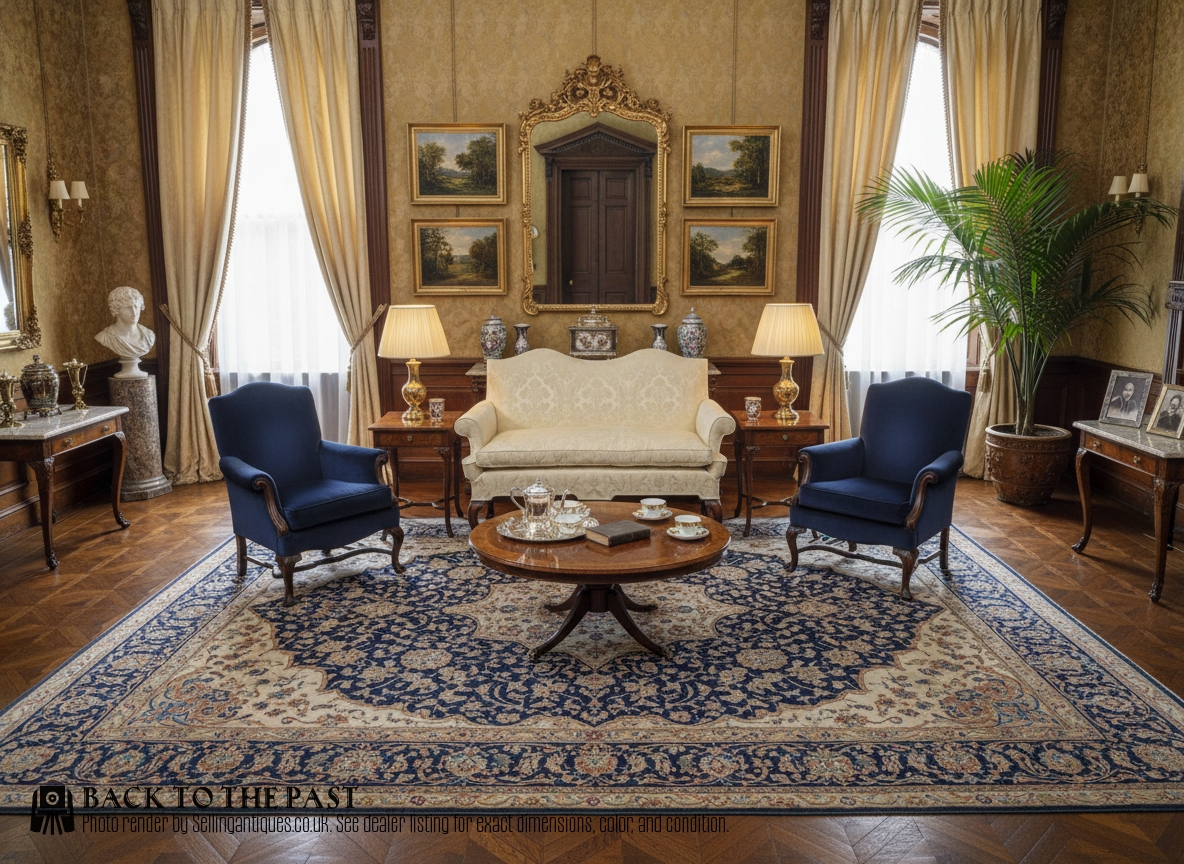
Antique Double Chairback Settee
An antique double chairback settee combines two distinct chair-like backrests within a single timber frame, designed to seat multiple people. The pieces seen here span from the eighteenth century through the Victorian, Edwardian, and early twentieth-century periods.
Most examples on this page are Victorian or Edwardian interpretations of earlier historic styles, including Queen Anne, George II, and William and Mary revivals. They appear under various descriptions such as settees, sofas, couches, and window seats.
Makers utilised resilient hardwoods to construct these forms, pairing sturdy frames with upholstered seats and backs. The resulting furniture serves domestic living spaces with distinct architectural presence and varied upholstery choices.
How they were made
Frames are constructed from solid hardwoods such as mahogany, walnut, rosewood, and oak, chosen for structural stability and rich grain. Carpenters employed carved and turned techniques to shape timber elements into distinct chairback profiles.
Upholstery methods involved textile coverings like fabric, velvet, and damask fabric applied over padded seat bases. Brass components occasionally supplemented the wooden framework to secure structural or decorative elements.
Listings on this site feature frames constructed from mahogany, walnut, rosewood, and oak across multiple revival periods.
What varies in quality
The refinement of timber carving and turning marks the distinction between standard production and superior craftsmanship. Crisp execution of revival styles, whether Queen Anne or Victorian Rococo, demonstrates the artisan's skill.
The choice and execution of upholstery materials, from plain fabric to damask and velvet, reflect the original intended status of the seating. Heavier, more substantial hardwood frames provide greater structural integrity.
The Antique Double Chairback Settee Glossary
- Chairback settee
- A multi-seating bench featuring a backrest constructed to mimic two conjoined chair backs. This design was popular across various revival periods.
- Revival style
- A design movement looking back to earlier historical periods such as Queen Anne or William and Mary. These pieces reinterpret past aesthetics using contemporary manufacturing methods.
- Damask fabric
- A reversible figured textile traditionally utilised for upholstery. It provides a patterned surface texture distinct from plain velvet or standard fabric.
- Turned timber
- Wood shaped on a lathe to create cylindrical, spiral, or baluster-like supports. This technique defines many legs and stretchers on these frames.
Antique Double Chairback Settee: Frequently Asked Questions
What is a double chairback settee?
A double chairback settee is a wooden bench whose backrest is visually and structurally divided into two distinct chair forms. This design draws inspiration from eighteenth-century seating arrangements.
Such pieces provide compact seating while maintaining the detailed woodwork associated with individual chairs of the period.
How do I date these settees?
Dating relies on identifying the primary wood species, construction techniques, and stylistic revival markers present in the frame. Victorian and Edwardian makers frequently adopted styles from the eighteenth century and earlier.
Examining the turning, carving style, and upholstery remnants helps place the piece within periods ranging from the eighteenth century to the early twentieth century.
Where were these settees used?
These settees served primarily in formal reception rooms, parlours, and domestic drawing rooms as secondary seating. Window seats and couches also occupied hallways or bedroom spaces.
Their decorative backrests made them suitable for placement against walls where the profile remained fully visible.
What woods were used for frames?
Framing timbers predominantly include mahogany, walnut, rosewood, and oak selected for their density and finish. Cabinet makers matched these woods to the prevailing fashion of each era.
Dark hardwoods support the intricate carved and turned details seen across Victorian and Edwardian examples.