
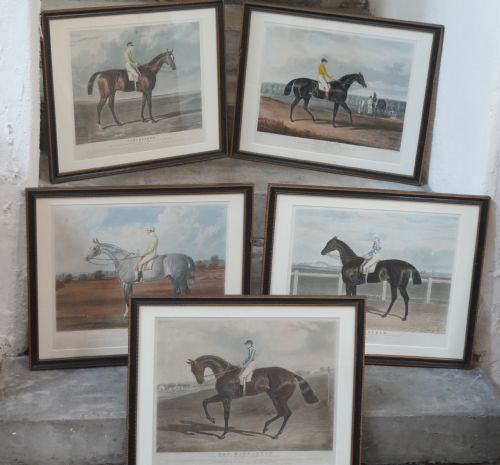


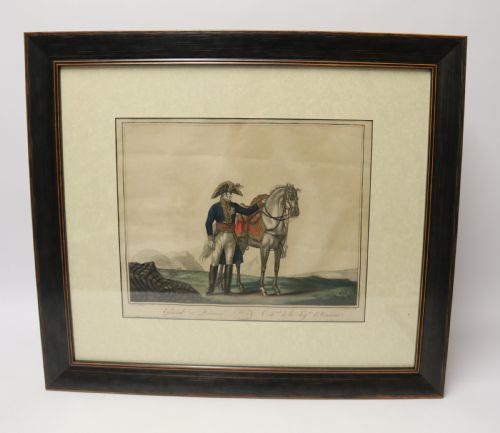


19th Century Horse Print
A 19th century horse print brings the motion and energy of the Victorian sporting world directly onto the wall.
19th Century Horse Print
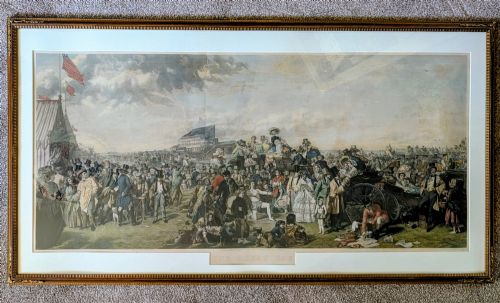
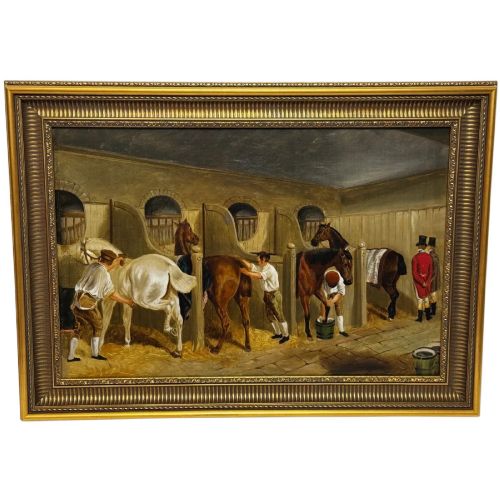
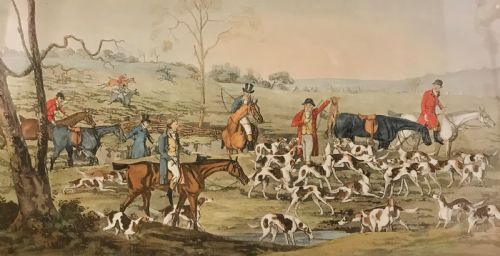
A 19th century horse print encompasses framed engravings, lithographs, aquatints, and oil paintings that capture equestrian subjects from the period. Buyers meet Victorian racing scenes, hunting studies, and individual portraits set within period frames of gilt wood or maple.
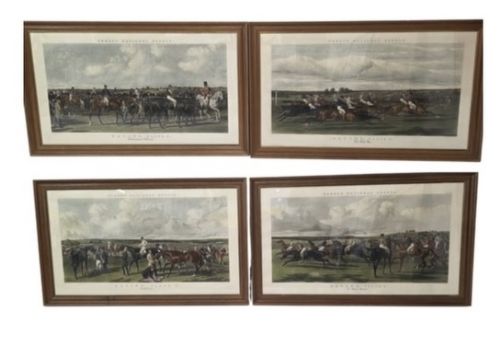
The selections span British and American publishing traditions, featuring works after artists such as William Powell Frith and Thomas Worth. These pieces range from single sheet engravings to sets documenting steeplechases, meets, and rural coaching routes.
How they were made
Makers produced these works on paper using ink, watercolour washes, and lithographic or aquatint plates. Many examples received hand colouring after printing to heighten the detail of the jockey silks and landscape backgrounds.
Framing utilised wood, glass, and gold leaf to protect the paper works, while oil paintings relied on canvas stretched over wooden supports. Artisans mounted engravings and lithographs within period frames that often featured decorative gilt mouldings.
Nineteenth-century racegoers sometimes smuggled folding periscopes onto the Derby grounds to peer over the enormous hats blocking their view of the horses.
What varies in quality
Quality rests upon the crispness of the impression on the paper and the precision of any hand applied colour. Stronger plates yield sharper lines in the depiction of horse anatomy and rider posture.
The integrity of the framing materials and the survival of the original paper surface dictate the standing of the piece. Intact margins, clear publisher details, and period frames preserve the historical context of the work.
William Powell Frith·Charles Faulkner·Victor Adam·Thomas Worth
The 19th Century Horse Print Glossary
- Aquatint
- An intaglio printmaking technique that produces areas of tone resembling watercolour washes. It was frequently utilised for sporting prints to render soft atmospheric skies and landscapes.
- Chromolithograph
- A multicoloured planographic print produced without hand colouring. This technique allowed publishers to issue bright, detailed coaching and racing scenes.
- Lithograph
- A print pulled from a flat stone or metal plate treated to retain ink only in the desired design. The method allowed artists to capture flowing lines in galloping horse subjects.
- Engraving
- An image incised directly into a metal plate with a sharp tool to hold ink. These prints offer exceptional fine line detail suited to architectural and equestrian subjects.
- Gilt wood
- Wood carved and coated with gold leaf or metallic paint. It frames many Victorian artworks to provide a reflective border.
19th Century Horse Print: Frequently Asked Questions
How do I care for an antique paper print?
Keep the framed work away from direct sunlight to prevent the ink and paper from fading over time. Maintain a stable indoor environment to protect the paper and original backing materials from moisture.
Ensure the glass remains secure in its rebate and avoid placing the piece on damp exterior walls. Professional framing with acid-free materials safeguards the longevity of the sheet.
Are these prints usually found in sets?
Publishers frequently issued sporting subjects in numbered series, such as sets of four or six racing and hunting plates. Surviving matched groups remain desirable for collectors seeking complete published sequences.
Individual plates also appear independently, having been separated from their original folios or framed individually by past owners. Both single sheets and multi-part sets circulate in the market.
What framing styles accompany these prints?
Period presentation often involves gilt wood frames, sometimes paired with glazed mounts to protect the delicate paper surface. Simple maple timber mouldings also appear on nineteenth-century American and British examples.
The choice of frame typically reflects the framing conventions of the decade in which the print was published or re-issued.
How can I distinguish lithographs from engravings?
An engraving displays fine, sharp lines pressed into the paper surface under high pressure, often leaving a distinct platemark impression around the image. Lithographs present a smoother ink surface without the indented plate edges characteristic of intaglio printing.
Examining the image under magnification reveals the microscopic dot patterns or flat ink application unique to each technique.