


Victorian Caricature Lithograph
These victorian caricature lithograph works capture public figures with biting wit, offering collectors a sharp visual record of past societies.
Victorian Caricature Lithograph
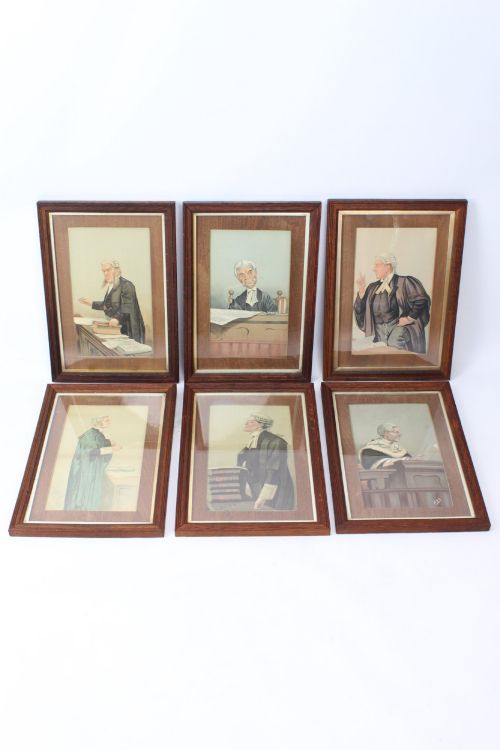
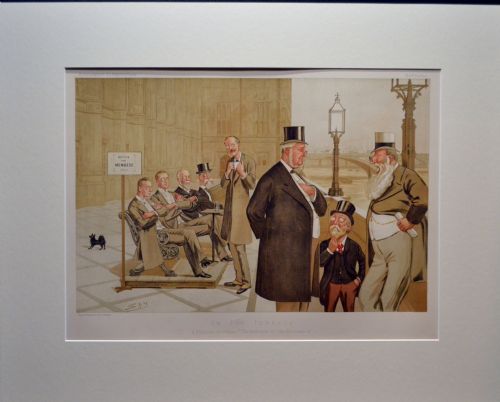
A victorian caricature lithograph delivers satirical portraiture from the nineteenth century and subsequent Edwardian decades. These works focus predominantly on political figures, royalty, military officers, and legal professionals.
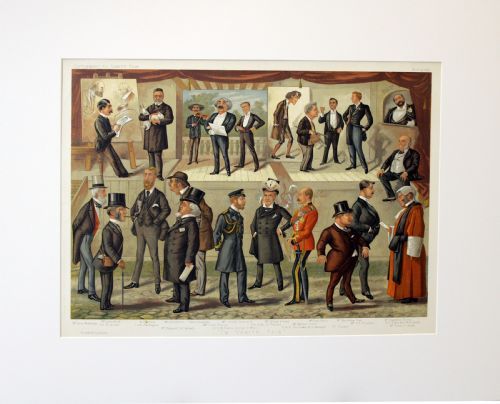
Buyers encounter single sheets, double-page spreads, and framed sets depicting prominent men of the day. The imagery relies on exaggerated physical traits to amuse and comment upon contemporary status.
Drawn chiefly from period periodicals and separate plate publications, these prints span Victorian, Edwardian, and nineteenth-century American origins. Framed variations dominate the current selection alongside loose double-page examples.
Materials and production
Lithography forms the primary printing technique, utilising inked stones or plates to transfer detailed caricature illustrations onto paper and card stock. Chromolithography introduces vibrant colour layers to specific double-page prints.
Works are preserved using paper, cardboards, and mount boards, often framed behind glass with wood or metal mouldings. The combination of black ink lines and applied pigments defines the visual texture of these satirical plates.
Listings feature paper, cardboard, mount board, wood, glass, and metal materials across Victorian and Edwardian periods.
Factors of quality
The crispness of the original lithographic line and the registration of colour application dictate visual clarity. Impressions taken early in the print run exhibit sharper detail across facial expressions and attire.
The condition of the paper and mount board affects overall presentation, with unfaded pigments and clean margins commanding greater interest. Completeness also matters, particularly for multi-part sets and unfolded double-page spreads.
The Victorian Caricature Lithograph Glossary
- Chromolithography
- A multicolour printmaking process that uses multiple stones or plates to build up vivid hues. This technique brings rich colour to double-page periodical plates.
- Lithography
- A planographic printing method based on the repulsion of oil and water upon a flat surface. It allows artists to render expressive caricature lines with precision.
- Spy
- The pseudonym used by artist Leslie Ward for his iconic satirical portraits published across decades. His subjects include prominent political and social figures of the era.
- Double-page
- A print format spanning two joined pages within a periodical publication, often featuring larger group gatherings or expansive scenes. These sheets require careful unfolding to preserve the central fold.
- Mount board
- Heavy paperboard used to frame and support artworks behind glass. It separates the print surface from the glazing material.
Victorian Caricature Lithograph: Frequently Asked Questions
What is a victorian caricature lithograph?
These works are satirical portrait prints produced during the nineteenth and early twentieth centuries, capturing notable public figures with humorous exaggeration.
They serve as historical records of social and political life through distinctive artistic illustration.
How were these prints originally published?
Many plates appeared as weekly supplements or special inserts within period satirical magazines and journals.
Publishers distributed them both as single sheets and unfolded double-page spreads for subscribers.
How should I display framed prints?
Keep framed artworks away from direct sunlight to protect the paper and printed pigments from fading over time.
Ensure mounting materials are acid-free to maintain the integrity of the antique paper.
How do I identify the printing period?
Examine the paper stock, printing style, and associated subject matter alongside any visible publication dates.
Stylistic shifts between Victorian and Edwardian examples offer clear clues to their exact era of production.