



Framed Satirical Print Art
Framed satirical print art captures the biting wit and social commentary of past centuries, offering buyers a window into historical humour and character study.
Framed Satirical Print Art
When you search for framed satirical print art, you encounter works spanning the Georgian, Victorian, and 19th-century periods alongside early 20th-century examples. These pieces typically take the form of antique prints, engravings, and chromolithographs enclosed behind glass.
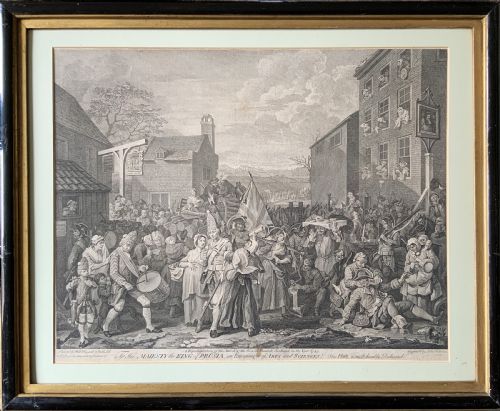
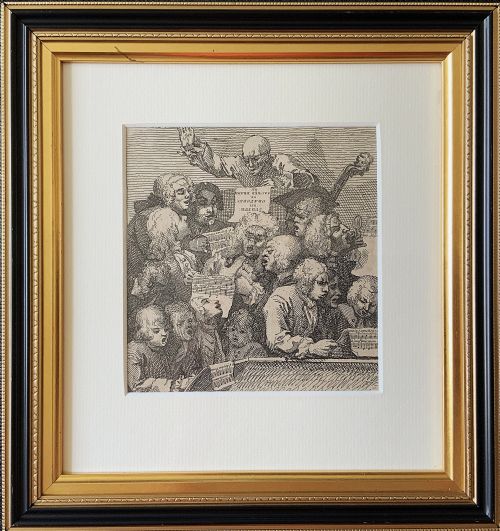
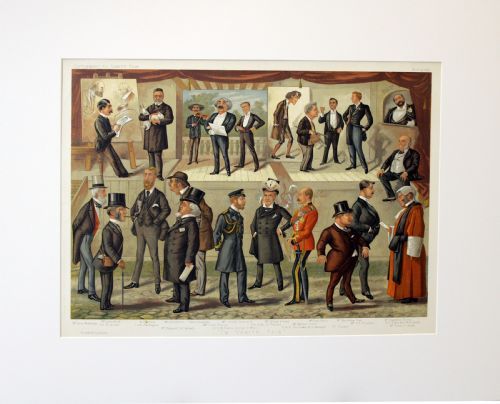
The selections on this page lean heavily towards historical caricatures and political commentaries, including works after William Hogarth and prints by cartoonists associated with Vanity Fair. Buyers frequently find framed groupings, such as sets of Spy prints or scrapbook pages featuring armorials and caricatures.
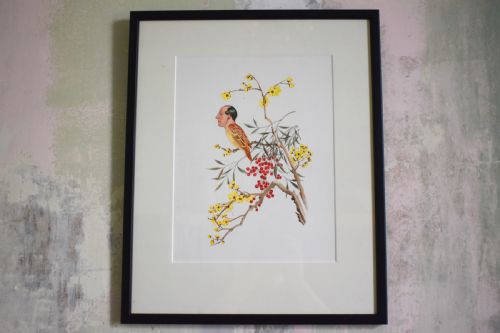
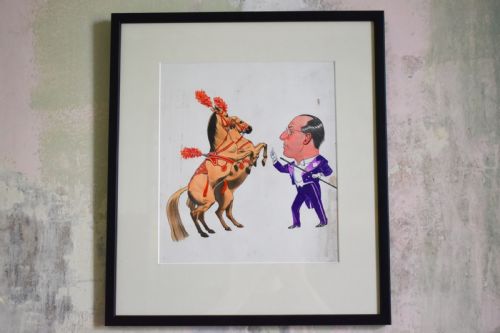
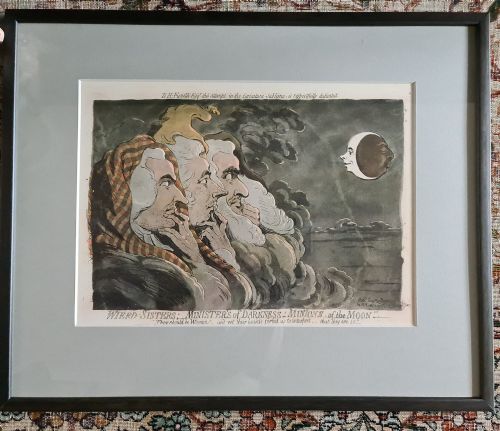
Origins stretch from British satirical traditions involving artists like Henry William Bunbury to 19th-century American political prints by Thomas Worth. Alongside standard paper prints, the inventory includes unique cartoon watercolours and hand-coloured stipple engravings.
Materials and methods
The physical construction of these pieces relies primarily on paper, ink, and watercolour housed within wooden frames under glass. Many early examples utilise detailed copperplate engraving techniques, while later Victorian works employ chromolithography to achieve richer colouration.
Framing materials often consist of timber such as maple, protecting the delicate paper surfaces from environmental damage. Hand-colouring frequently appears on stipple engravings and etchings, adding individual touches to the printed ink foundations.
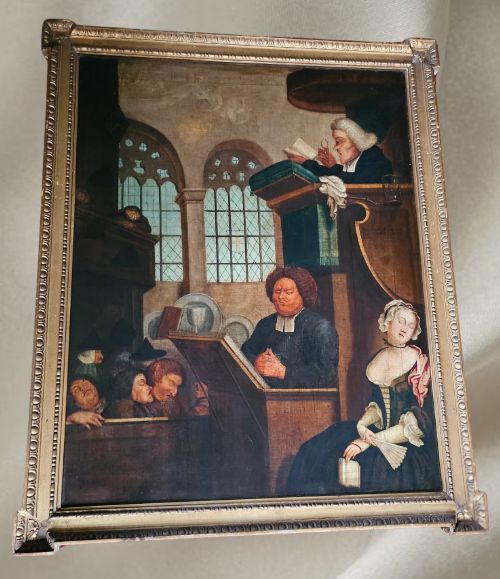
Cannibals, sleeping churchgoers, and jumping in sacks all share wall space here.
Assessing the range
Quality differences in framed satirical print art hinge upon the directness of the printing lineage and the execution of any hand-colouring. Early impressions pulled directly from plates during an artist's lifetime command greater regard than later 19th-century copies or mechanical reproductions.
The preservation of the paper and the clarity of the ink lines dictate the visual impact of the piece. Additionally, period framing choices, such as original maple mouldings, contribute to the overall integrity of the finished wall art.
William Hogarth·Luke Sullivan·Thomas Worth·Henry William Bunbury
The Framed Satirical Print Art Glossary
- Engraving
- A printmaking process where an artist cuts lines directly into a metal plate to hold ink. This technique allows for fine detail and sharp contrasts in historical satirical works.
- Chromolithography
- A planographic colour printing method using multiple stone slabs for each hue applied. It produced vibrant Victorian periodical inserts and caricature plates.
- Etching
- A method where acid bites lines into a metal plate covered with an acid-resistant ground. It yields fluid, expressive lines common in caricatures.
- Stipple engraving
- A technique using dots rather than lines to build up tone and image form. This method was frequently hand-coloured afterwards.
- Caricature
- A rendered portrait or scene exaggerating its subjects for comic or satirical effect. It forms the core subject matter of these framed artworks.
Framed Satirical Print Art: Frequently Asked Questions
What periods do these satirical prints come from?
The listings span several centuries, with a strong representation of Georgian and 18th-century plates alongside 19th-century and Victorian items.
Later pieces extend into the 1920s and 1930s, including early 20th-century illustrations and cartoon watercolours.
How were these satirical artworks originally displayed?
Many of these pieces began life as book illustrations, periodical inserts like Vanity Fair, or separately published sheets before being mounted behind glass.
Owners often housed them in wooden frames, such as maple, to protect the fragile paper from handling.
Are these pieces hand-coloured?
Some items, such as specific stipple engravings and watercolours, feature applied pigment over the printed ink lines.
Other examples rely purely on monochrome ink printing or chromolithographic colour processes.
What subjects appear in these frames?
Subjects range from political commentary and social satire to theatrical scenes and military caricatures.
Artists targeted everyday vices, political figures, and cultural archetypes of their respective eras.