




19th Century Harbour Scene
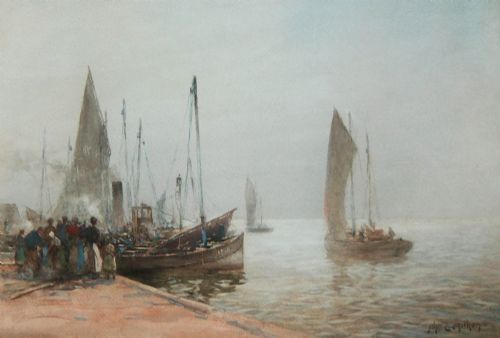
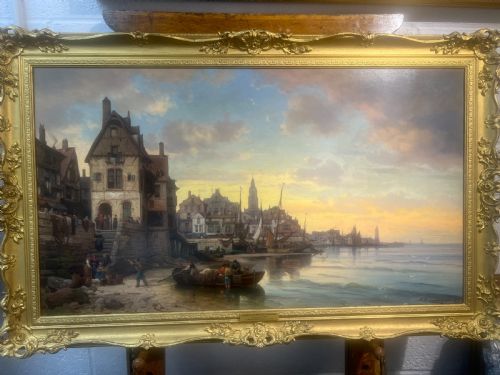
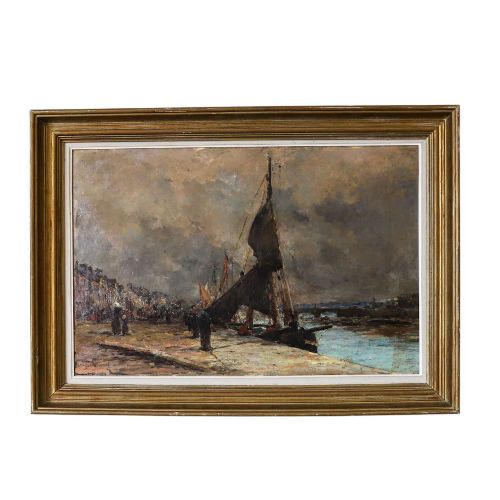
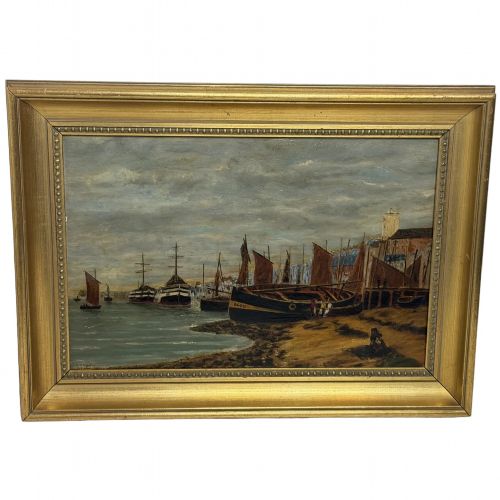
A 19th century harbour scene captures the bustling maritime life of the era through enduring oil and watercolour depictions.
19th Century Harbour Scene
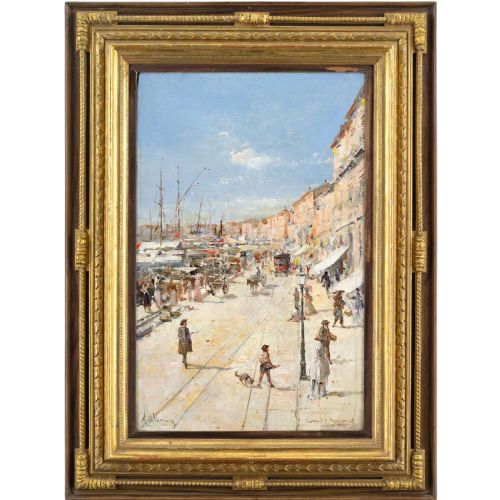
A 19th century harbour scene depicts maritime life, quaysides, and coastal shipping created during the Victorian period and surrounding decades. These works span British coastal locations like Whitby and St Ives alongside continental ports in Italy and France.
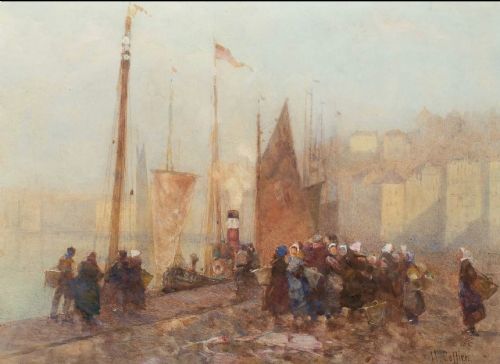
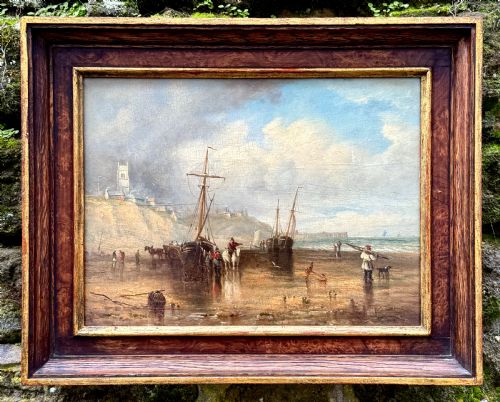
The format most frequently encountered on this page is the framed oil painting on canvas or panel, followed closely by detailed watercolour paintings on paper. Subjects range from busy fishing fleets landing their catch to quiet moonlight views of lighthouses and moored sailing yachts.
Compositions often incorporate local architecture, such as abbeys or townscapes overlooking the water, alongside figures engaged in quayside labour. Artists of the period focused heavily on capturing changing light conditions and atmospheric coastal weather.
How They Were Made
Painters utilised oil paint on stretched canvas or wooden panels to build rich textures and deep tones for dramatic maritime lighting. Watercolour was applied to paper using fluid washes and precise brushwork to capture the translucent qualities of sea and sky.
Many surviving works are housed within their original or period-appropriate gilt wood and giltwood frames, which enhance the visual depth of the artwork. Hand-enamelled polychrome frames also appear among the watercolour selections, demonstrating bespoke framing choices of the period.
Several artists clearly braved the nocturnal chill, capturing moonlight glinting off harbour waters and lighthouse beams.
What Varies In Quality
The capability of the artist to render accurate maritime architecture, rigging, and vessel proportions dictates the artistic merit of each painting. Stronger works demonstrate a confident command of light and atmospheric perspective across the water.
The preservation of the paint surface and the paper support influences the visual integrity of the piece over time. Original gilt frames that complement the painting without replacement also contribute to the overall historical coherence of the object.
Edward Mills·James E. Aitken·William Banks Fortescue·Augusto Alberici·Hector Caffieri·Thomas Creswick·Charles Euphraisie Kuasseg·William Edward Webb·James Kyd·Arthur Tucker·Adrian Van Porten·T.S. Wallis·James Webb·James Thomas Watts·Kate E Booth·Jan van Couver·Sir Edwin Landseer·John Callow·Gustave De Breanski·Thomas Clavering Alder·Jane Vivian·Lennard Lewis·Frank Rousse·William Collins·Hubert Thornley
The 19th Century Harbour Scene Glossary
- Seascape
- A work of art depicting the sea, ships, or coastal views. These pieces form the primary category for maritime paintings.
- Watercolour
- A painting method where paint is made of pigments suspended in a water-soluble vehicle. Artists used this medium on paper to capture translucent coastal effects.
- Giltwood
- Wood carved and covered with a thin layer of gold leaf. This material frequently frames 19th-century oil paintings.
- Panel
- A flat piece of wood used as a support for oil painting instead of canvas. Painters favoured panels for smaller, detailed coastal studies.
19th Century Harbour Scene: Frequently Asked Questions
Where were these scenes usually painted?
Artists worked across various British coastal towns including Whitby, Scarborough, and St Ives, alongside continental European ports in Italy and France.
Many painters travelled to active fishing harbours to record local vessels, quayside workers, and maritime architecture directly from life.
How do I identify a watercolour from an oil painting?
Watercolours are painted on paper and typically displayed under protective glass within a framed mount. They rely on translucent washes of pigment to create lighter, more luminous atmospheric effects.
Oil paintings utilise heavier paint layers applied to canvas or wood panels, often showing visible brush texture and deeper colour saturation without glass.
Are these paintings usually signed by the artist?
Many works bear visible signatures or initials from the period artist, sometimes accompanied by a dated year. Others remain unsigned but are attributed through distinct stylistic traits and subject matter.
Archival details and framing inscriptions frequently help confirm the origin and creator of the maritime scene.
How should I care for a 19th century painting?
Keep artworks away from direct sunlight and maintain stable indoor humidity to protect delicate canvas, paper, and wooden supports. Avoid using liquid cleaners on antique painted surfaces or gilt frames.
Professional framing conservation ensures that acidic backing materials do not damage watercolours over time.