
19th Century Gilded Porcelain
19th century gilded porcelain brings together rich enamel decoration and gold leaf across tea services, vases, and cabinet pieces from English, French, and German factories.
19th Century Gilded Porcelain
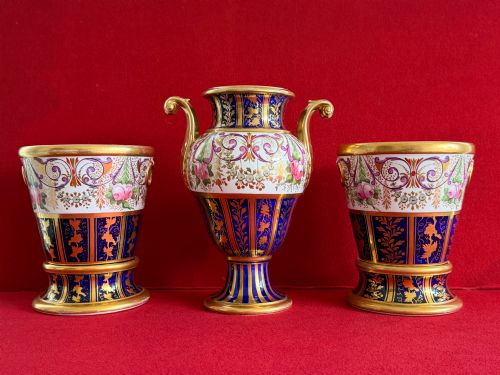
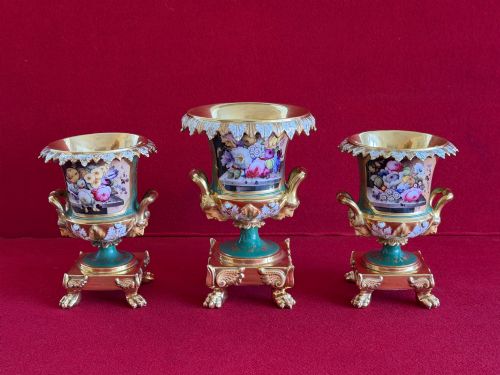
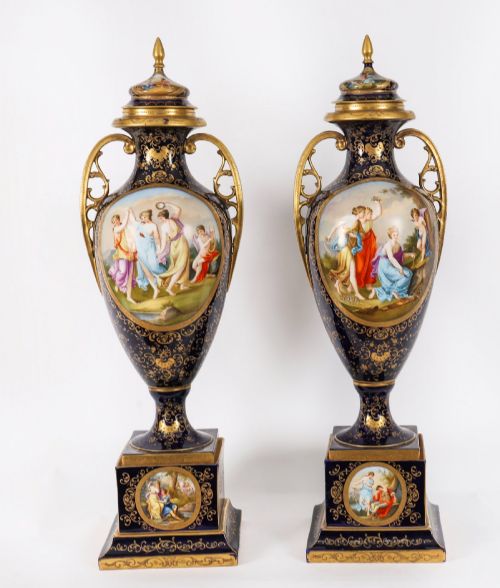
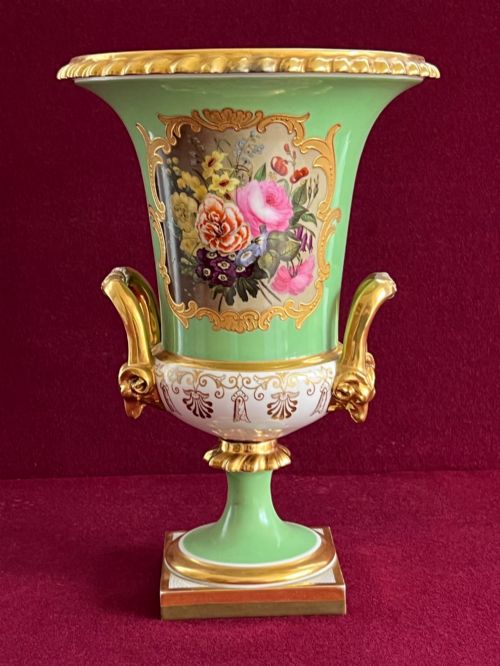
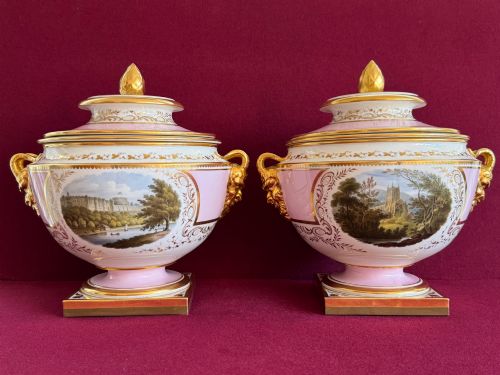
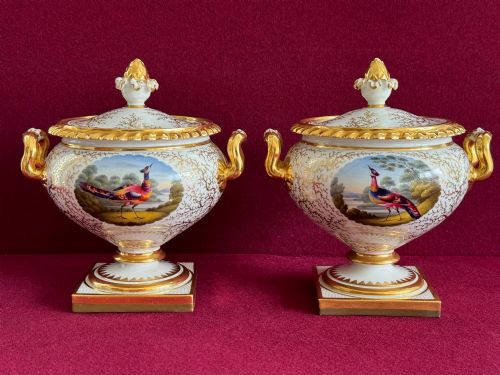
19th century gilded porcelain encompasses functional tableware and decorative display items produced during the Georgian, Regency, and Victorian periods. Buyers encounter tea cups, saucers, campana shape vases, cream tureens, and cabinet trios originating from prominent English works like Spode, Worcester, and Coalport, alongside continental factories.
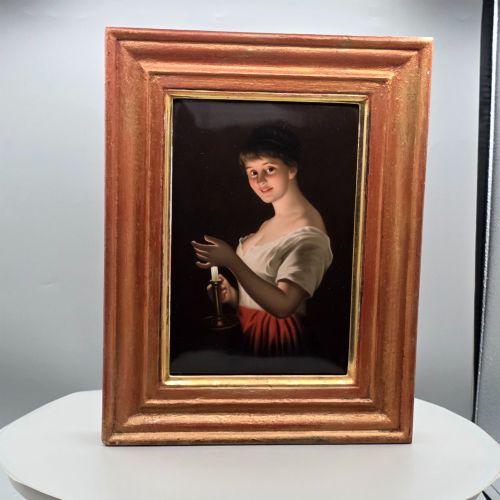
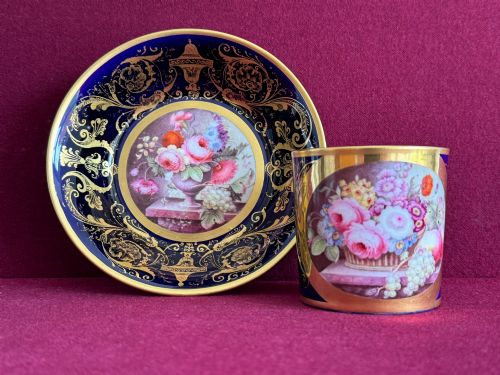
The selections span distinct stylistic movements including Rococo Revival, Neoclassical, and French Rococo Revival designs. Pieces range from delicate cabinet cups painted with botanical scenes to large armorial chargers, monumental wall mirrors, and porcelain figurines.
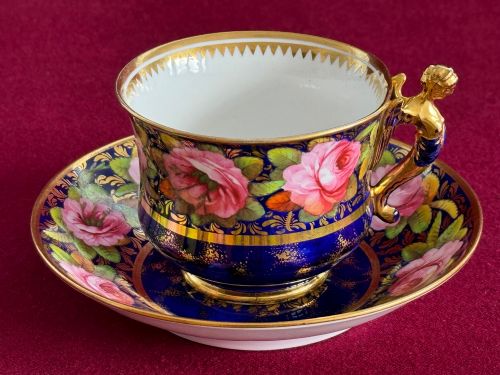
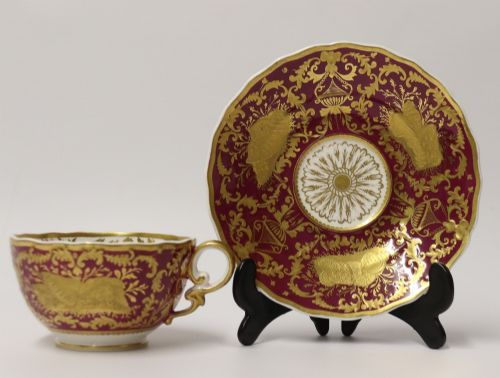
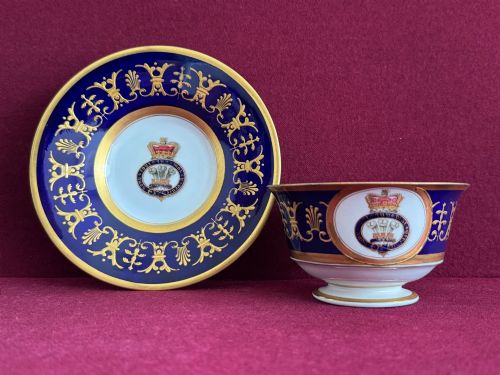
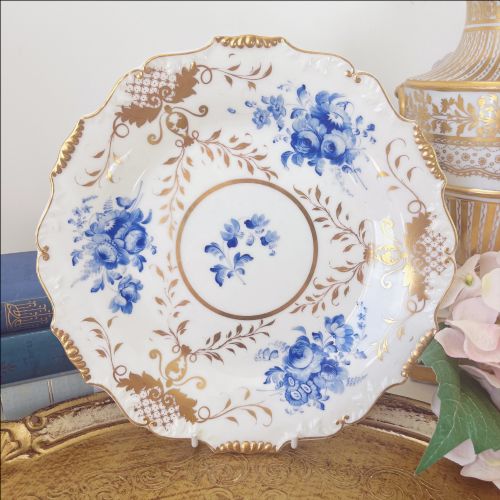
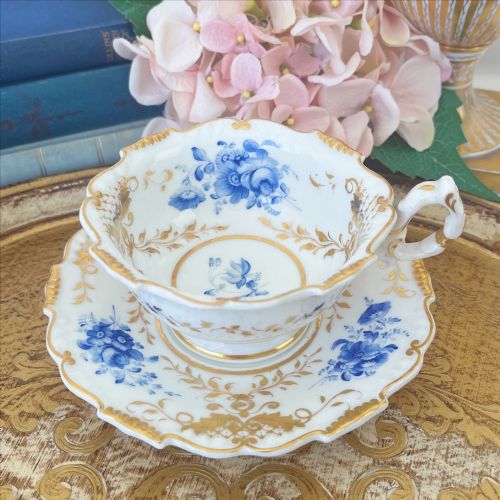
Makers utilised both hard-paste porcelain and bone china as foundations for elaborate surface decoration. Items frequently feature hand-painted bird or floral panels framed by heavy gold leaf gilding against cobalt blue, turquoise, or white grounds.
Materials and production techniques
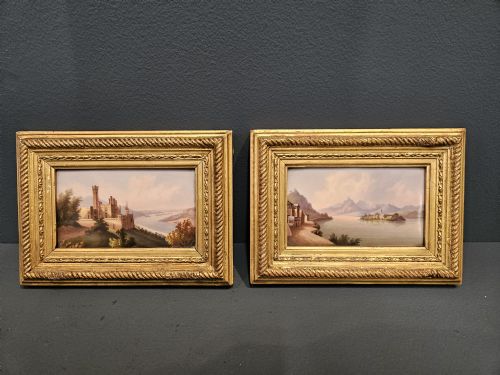
Potters shaped porcelain bodies using fine clay mixtures, bone china, and hard-paste porcelain, firing the pieces in kilns to achieve a durable white ceramic base. Artisans then applied enamel colours by hand, using mineral pigments for botanical studies, portraits, and scenic views.
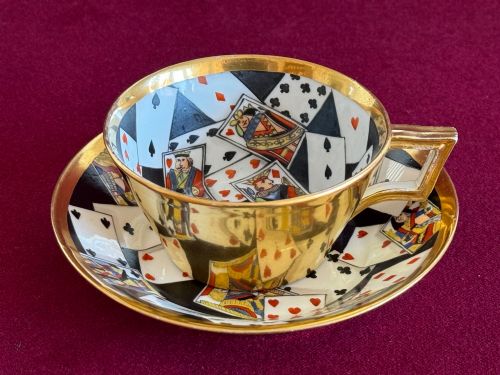
Gilding was applied using gold leaf or liquid gold preparations, which required secondary kiln firings to fuse the metal securely to the glaze. Many items incorporated gilt bronze or ormolu mounts to frame plates, mirrors, and clock casings.
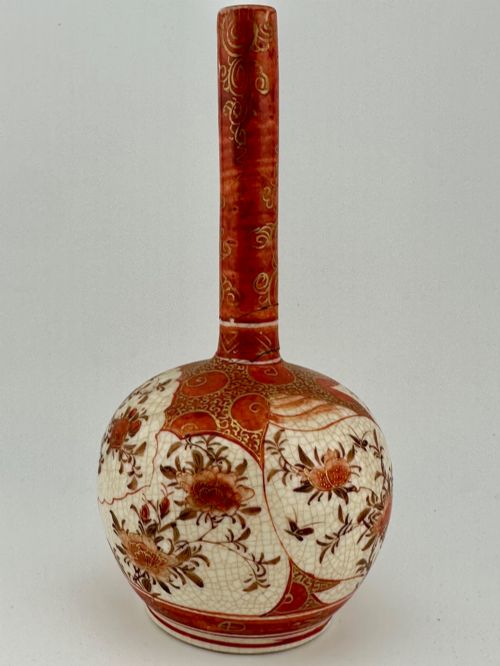
Listings feature 19th-century porcelain from English, French, German, and Japanese makers, utilising bone china and hard-paste porcelain.
Distinctions in quality
Quality rests upon the precision of the hand-painted brushwork and the purity of the porcelain body. Pieces decorated by named artists or produced during specific factory periods demonstrate superior artistic execution compared to standard commercial output.
The weight and depth of the gold leaf application define the upper tier of production. Richly chased and burnished gilding reflects meticulous craftsmanship, whereas thinner applications indicate simpler factory work.
Spode·Flight, Barr & Barr·Minton·H & R Daniel·Imperial Porcelain Factory·Coalport·Meissen·Samson of Paris
The 19th Century Gilded Porcelain Glossary
- Campana
- A bell-shaped vessel form commonly utilised for decorative vases and urns during the Regency period.
- Bone china
- A type of soft-paste porcelain containing animal bone ash, developed in England to improve strength and translucency.
- Gilding
- The application of gold leaf or powdered gold onto the ceramic surface to create metallic ornamentation.
- Tazza
- An elevated shallow bowl or dish used for serving desserts or displaying fruit on dining tables.
- Hard-paste porcelain
- A vitrified ceramic composed of kaolin and petuntse fired at high temperatures, offering high durability and a bright white surface.
19th Century Gilded Porcelain: Frequently Asked Questions
What are cabinet cups?
Cabinet cups are highly decorative teacups produced primarily for display in glass-fronted cabinets rather than daily use. They often feature intricate hand-painted scenes and heavy gilding.
These pieces typically arrived paired with matching saucers and represent the finest artistic output of period porcelain manufacturers.
How do I identify Regency pieces?
Regency porcelain is identified through classical Neoclassical shapes, campana urn forms, and rich enamel colour palettes combined with burnished gold leaf. Factory marks and pattern numbers painted on the base often confirm the era.
Many examples from this period reflect the influence of French design alongside traditional English botanical illustration.
Were these items used daily?
Most utilitarian items like teacups, saucers, and plates served wealthy households during formal dining and tea rituals. Their delicate bone china bodies and gold leaf decoration meant they required careful handling.
Larger items such as vases, urns, and garniture sets remained static decorative objects placed upon mantelpieces and sideboards.
What is a garniture?
A garniture is a matching set of three or more vases or urns designed to be displayed together on a mantelpiece or sideboard. They became popular decorative elements in 19th-century drawing rooms.
These sets feature graduated sizes while sharing identical decorative motifs, enamel colours, and gilding patterns.