
Gilded Saucer
When you search for a gilded antique saucer, you enter a world of hand-painted porcelain and precious gold leaf from centuries past.
Gilded Saucer
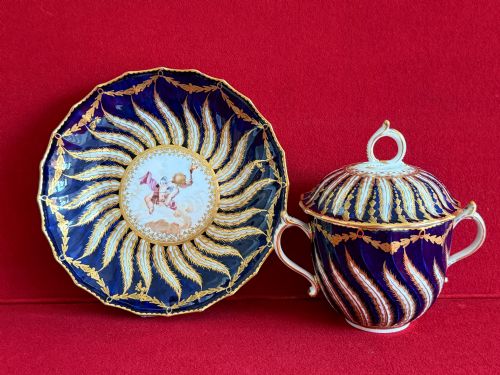
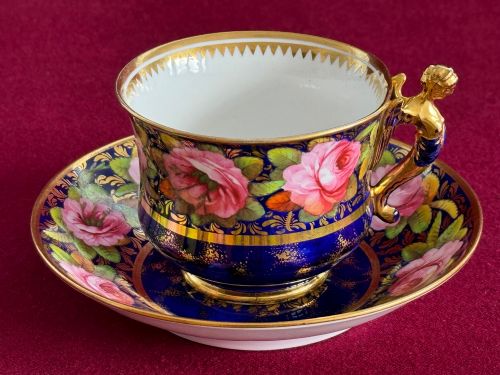
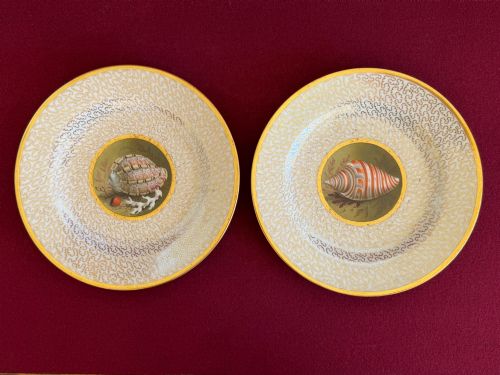
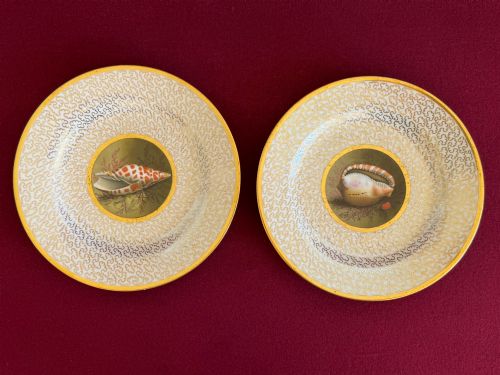
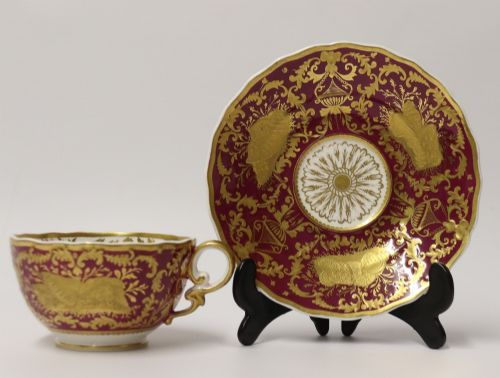
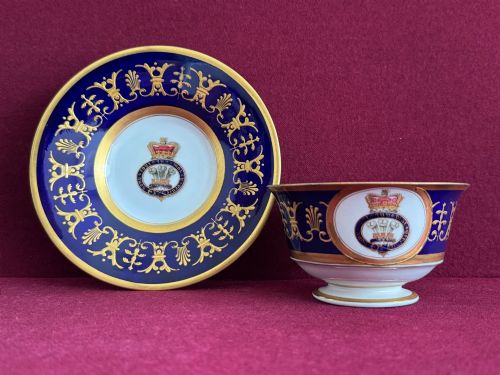
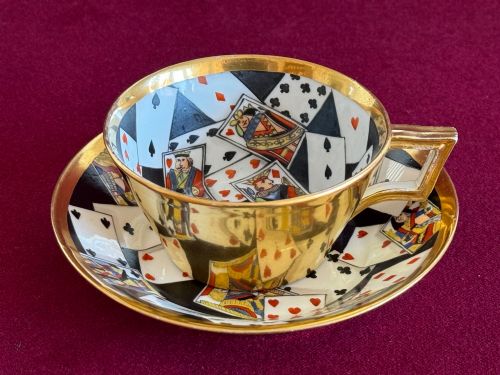
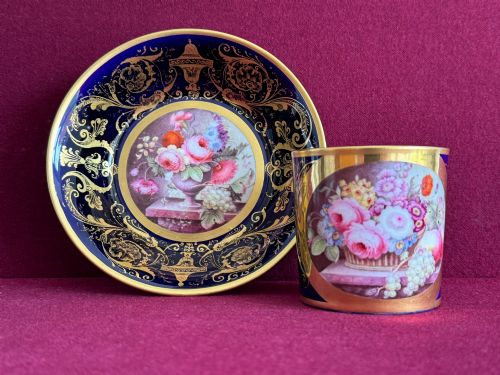
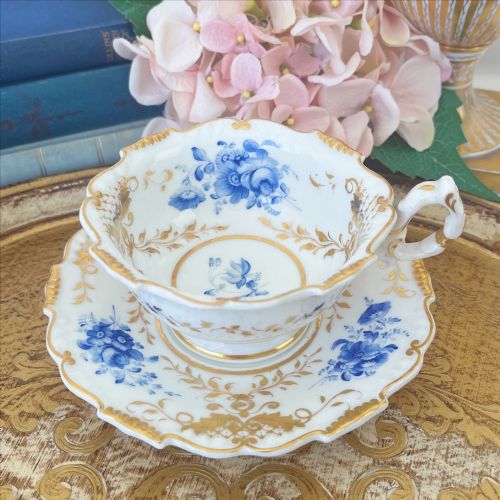
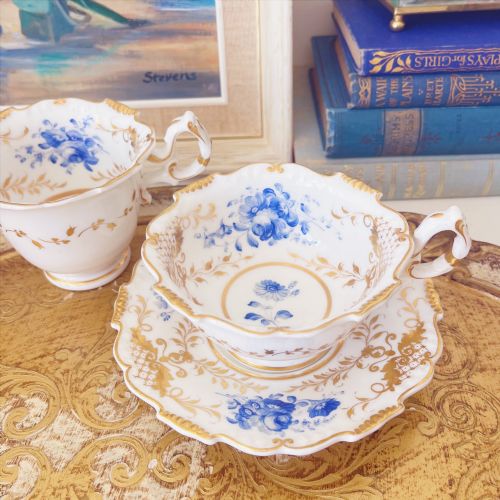
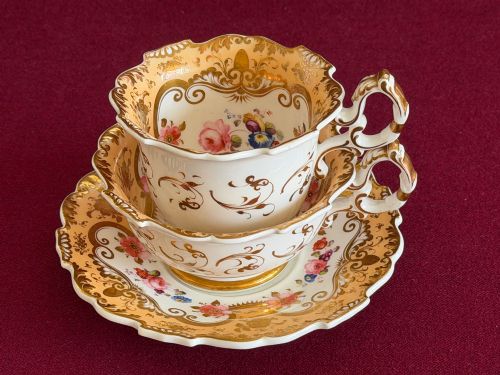
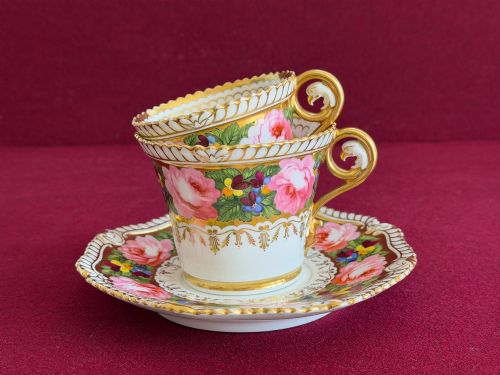
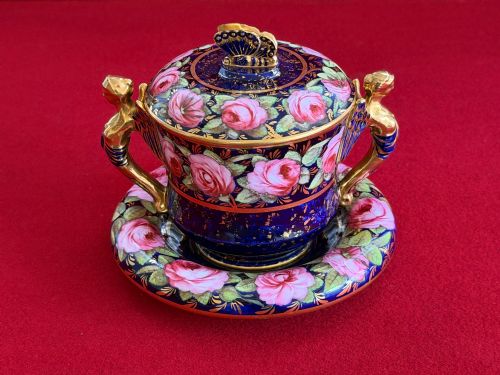
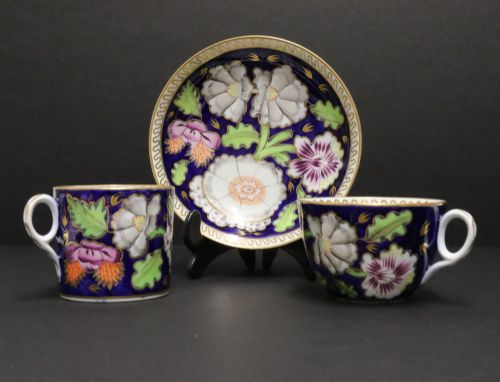
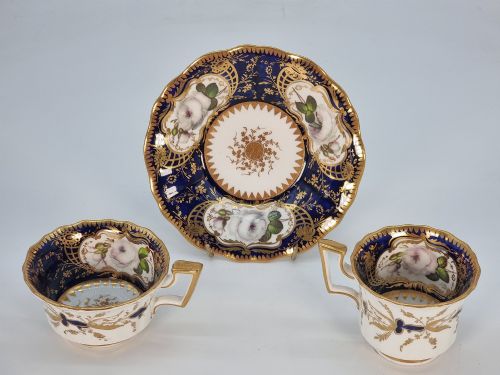
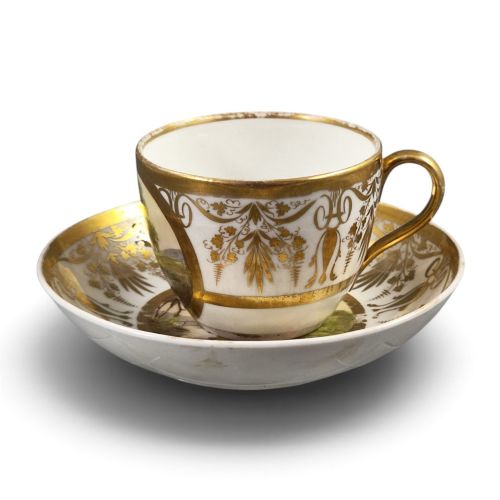
A gilded antique saucer is a small ceramic dish designed to hold a teacup, often surviving today as part of a larger service or as an individual cabinet piece. When searching for a gilded antique saucer, collectors encounter delicate porcelain forms spanning the eighteenth, nineteenth, and early twentieth centuries. The examples met most frequently on this page originate from English and European factories during the Georgian and Regency periods.
These pieces range from utilitarian tea wares to elaborate cabinet trios and decorative dishes featuring hand-painted landscapes, birds, or floral motifs. Many were produced by renowned potteries such as Worcester, Spode, and New Hall, often pairing bright enamel colours with rich gold leaf borders. Whether formed as a simple fluted tea bowl stand or an ornate lion mask handle coffee set component, each item reflects the prevailing neoclassical and revival styles of its era.
Materials and Techniques
Makers of these pieces relied primarily on porcelain, utilising hard-paste, soft-paste, and bone china bodies shaped by hand or moulded in specialised potteries. The ceramic body was fired, glazed, and then hand-painted with enamel colours before receiving its final decorative layer.
Gilding was applied using genuine gold leaf or gold gilt, meticulously brushed onto the porcelain surface and subsequently fired to bond with the glaze. Artisans frequently added burnished highlights to catch the light against white, green, or blue grounds.
Listings feature porcelain bodies ranging from eighteenth-century soft-paste to nineteenth-century bone china and hard-paste.
Distinctions in Quality
Quality in these ceramics rests on the precision of the hand-painted decoration and the crispness of the porcelain moulding. Superior pieces display finely detailed landscapes, exotic birds, or botanical studies executed by named artists, whereas lesser examples rely on standard transfer-printed outlines.
The application of the gold leaf also separates standard production from exceptional cabinet pieces. Thick, hand-chased gilding that retains its bright reflective quality indicates superior workshop standards, while thin or rubbed gold suggests heavy wear or less skilled initial application.
Spode·Barr Flight and Barr·Royal Flight Barr And Barr·Duesbury And Kean·Minton·H And R Daniel·Chamberlain Worcester·Newhall·Coalport John Rose·KPM Berlin·Rockingham·Grainger·Sevres·Royal Worcester
The Gilded Saucer Glossary
- Soft-Paste Porcelain
- An early ceramic composition fired at lower temperatures than hard-paste porcelain, creating a warm, creamy body that often reacts distinctively to light. It is frequently found in eighteenth-century English wares.
- Coffee Can
- A straight-sided cylindrical cup designed for drinking coffee rather than tea, commonly paired with a matching saucer in Regency and Georgian services.
- Enamel
- Opaque vitreous colours painted onto the glazed porcelain surface before a low-temperature firing fixed the design. These pigments provide the vibrant greens, pinks, and blues seen on period wares.
- Gilding
- The application of gold leaf or gold paste to the ceramic surface to create decorative borders, handles, and highlights. It is a defining characteristic of high-status dining services.
- Cabinet Trio
- A matching set comprising a teacup, a coffee cup, and a saucer intended for display in a collector cabinet rather than everyday use.
Gilded Saucer: Frequently Asked Questions
How were these saucers used?
These saucers served a practical function in formal dining, holding tea or coffee cups during social gatherings. In many historical settings, tea was poured from the cup into the saucer to cool before drinking.
Over time, many surviving pieces transitioned from functional table settings to decorative display items kept in cabinets or mounted on stands. Wealthy households utilised complete services for afternoon tea entertaining, matching cups and saucers with larger teapots and slop bowls.
How do I identify a Regency saucer?
Regency pieces typically feature bold neoclassical shapes, rich gilding, and vibrant enamel motifs influenced by contemporary French taste. Look for distinctive forms such as shell handles, lion masks, or deep cobalt blue and green grounds.
Factory patterns from this era often include painted or printed numbers on the underside. Comparing these design numbers with known factory records helps pinpoint the exact decade of manufacture.
Can I use antique saucers daily?
Using antique porcelain for daily dining is generally discouraged due to the fragile nature of soft-paste bodies and delicate overglaze gilding. Hand-washing in lukewarm water without harsh detergents is essential to preserve the historic enamel and gold leaf.
Most collectors prefer to display these items or reserve them for occasional special use. Modern dishwashers and microwaves will permanently damage the historic gold and hand-painted surfaces.