

19th Century French Armchairs
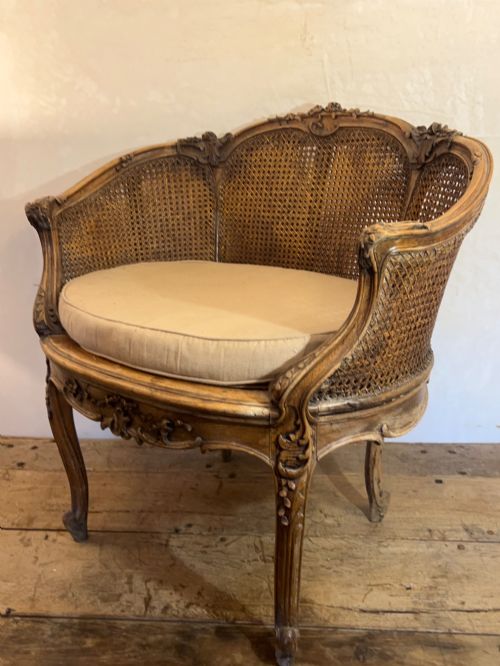
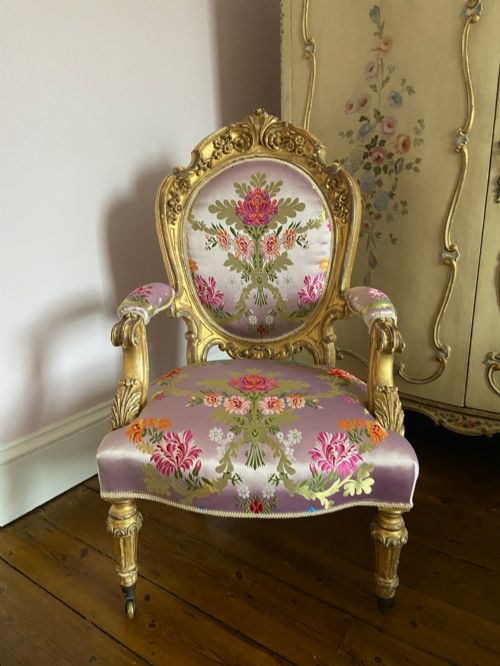
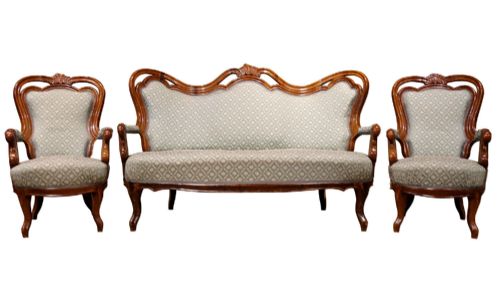
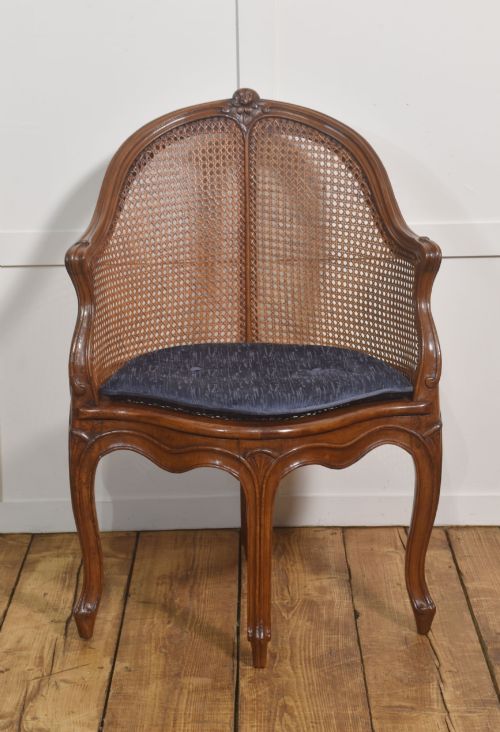
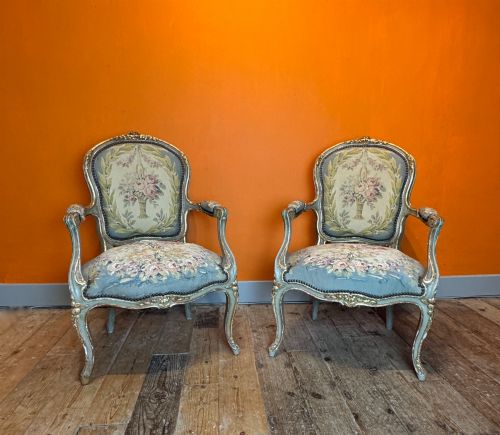
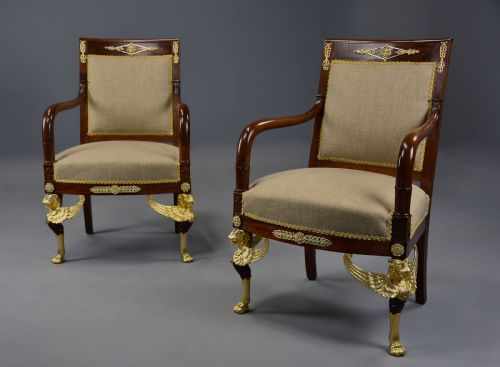
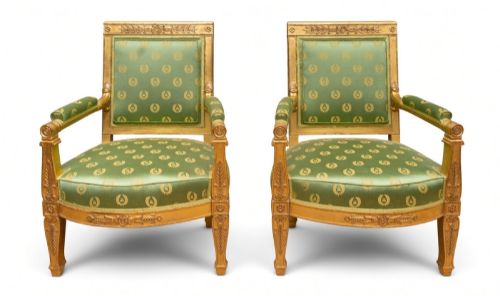
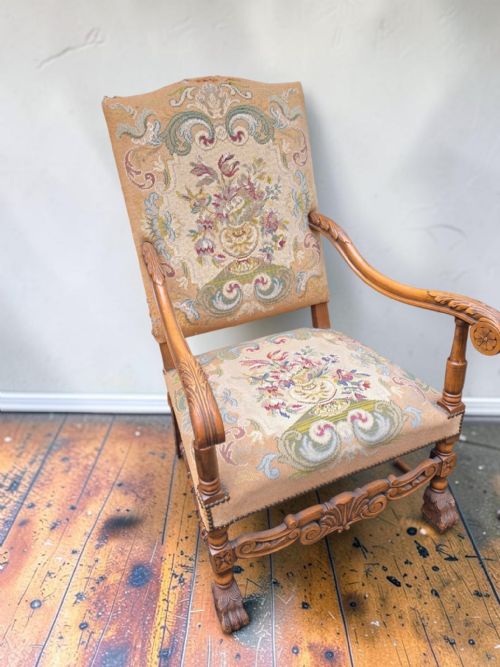
These 19th century french armchairs bring carved frames and period upholstery into a room.
19th Century French Armchairs
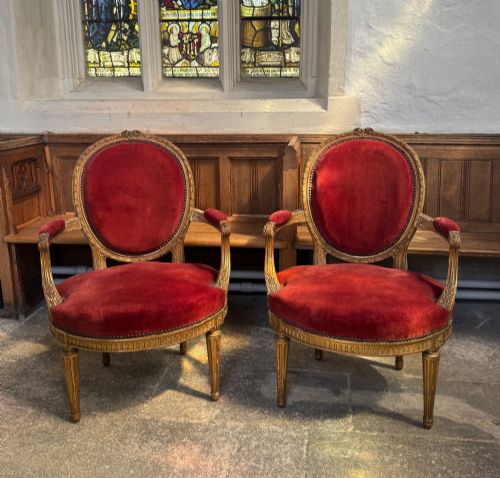
19th century french armchairs encompass substantial salon seating designed across the nineteenth century, including years around eighteen fifty and nineteen hundred. A buyer exploring this phrase encounters formal styles such as Louis XVI Revival and French Empire alongside simpler French Country forms.
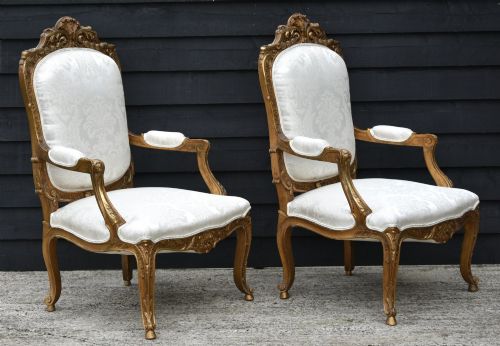
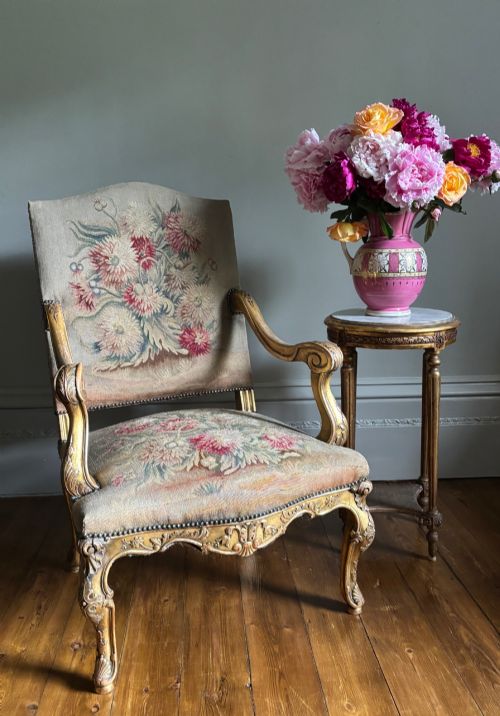
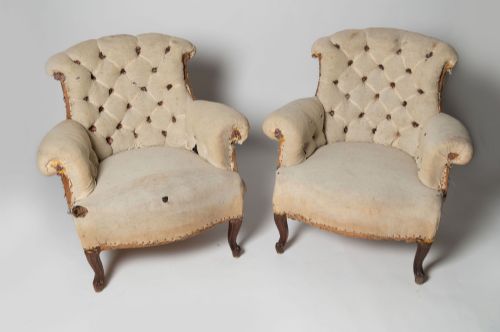
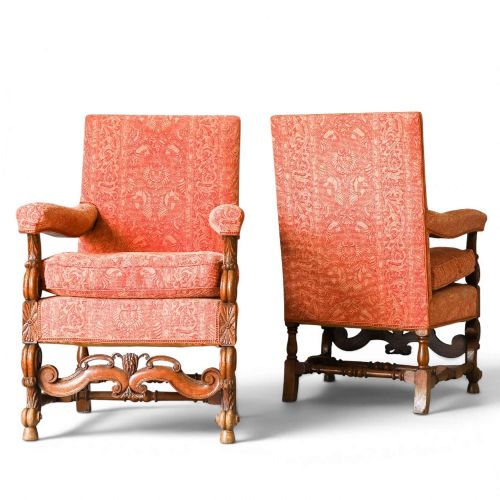
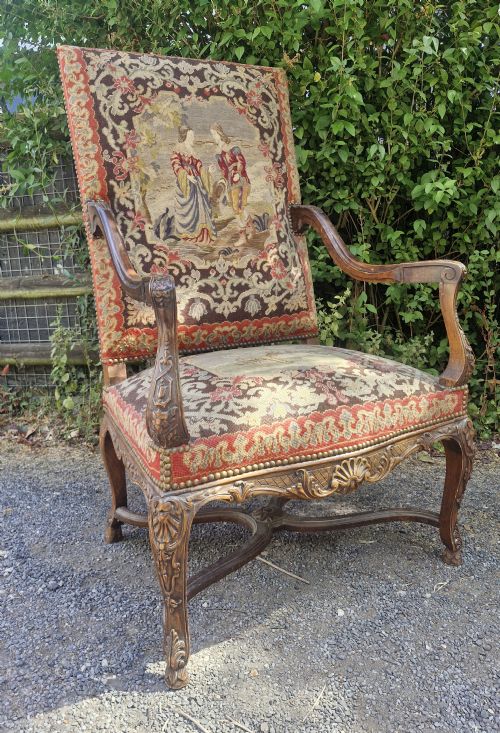
The evidence shows armchair frames built in pairs and sets, frequently retaining upholstery of tapestry fabric, hessian, and calico. Structural timbers vary from mahogany and walnut to beech, fruitwood, and ebonised wood.
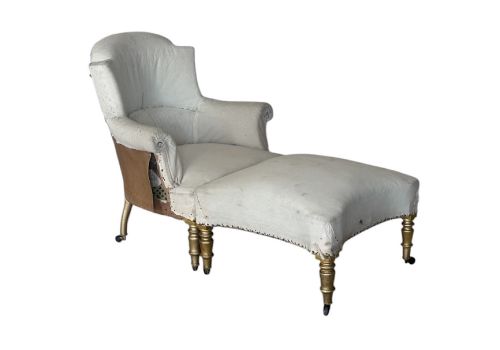
Open armchairs and square back armchairs dominate the selection, appearing alongside buttoned back examples and grand scale pieces with matching footstools. These seats reflect the changing stylistic revivals of nineteenth-century France.
How they were made
Cabinetmakers constructed these chair frames from hardwoods such as mahogany, walnut, oak, rosewood, and beech. Frames were frequently carved, painted, ebonised, or gilded, occasionally incorporating ormolu mounts.
Upholstery techniques involved supportive layers of hessian and calico beneath decorative top covers like tapestry fabric. Buttoned back treatments and reeded legs added decorative and structural detail to the finished seating.
Several armchairs come paired with their original matching footstools, ready for nineteenth-century relaxation.
What varies in quality
Quality rests in the crispness and depth of the carved wood frame, whether executed in walnut, oak, mahogany, or fruitwood. The distinction between standard production and finer work shows in the handling of painted, ebonised, or gilded surfaces.
The integrity of the original form, such as square backs, open arms, or pie crust details, dictates the character of the piece. Matching elements like footstools and integrated tapestry fabric further distinguish the upper tiers of surviving armchairs.
The 19th Century French Armchairs Glossary
- Fauteuil
- An open-armed upholstered armchair with an exposed wooden frame. This form became a staple of French seating design.
- Ormolu
- Gilded bronze mounted onto furniture as a decorative detail. It appears on Empire style pieces.
- Ebonised
- Timber treated to resemble ebony through staining or painting. This finish gives a dark, formal appearance.
- Tapestry fabric
- Heavy woven textile used for upholstery. It often depicts pictorial or floral scenes on period chairs.
- Reeded
- Timber shaped with parallel convex mouldings resembling bundled reeds. This technique decorates chair legs.
19th Century French Armchairs: Frequently Asked Questions
How do I identify French Empire armchairs?
French Empire armchairs display classical proportions and formal styling reflecting nineteenth-century design.
These pieces often utilise mahogany timber and clean architectural lines.
What is a Fauteuil armchair?
A Fauteuil is an open-armed French chair featuring an exposed wooden frame.
They combine structural woodwork with upholstered seat and back pads.
Are these armchairs sold in pairs?
The historical record shows that these armchairs frequently survive and sell in pairs.
Matching sets and individual armchairs also appear across the nineteenth-century periods.
What woods were used for frames?
Cabinetmakers utilised a range of timbers including walnut, mahogany, beech, oak, rosewood, and fruitwood.
Some beech frames received ebonised finishes or paint.