




19th Century Empire Clock
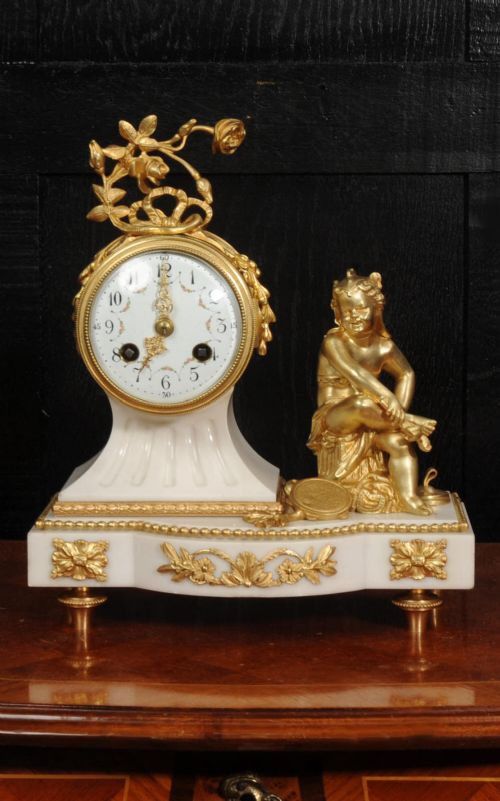
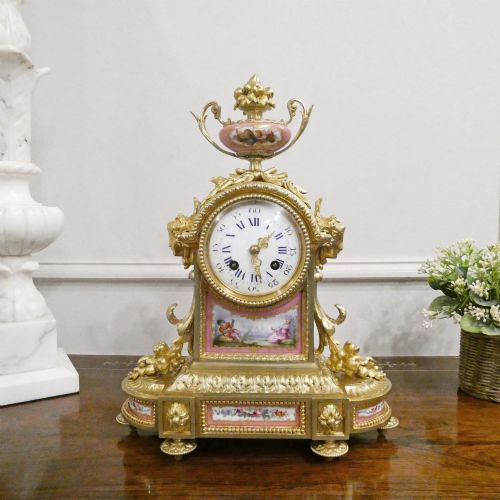
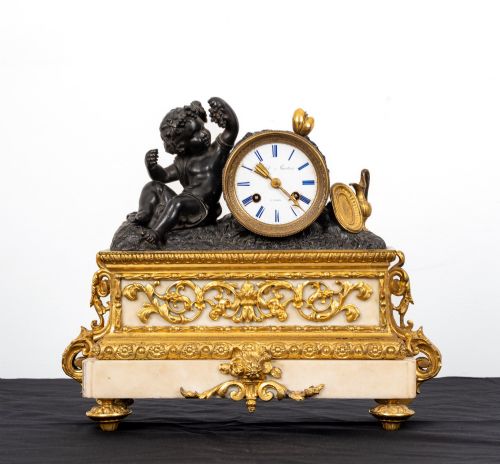
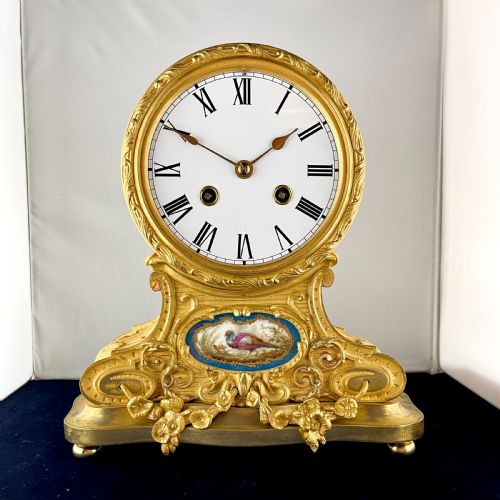
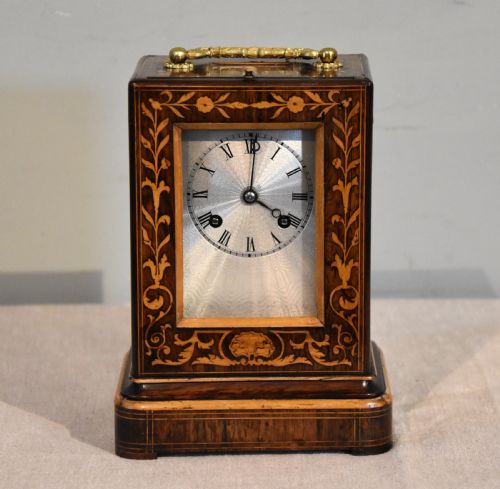
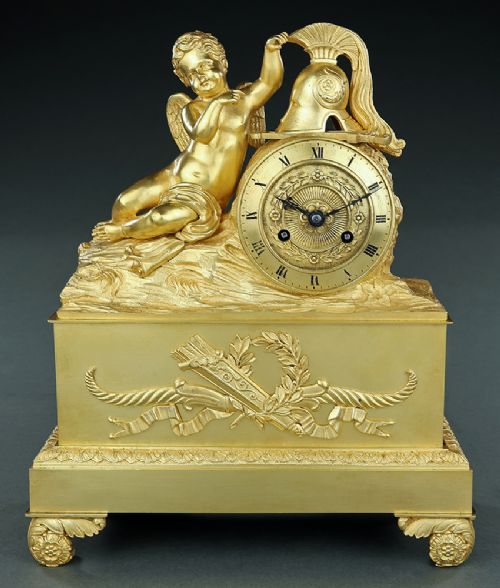
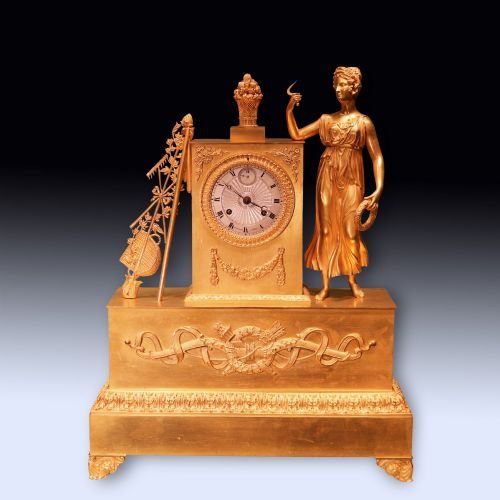
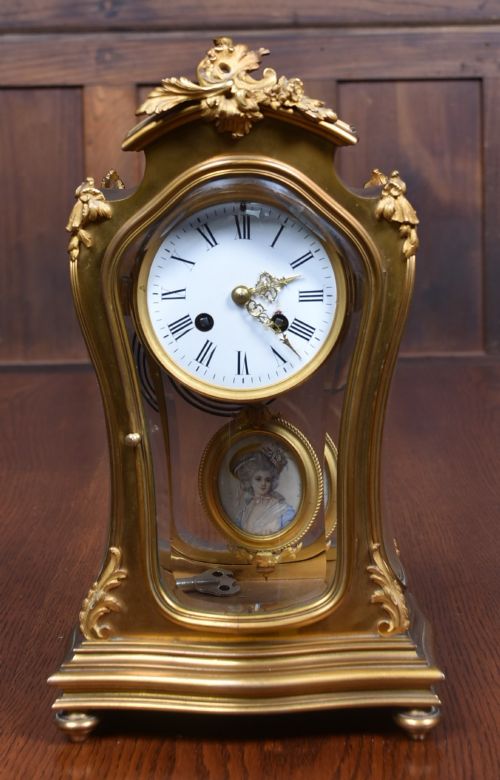
These 19th century empire clock pieces deliver classical proportion and heavy cast metal work to a mantelpiece.
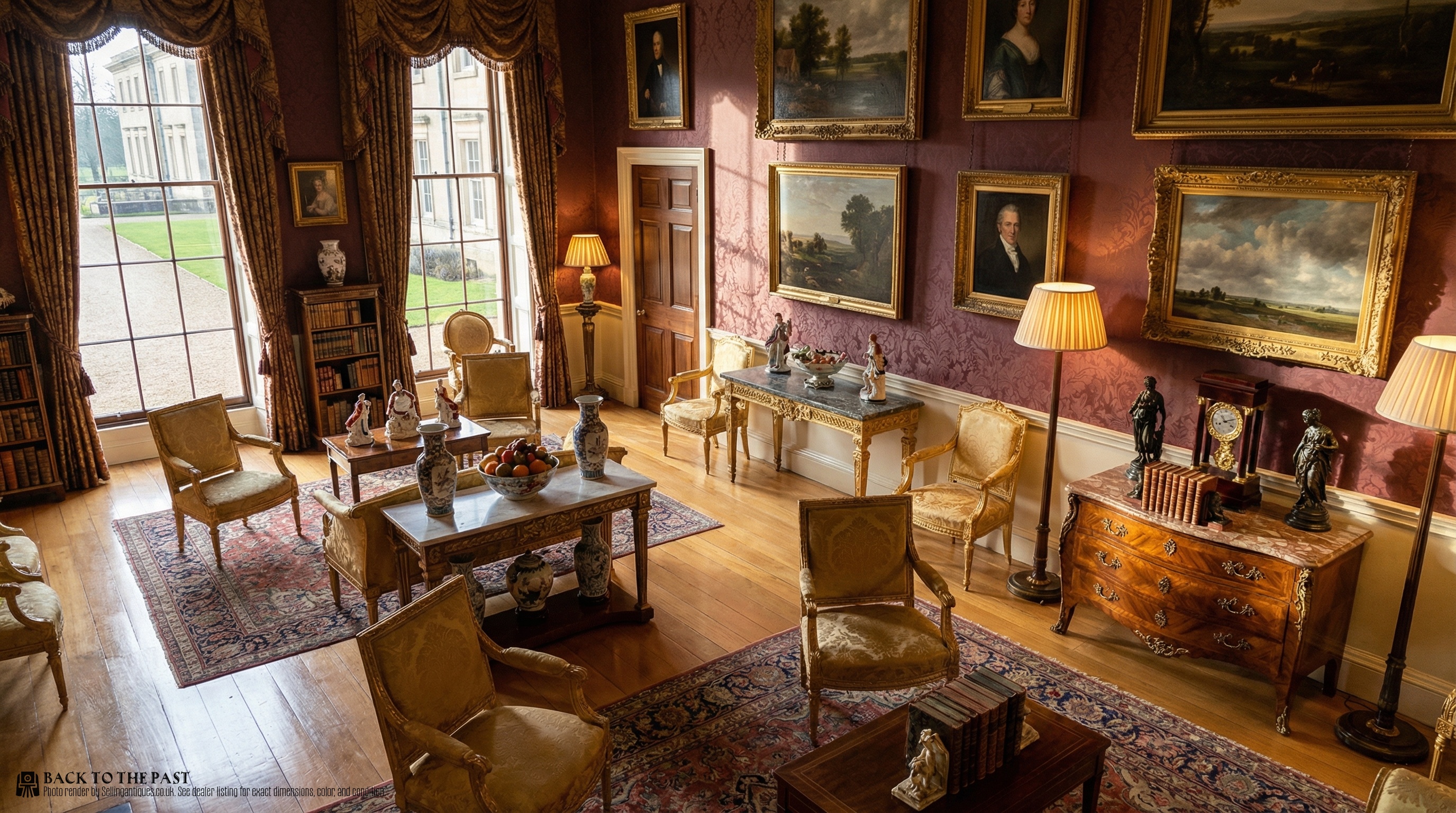
19th Century Empire Clock
When you search for a 19th century empire clock, you encounter heavy mantel clocks, clock garnitures, and portico clocks originating from France. The items listed now span the nineteenth century, including specific decades like the eighteen-sixties, seventies, and eighties, alongside Victorian and Georgian designations.
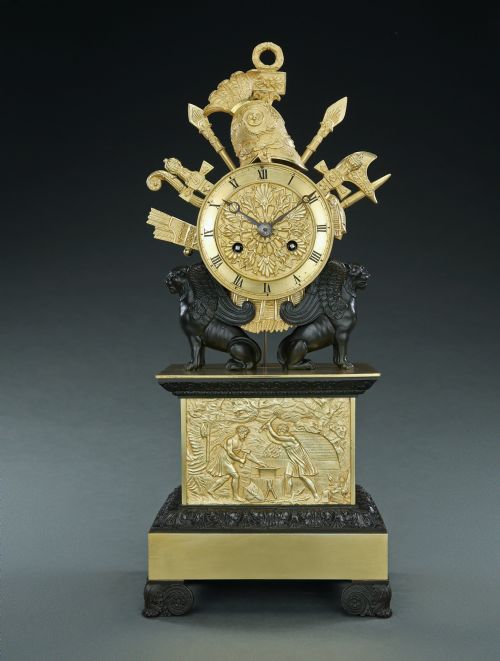
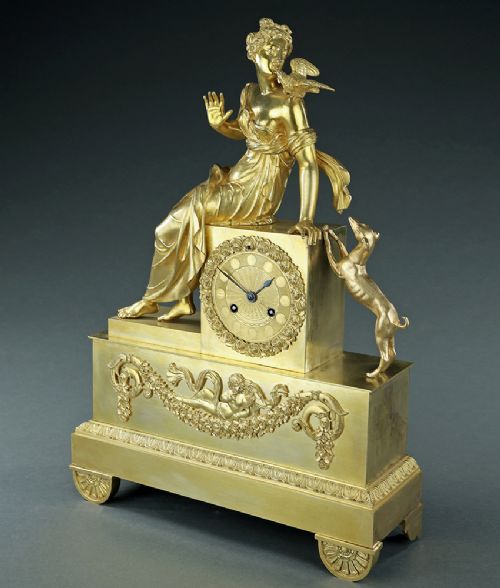
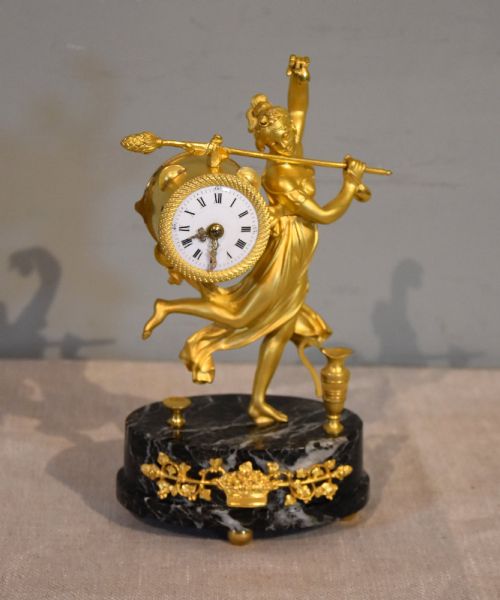
The prevalent forms combine architectural marble bodies with patinated bronze and gilt ormolu figures. Subjects range from classical allegories and military trophies to figural compositions like Napoleon crossing the Alps.
Many examples are paired with matching side garnitures or protected beneath glass domes. The French workshops produced both freestanding mantel timepieces and complex striking models designed to dominate a room.
Materials and Construction
Makers utilised cast bronze, ormolu, and brass combined with various marbles such as rouge, green, and sienna. Cut crystal and porcelain plates frequently complement the metal frameworks.
Dials typically feature enamel painted numerals protected by glass bezels. Movements are mechanical eight-day mechanisms driven by springs or gravity.
Cases rely on mercury gilding or fire gilding for the brass elements, while marble bases are turned and polished to support the heavy metal top sculptures.
Listings feature gilt bronze, patinated bronze, ormolu, enamel, and various marbles including rouge and sienna.
Quality Variations in These Clocks
The choice and integration of the stone body dictate overall heft and dignity. Solid marble or onyx with matched garniture sets indicates a higher original commission than simpler wooden or plated alternatives.
Signed movements by known Parisian makers carry greater horological weight than unmarked mechanisms.
Japy Freres·Siffel and Cartier·Canaillor of Paris·Rodier·Breguet·Samuel Marti·Ravrio
The 19th Century Empire Clock Glossary
- Ormolu
- Gilded bronze produced by applying a mercury and gold amalgam to a bronze base and heating it. This technique creates a durable golden surface seen on many French mantel clocks.
- Garniture
- A set of matching decorative objects consisting of a central clock flanked by matching vases or candelabra. They were designed to sit together on a fireplace mantel.
- Portico Clock
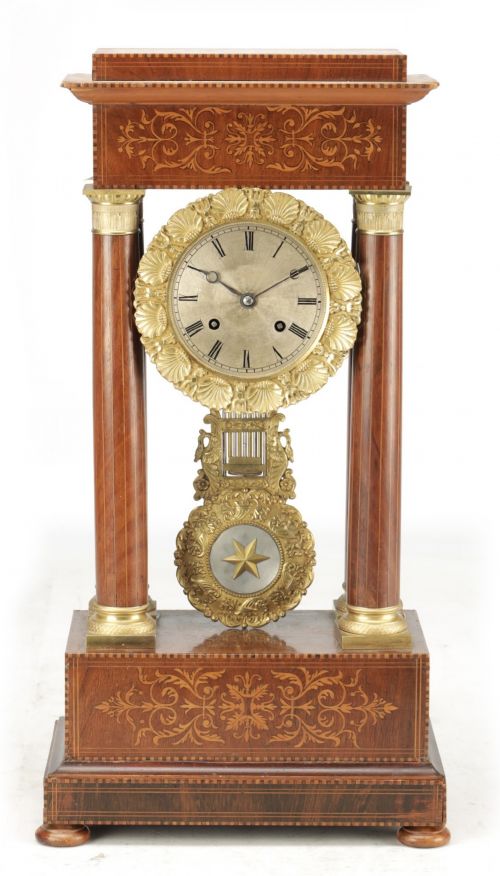
- A tall clock style featuring four slender columns supporting the movement housing. Charles X examples often combine cut crystal pillars with ormolu mounts.
- Drumhead Clock
- A mantel clock where the movement is housed within a circular metal drum resting on a flat base. They appear frequently in nineteenth-century French designs.
- Patinated Bronze
- Bronze treated with chemical solutions to produce a dark brown or green surface finish. It contrasts with the bright reflection of adjacent ormolu mounts.
19th Century Empire Clock: Frequently Asked Questions
How do I wind a French mantel clock?
Insert the appropriate winding key into the dial holes and turn gently until resistance is felt. Take care not to overwind the mainspring.
Most nineteenth-century mechanical movements require weekly attention to keep accurate time and maintain the strike train.
What is a clock garniture set?
A garniture set includes a central mantel clock accompanied by matching decorative side pieces such as urns or candelabras. They create a symmetrical display on a fireplace.
Buyers often find complete sets featuring matching marble bases and ormolu mounts.
How can I identify a portico clock?
Portico clocks feature an architectural frame supported by four vertical pillars or columns. The pendulum typically swings visibly between these columns.
Charles X models frequently utilise cut crystal for the pillars alongside ormolu bezels and bases.
Did Napoleon influence empire clock designs?
The French Empire style drew heavily on classical Roman and Greek motifs popular during Napoleon's rule. Subjects often celebrated military campaigns or political stability.
Figural scenes depicting specific historical events like the crossing of the Alps appear frequently on these bronze cases.