
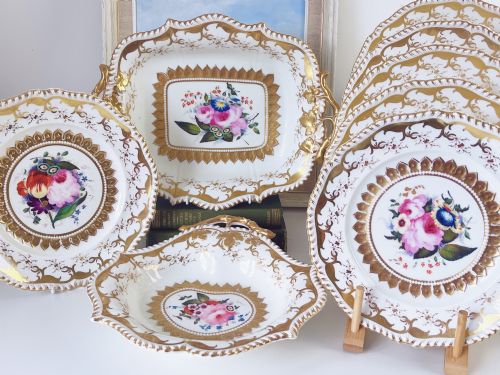
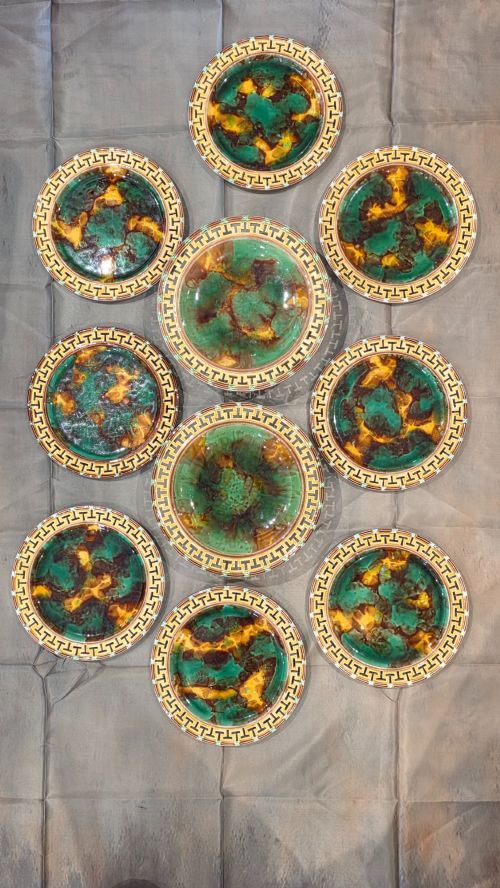
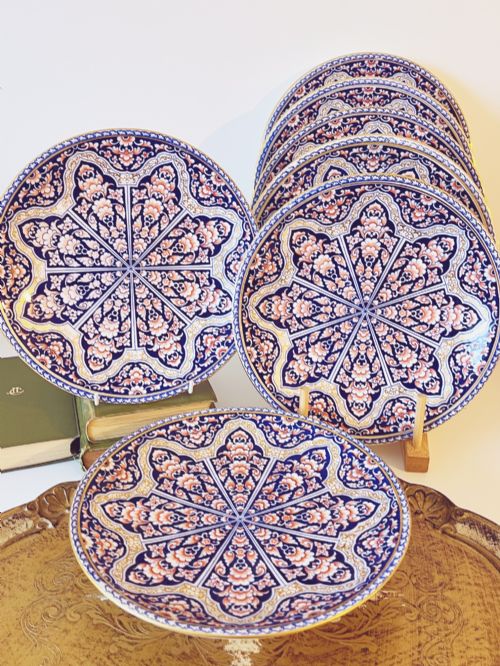
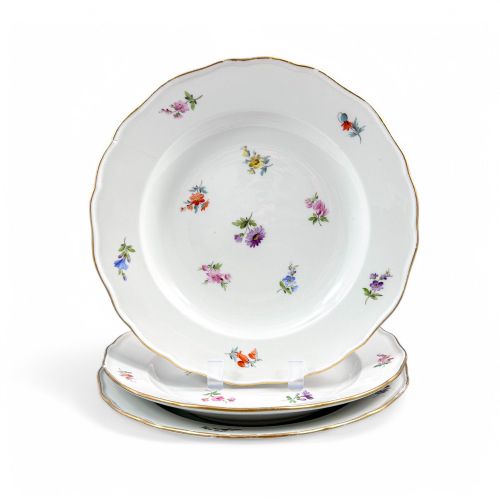


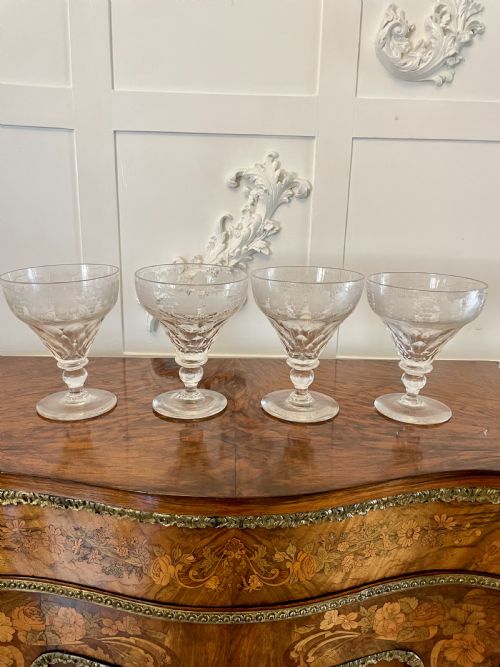

19th Century Dessert Set
A 19th century dessert set brings together matched porcelain plates, comports, and fruit cutlery designed for the final course of a formal meal.
19th Century Dessert Set
A 19th century dessert set comprises matched tableware created specifically for serving fruit, custards, and sweet courses at the end of a grand meal. Surviving examples typically include services of plates, comports, and specialised serving dishes.
Buyers will most frequently encounter ceramic and porcelain pieces spanning the Georgian, Regency, and Victorian periods. These range from substantial ironstone services to delicate painted porcelain plates.
The selection extends to accompanying items such as custard cups, ice plates, and mother of pearl handled fruit knives. These pieces reflect the elaborate dining customs of nineteenth-century households.
How they were made
Makers utilised porcelain, earthenware, and ironstone as the primary bodies for ceramic services, often applying intricate glaze and enamel decoration by hand. Gold leaf accents and handpainted floral motifs frequently highlight the finer ceramic surfaces.
Glass services relied on free blown crystal and cut glass techniques to produce finger bowls, ice plates, and custard cups with clear optical depth. Cutlery combined solid silver gilt blades with natural mother of pearl handles.
Object types include complete dessert services, custard cups, finger bowls, and mother of pearl fruit knives.
What varies in quality
The standard of painting and gilding distinguishes utilitarian earthenware from exhibition-grade porcelain services. Handpainted floral details and crisp enamelling demonstrate greater artisan skill than standard transfer printing.
Completeness and uniformity across a service dictate its standing, as larger matched groupings require consistent firing and decoration across every plate and comport. The quality of base materials, from fine porcelain to heavy ironstone and free blown crystal, shapes the durability and weight of each piece.
Grainger Lee & Co·Wedgwood·Royal Crown Derby·Rockingham Pottery·Spode·Sevres·Kerr & Binns·Mason s·Davenport
The 19th Century Dessert Set Glossary
- Comport
- A raised serving dish or pedestal bowl used for presenting fruit as part of a dessert service. It stands taller than the surrounding plates to create tiered visual interest on the dining table.
- Ironstone
- A dense, durable type of earthenware patented in the nineteenth century to imitate Chinese porcelain. It provides a robust body suitable for everyday dining services.
- Gilt
- A thin application of gold or gold leaf applied to the surface of ceramics or metals. It often highlights the rims and borders of dessert plates.
- Finger bowl
- A small bowl filled with water scented with lemon or flowers, used by diners to rinse their fingers between courses. They are frequently formed from cut crystal.
19th Century Dessert Set: Frequently Asked Questions
What is included in a dessert service?
A traditional service includes a central comport accompanied by matching plates intended for fruit and sweet courses.
Larger configurations may also incorporate specialised vessels such as custard cups, finger bowls, and serving dishes.
How were these sets used?
These items were brought out for the final course of formal dinners, specifically for serving fruit, confections, and sweet dishes.
Guests used specialised cutlery like silver gilt and mother of pearl fruit knives to consume the dessert.
How do I identify a Georgian set?
Georgian services often display earthenware bodies like ironstone alongside handpainted floral motifs characteristic of early nineteenth-century production.
Makers from this period frequently utilised distinctive shapes associated with Regency and Georgian dining traditions.
Can I use these sets for dining?
Many nineteenth-century ceramic and glass services remain structurally sound for careful contemporary use at the table.
Gentle hand washing helps preserve delicate enamel work, handpainted flowers, and gold leaf gilding over time.