
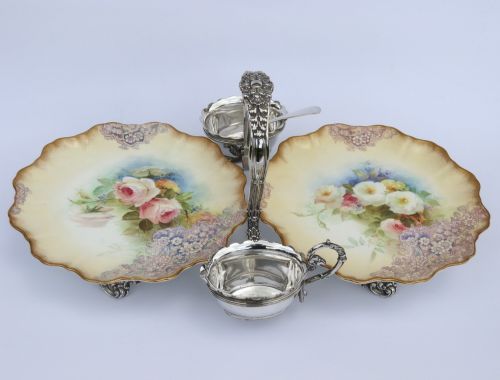


Antique Floral Tableware Set
An antique floral tableware set brings hand-painted botanicals and centuries of ceramic artistry straight to your dining table.
Antique Floral Tableware Set
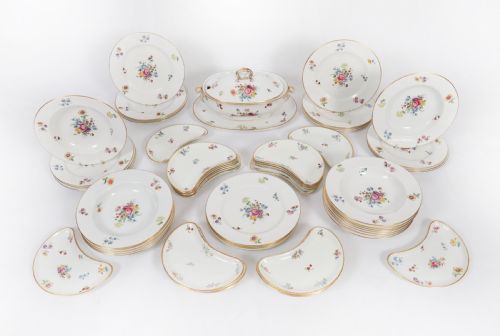
The selections span distinct historical periods including Georgian, Regency, Victorian, and Edwardian eras. These collections range from intimate dessert sets for two to massive sixty-piece dining services adorned with traditional English and Rococo Revival styles.
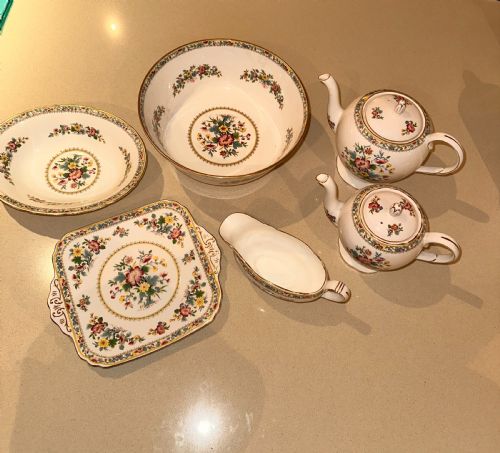
Makers utilised various ceramic bodies, applying intricate glazes and enamel details to create enduring domestic wares. Buyers searching for an antique floral tableware set find everything from small decorative plate groupings to comprehensive multi-piece dining collections.
How they were made
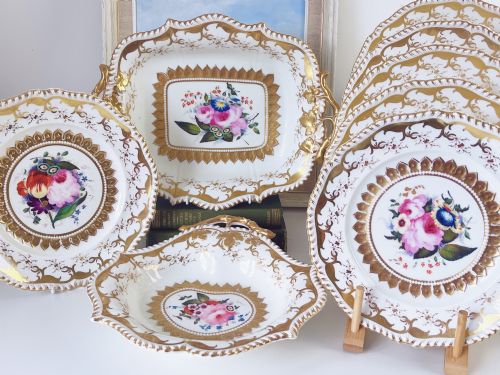
Potters shaped ceramic, porcelain, ironstone, and creamware bodies before applying hand-painted floral decoration and detailed enamel work. Artisans frequently integrated gold leaf and gilt highlights to accentuate the botanical patterns across plates, bowls, and serving platters.
Firing techniques of the nineteenth and early twentieth centuries produced durable glazes that protected the intricate painted scenes. Workshops combined traditional throwing and moulding methods to create consistent shapes within large dinner and dessert services.
Listings feature nineteenth-century porcelain, ironstone, and earthenware dinner services decorated with hand-painted floral motifs and gilt trim.
What varies in quality
The finesse of the hand-painted floral decoration distinguishes superior services from simpler production wares. Superior brushwork, detailed botanical accuracy, and the skilful application of gold leaf elevate a service.
Completeness and consistency across a multi-piece service dictate desirability among collectors. Original matching sets retain greater cohesion than assembled part services gathered over time.
Grainger Lee and Co·Copeland Spode·Doulton Burslem·John Ridgway·Wedgwood·Rockingham Pottery·Booths·Coalport·Mason·Müller Volkstedt
The Antique Floral Tableware Set Glossary
- Ironstone
- A heavy, durable type of earthenware patented in the nineteenth century. It provided a robust alternative to porcelain for everyday dining services.
- Creamware
- A refined earthenware body developed in the eighteenth century with a pale yellowish-cream glaze. Wedgwood notably produced botanical services using this material.
- Gilt
- A thin layer of gold applied to ceramic surfaces and handles. It often outlines floral motifs and plate rims on nineteenth-century tableware.
- Dessert Service
- A matched collection of plates, bowls, and platters specifically intended for serving dessert. These sets often display particularly elaborate hand-painted floral scenes.
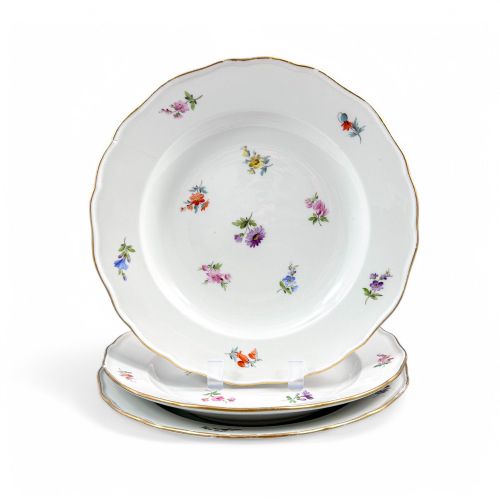
- Streublumen
- A decorative pattern of scattered small floral sprays. Meissen porcelain frequently utilised this motif across nineteenth-century plates.
Antique Floral Tableware Set: Frequently Asked Questions
What is an antique floral tableware set?
An antique floral tableware set is a collection of ceramic dining or dessert pieces decorated with painted flowers. These services range from small plate groupings to extensive multi-piece dinner sets.
They reflect the prevalent ceramic styles of the nineteenth and early twentieth centuries. Each service demonstrates the distinct manufacturing techniques of its period of origin.
How were these sets used originally?
These sets served functional roles during formal dining and afternoon gatherings. Large dinner services accommodated multi-course meals, while specialised dessert sets held fruit and sweet dishes.
Wealthy households displayed them during formal entertaining to showcase their social standing. The hand-painted botanical designs added visual splendour to the dining room.
Can I use an antique set for dining?
Many people choose to use their antique ceramics for special occasions, though careful handling is required. Hand-washed care preserves the delicate enamel work and gold leaf.
Modern dishwashers and harsh detergents can damage historic glazes and painted details. Gentle use ensures these nineteenth-century pieces survive for future generations.
How do I identify the period of a set?
Pottery marks stamped or painted on the underside of ceramics help determine the maker and production era. Stylistic clues like Rococo Revival shaping or Edwardian forms also indicate the date.
Materials such as pearlware, ironstone, and bone china point to specific decades of manufacture. Comparing the decorative style with known historical patterns narrows down the timeframe.