


Green Tableware
Green antique tableware brings striking colour to the table through centuries of earthenware, porcelain, and majolica.
Green Tableware
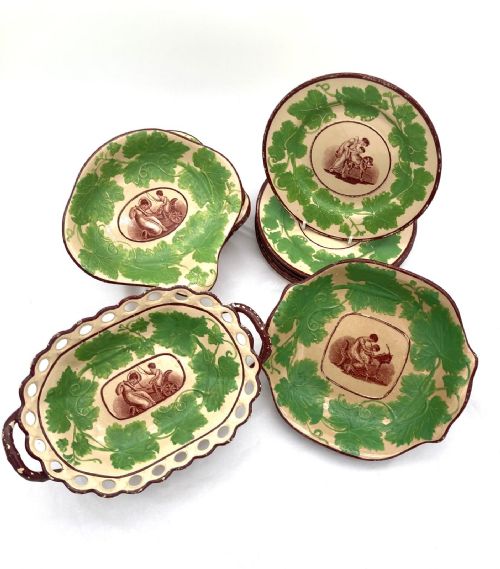
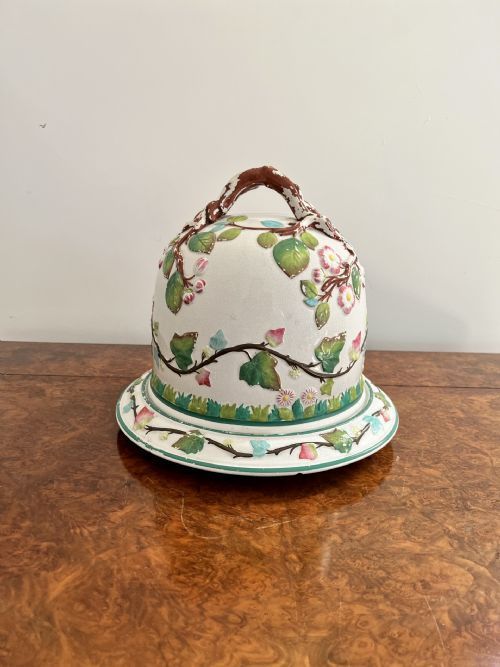
Green antique tableware comprises a varied selection of functional and decorative ceramic service pieces, ranging from large majolica cheese domes to complete dessert services and individual dinner plates. These pieces date primarily from the nineteenth century, including Victorian, Regency, and Edwardian periods, alongside earlier eighteenth-century examples.
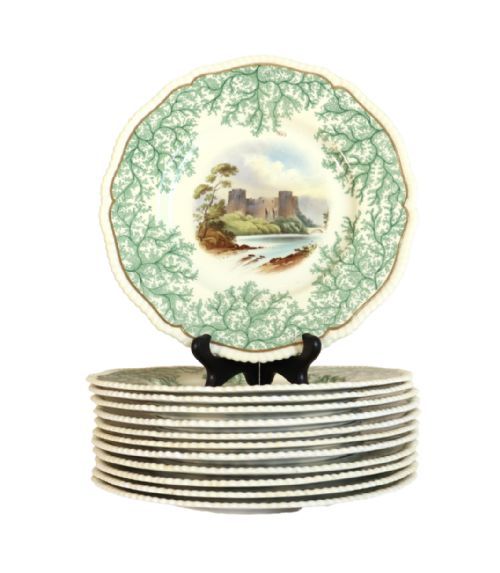
The most common items encountered in this category are plates, dessert services, and specialised vessels such as food warmers and jam pots. Many pieces incorporate distinct botanical or transfer-printed motifs, reflecting the styles of prominent historical potteries.
Materials and manufacture
These items are shaped from ceramic, earthenware, ironstone, and porcelain, frequently finished with specialised glazes and enamel decoration. Techniques such as hand-painting and transfer printing applied intricate patterns onto the ceramic bodies.
Metal and glass elements also appear within the selection, combining silver plate or sterling silver fittings with ceramic bodies, alongside moulded opaline glass enhanced with gold leaf details.
Cows and tigers make unexpected appearances among the green tableware, immortalized on nineteenth-century porcelain vases.
Assessing quality and craftsmanship
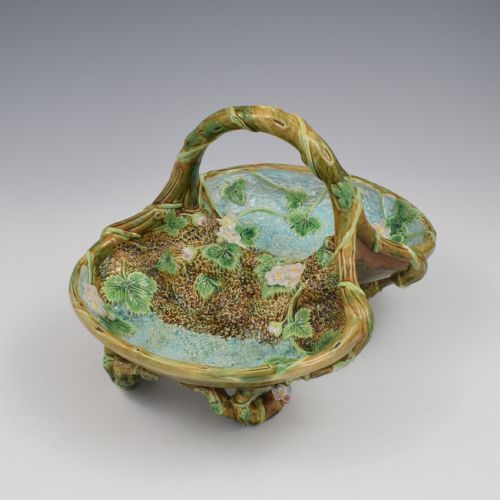
Quality in these items rests upon the crispness of the moulded relief work, particularly in majolica pieces where botanical and natural forms define the surface. The depth and evenness of the green glaze further distinguish superior examples from standard production.
The precision of hand-painted details and the preservation of secondary gilding or transfer printing indicate the skill involved in the original manufacture. Completeness of sets, such as matching dessert services or paired dishes, also influences the character of the group.
Spode·Wedgwood·George Jones·Minton·Viners·Plichta Pottery·Wemyss·Veuve Perrin·Mason's·Coalport·Royal Crown Derby
The Green Tableware Glossary
- Ironstone
- A heavy, durable type of ceramic patented in the nineteenth century to imitate Chinese porcelain. It provides a sturdy body suitable for richly patterned dinner and dessert services.
- Dessert Service
- A matched collection of plates, bowls, and sometimes central display stands intended for serving the final course of a formal meal. These sets frequently showcase elaborate hand-painted or transfer-printed botanical scenes.
- Cheese Dome
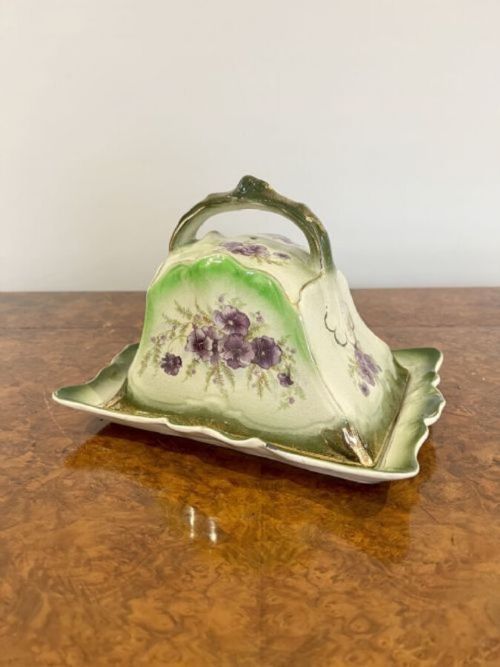
- A covered ceramic dish designed to store and present cheese at the table, often featuring an underplate and a high domed cover. Victorian examples are frequently rendered in majolica with detailed relief decoration.
Green Tableware: Frequently Asked Questions
How do I date green tableware?
Dating relies on identifying backstamps, ceramic bodies, and stylistic markers associated with specific periods like the Regency or Victorian eras. Examining the glaze type and manufacturing technique also helps narrow the production timeframe.
Changes in pottery marks and registration numbers provide more precise clues for pieces produced throughout the nineteenth and early twentieth centuries.
Can I use antique plates for dining?
Many antique plates remain structurally sound for occasional dining, though careful hand washing is essential to preserve fragile glazes and enamel decoration. Older earthenware and ironstone can be sensitive to modern dishwashers and thermal shock.
Displaying them or reserving them for special occasions helps protect the historical surface from everyday wear.
What is majolica tableware?
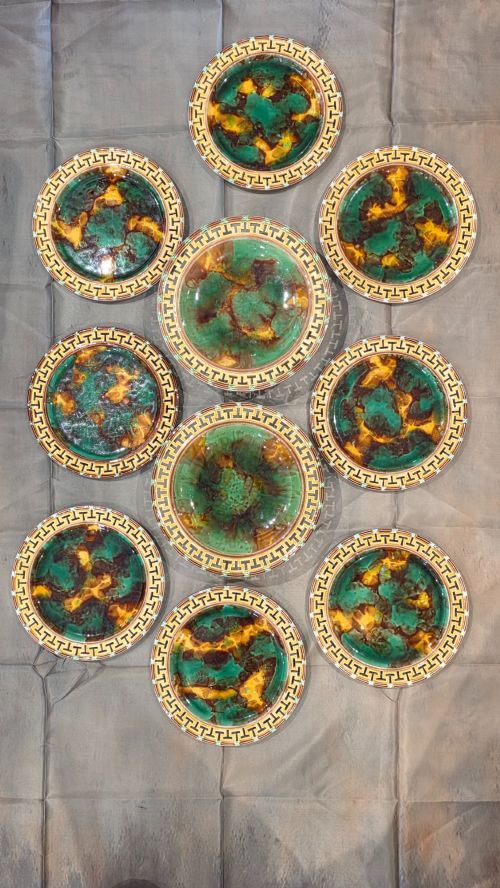
Majolica is a heavily glazed earthenware developed in the nineteenth century, known for its vibrant green and earthy colour palettes and naturalistic relief motifs. These pieces often depict leaves, ferns, and animal forms.
The thick coloured glazes give the ceramics a glossy, tactile finish that stands out on the dining table.
How were cheese domes used?
Cheese domes served to keep cheese moist and protected from insects on the Victorian dining table before refrigeration became common. The heavy ceramic cover trapped humidity and preserved the cheese throughout the meal.
They sat upon matching ceramic plates and were often elaborately decorated as centrepiece items.