
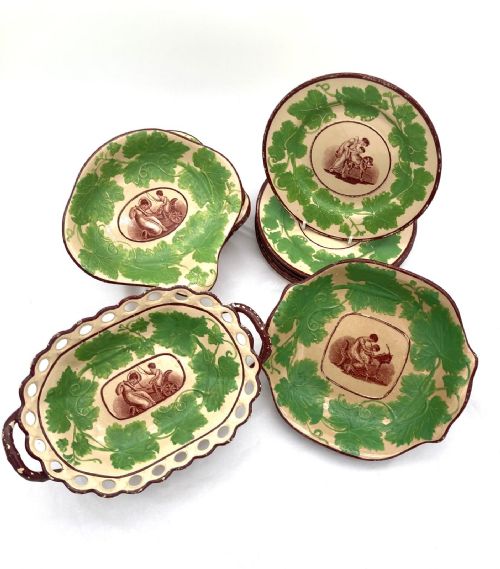


Antique English Dessert Service
An antique English dessert service brings coordinated elegance to the end of a formal meal through matched porcelain plates, dishes and comports.
Antique English Dessert Service
An antique English dessert service comprises matched sets of plates, serving dishes and occasional comports designed specifically for the final course of a meal. These services frequently appear from the eighteenth, nineteenth, and early twentieth centuries in materials such as porcelain, bone china, ironstone and creamware.
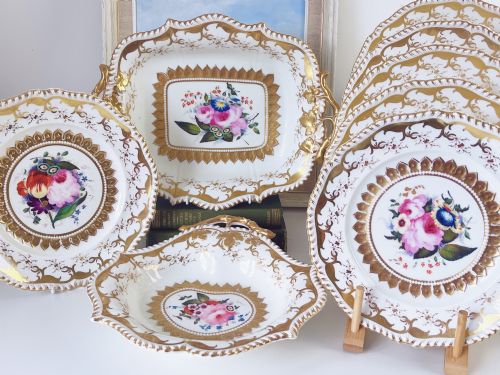
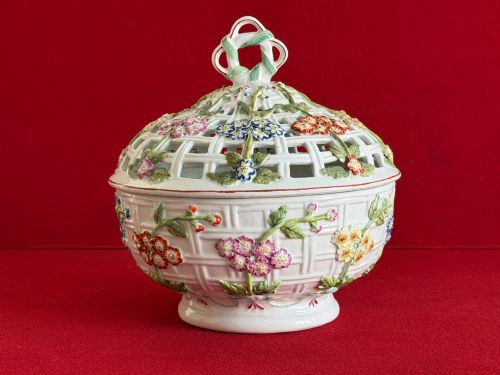
Buyers will encounter full table sets alongside smaller surviving groupings or individual fruit-painted plates and chestnut baskets. The aesthetic spans Georgian, Regency, Victorian and Edwardian periods, often incorporating hand-painted botanical motifs, landscapes or rich borders of gold leaf and enamel.
How they were made
Potteries shaped these services using porcelain, bone china, ironstone or earthenware, applying glaze and firing them in kilns to achieve durable tablewares. Makers then enriched the pieces by hand-painting floral sprays, fruit and landscapes directly onto the ceramic body.
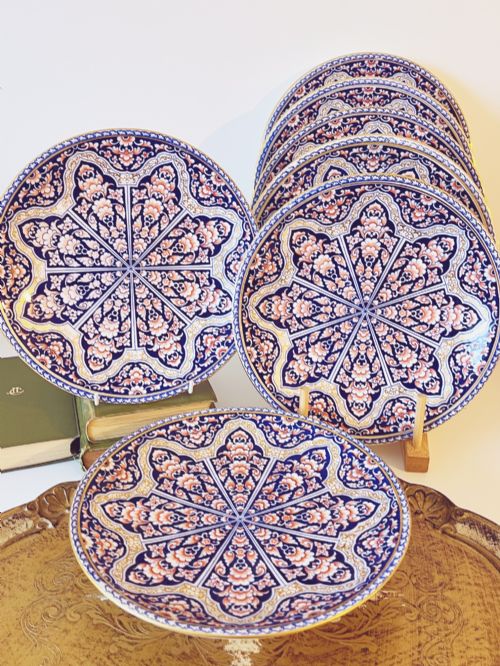
Gilders applied gold leaf highlights to rims and handles, sometimes combining this with raised enamel work or pearl jewelling. Certain wares utilised transfer printing techniques, such as bar printing, to repeat complex patterns across entire services.
Listings feature porcelain, ironstone, creamware and bone china from the Georgian, Regency and Victorian periods.
What varies in quality
The standard of an antique English dessert service rests upon the fineness of the ceramic body and the skill evident in the hand-painted decoration. Services featuring detailed botanical or landscape artistry by named hands command greater attention than simple transfer-printed equivalents.
Preservation of the original gold leaf and enamel colours dictates the desirability of surviving pieces. Completeness of the service, from matching comports down to individual dessert plates, defines the standing of the set.
Grainger Lee And Co·Royal Crown Derby·John Ridgway·Spode·Thomas Steele·Minton·Flight Barr And Barr·Wedgwood·Mason·Worcester Porcelain
The Antique English Dessert Service Glossary
- Comport
- A raised pedestal dish used for serving fruit or sweetmeats as the centrepiece of a dessert service. These elevated vessels add vertical hierarchy to the table arrangement.
- Creamware
- A refined earthenware developed in England with a pale yellowish-cream glaze. It provided an affordable and durable alternative to porcelain for dining wares.
- Ironstone
- A heavy, durable type of earthenware patented to resist chipping while maintaining a smooth ceramic surface. It frequently carries bold patterns suitable for everyday service.
- Bone china
- A soft-paste porcelain incorporating animal bone ash that yields a milky white body with high translucency. It allowed makers to produce thinner, more delicate dessert plates.
- Gold leaf
- Hammered gold beaten into extremely thin sheets and applied to ceramic rims and handles for decoration. This metallic embellishment catches candlelight during formal evening dining.
Antique English Dessert Service: Frequently Asked Questions
What is a dessert service?
An antique English dessert service is a matched collection of plates, serving dishes and comports intended for the fruit and sweet course following dinner. These sets brought coordination and decorative flair to the end of a formal meal.
Surviving examples range from large multi-piece services to smaller groupings of plates or individual serving baskets. They reflect the changing ceramic styles of the eighteenth and nineteenth centuries.
How were dessert services used?
Hosts utilised these porcelain and ironstone sets to serve fruit, nuts, cheeses and sweet confections at the conclusion of dining. The dishes were arranged symmetrically on the table to display both the food and the ceramic artistry.
Comports held taller arrangements of fruit, while low plates accommodated individual portions. The bright enamel colours and painted landscapes provided a decorative talking point for guests.
How do I date a service?
Dating relies on identifying the ceramic body, glaze characteristics, factory marks and stylistic traits such as Regency or Rococo Revival shaping. Marked pieces often feature specific pattern numbers or factory stamps that align with known production eras.
Hand-painted subjects and border designs also offer clues to the period of manufacture. Comparing the forms to dated examples helps narrow the decade of origin.
How do I care for antique plates?
These ceramic services require gentle hand washing in lukewarm water with mild soap to protect fragile glazes and hand-painted details. Dishwashers and abrasive sponges will permanently damage the delicate enamel and gold leaf decorations.
Storage should involve padded plate dividers to prevent rim chips and friction marks. Careful handling ensures these historic tablewares survive for future generations.