


Antique Spode Porcelain Set
These antique spode porcelain sets offer refined tableservice and writing pieces from the nineteenth and early twentieth centuries.
Antique Spode Porcelain Set
An antique spode porcelain set encompasses everything from grand dinner and dessert services to intimate tea trios and inkstands. When searching this phrase, buyers encounter dining plates, children's tea services, and writing equipment spanning the nineteenth century.
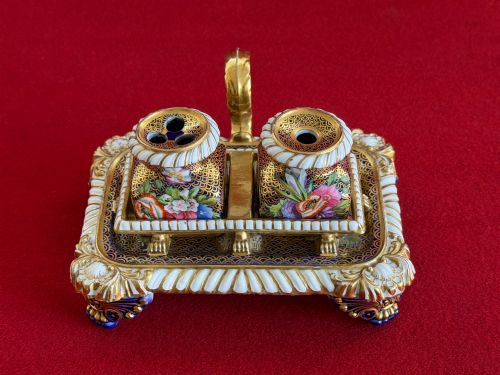
The Regency era brings fine pattern work such as pattern 1166 inkstands, while later Victorian and Edwardian periods contribute Copeland dinner services and coffee cups. These domestic and cabinet items showcase the varied output of the historic pottery.
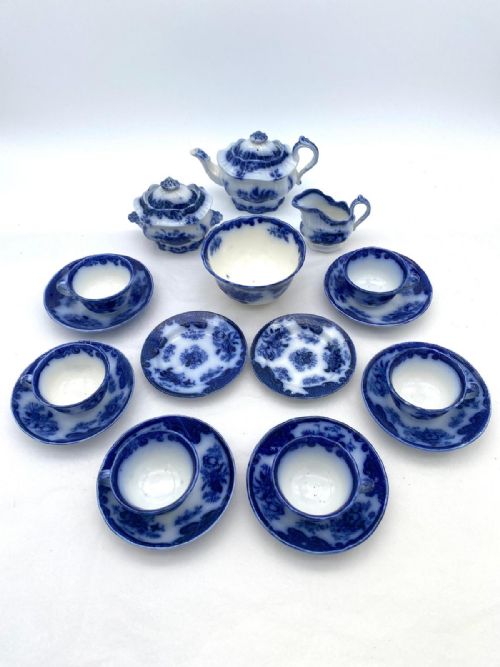
Most pieces date across the nineteenth century, moving from Regency refinement through mid-century flow blue child's services to later Copeland iterations. Every set reflects the durable material history of English ceramic production.
How they were made
Makers utilised bone china, porcelain, and earthenware as the foundational bodies for these sets, shaping them into plates, cups, and inkstands. Cobalt glaze and enamel colours were then applied to decorate the surfaces before firing.
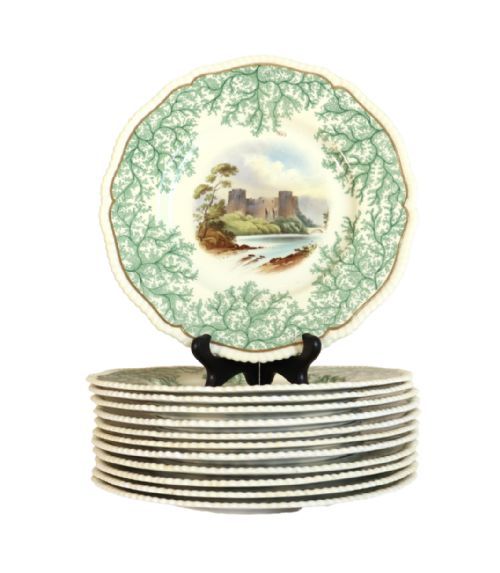
Many items incorporate gold leaf and gilt highlights to accentuate borders and motifs like the seaweed design on landmark scene dinner plates. Artisans combined these metallic touches with glaze finishes to achieve the characteristic appearance of the period.
Materials recorded across the available pieces include gold leaf, cobalt glaze, enamel, and standard glaze finishes on ceramic bodies.
What varies in quality
Quality separates through the intricacy of the pattern application and the precision of the hand-painted enamel and gilt work. Sets featuring specific named scenes, such as landmark scenes with seaweed borders, demonstrate a higher tier of factory output.
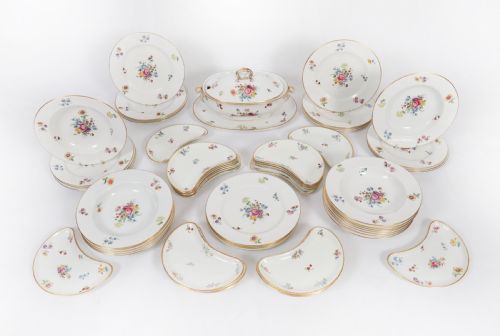
The completeness of a service, from a simple cabinet trio up to a sixty-piece dinner service or dessert service, influences the desirability of the set. Well-preserved glaze surfaces and intact gold leaf detailing further distinguish finer examples from standard production.
Spode·Copeland
The Antique Spode Porcelain Set Glossary
- Bone china
- A type of porcelain incorporating bone ash, creating a durable and slightly translucent body suited for fine tableware.
- Flow blue
- A cobalt blue transfer printing style that blurred slightly during firing, creating a misty effect popular on mid-nineteenth-century wares.
- Inkstand
- A desk accessory designed to hold inkwells, pens, and related writing implements, often produced in matching porcelain.
- Trio
- A matched set comprising a teacup, a coffee cup, and a saucering plate, commonly collected as cabinet displays.
- Gilt
- A thin layer of gold applied to the surface of porcelain to provide decorative metallic borders and accents.
Antique Spode Porcelain Set: Frequently Asked Questions
What items are in a Spode tea service?
These sets typically include cups, saucers, and related serving vessels designed for social tea drinking. Items range from individual trios to larger children's services.
Production spans from the Regency period into the nineteenth century, utilising bone china and porcelain decorated with enamel and gilt.
How do I identify Regency Spode porcelain?
Regency pieces often display specific pattern numbers, such as pattern 1166, alongside early nineteenth-century forms like porcelain inkstands and cabinet trios.
Materials from this era include fine porcelain enhanced with cobalt glaze, gold leaf, and hand-painted enamel details.
What is a Copeland Spode set?
Copeland continued the Spode factory traditions into the Victorian, Edwardian, and later periods. These later sets include extensive dinner services and coffee cups.
They reflect the evolution of manufacturing while maintaining traditional forms like flow blue and transfer-printed designs.
What is a cabinet trio?
A cabinet trio is a small matched grouping consisting of a teacup, a coffee cup, and a saucer intended for display rather than daily dining. These pieces highlight the decorative enamel and gold leaf work of the maker.
They date primarily to the early nineteenth century during the Regency style period.