
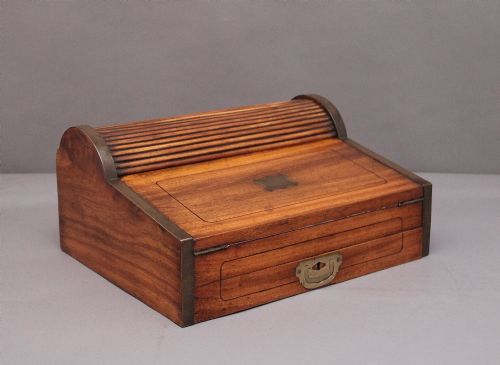


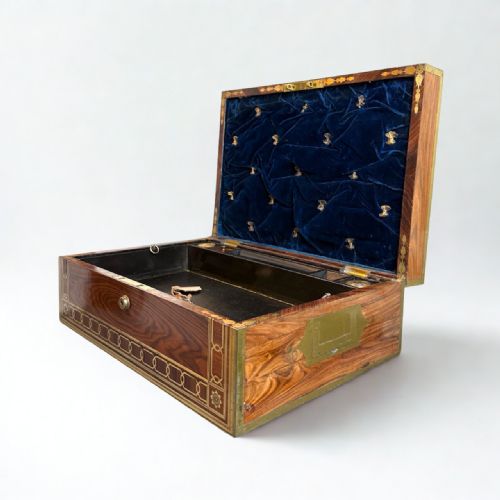


19th Century Chinese Box
A 19th century chinese box brings hand-carved detail and utilitarian warmth to a room, offering practical storage disguised in lacquer, camphor wood, or leather.
19th Century Chinese Box
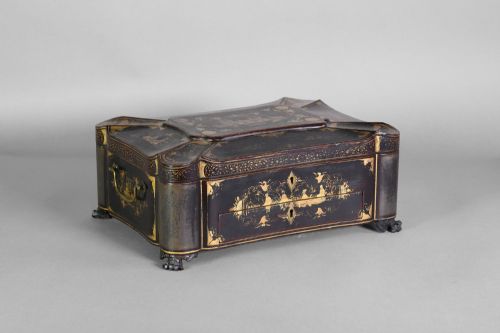
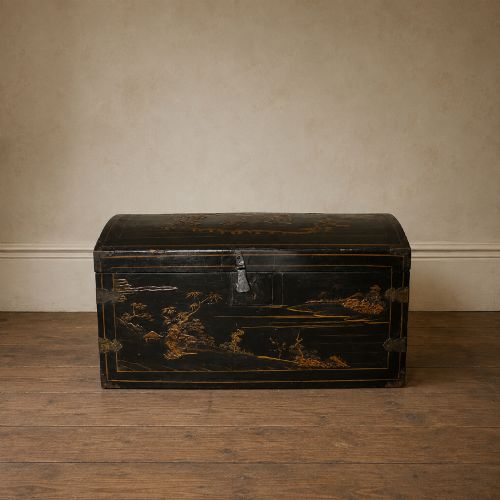
A 19th century chinese box spans domestic and travel containers made for export, ranging from tea caddies and card cases to large camphor wood chests and leather trunks. These pieces emerge from periods including the Qing dynasty and Victorian eras, carrying specific influences from Chinese export trade and Anglo-Chinese makers.
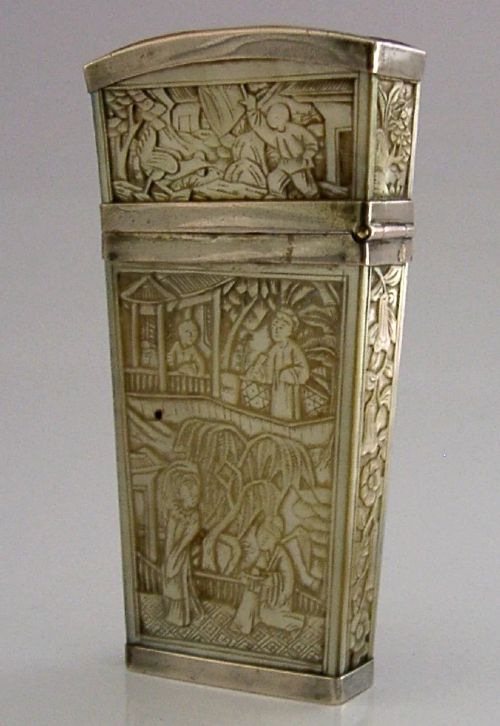
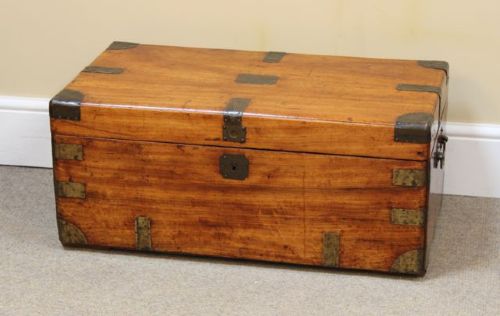
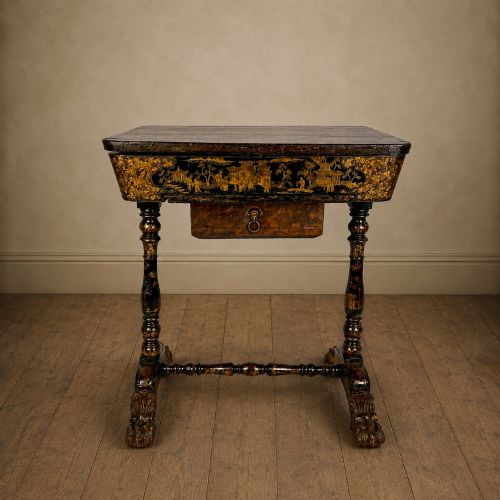
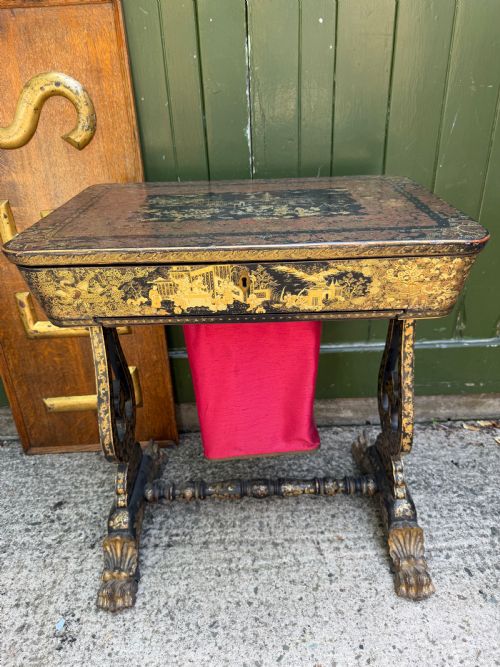
The most frequent encounters on this page include camphor wood storage chests, lacquered sewing tables, and intricate tea caddies. Smaller items like carved sandalwood card cases and cinnabar lacquered enamel trinket boxes also appear alongside larger campaign trunks and writing slopes.
Materials and Construction
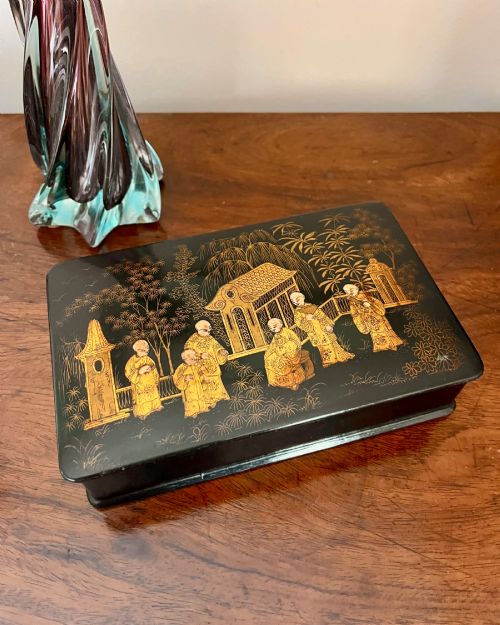
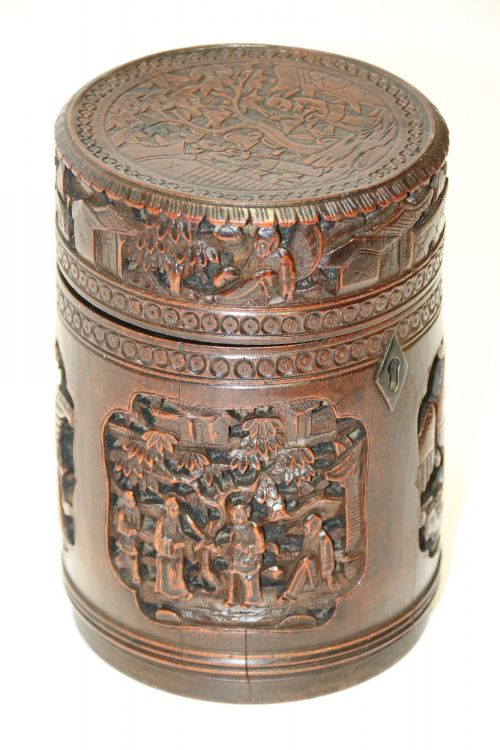
Wood forms the primary foundation, with camphor wood selected for chests to deter insects, alongside rosewood, huanghuali, and eastern elm. Lacquer work utilises black or red finishes layered with gold leaf and gilt decoration, while select pieces employ carved bamboo, sandalwood, and bone.
Hardware and protective elements incorporate brass detailing, iron fixtures, and leather coverings painted in polychrome. Construction techniques include deep carving for figurative garden scenes and precision joinery suited for travel and maritime transport.
Some travel boxes survived decades at sea simply because their camphor scent kept the moths away.
Material Depth and Execution
The standard of a 19th century chinese box depends on the depth and clarity of the carving, particularly in sandalwood and lacquer pieces where intricate figures require precise handwork. Superior examples retain crisp gilding and intact surfaces rather than flat, worn applications.
Selection relies on the integrity of the primary material, such as strongly figured camphor wood or deep red cinnabar, paired with original brass mounts and functioning internal compartments. Condition of the structural joinery separates everyday utility boxes from finer decorative containers.
The 19th Century Chinese Box Glossary
- Camphor Wood
- A resilient aromatic timber utilised in the construction of storage chests and trunks. It provides natural insect-repellent properties.
- Cinnabar
- A carved red lacquer material applied in layers over a base. Artisans cut intricate patterns and figures into the cured surface.
- Campaign
- Describing portable furniture and boxes fitted with brass corners and drop handles. These items were built for travel during the nineteenth century.
- Chinoiserie
- European decorative style imitating Chinese artistic traditions. It appears on lacquered work tables and boxes featuring gilt motifs.
- Export
- Goods manufactured in China specifically for international markets during the nineteenth century. These items blend local craftsmanship with Western functional requirements.
19th Century Chinese Box: Frequently Asked Questions
What were camphor wood chests used for?
Camphor wood chests served primarily for storing garments and textiles during travel or domestic life. The natural scent of the wood protected fabrics from insects and moisture.
Larger versions functioned as blanket trunks, while smaller examples protected personal documents and valuables aboard ships or in residences.
How do you clean a lacquered box?
Lacquered surfaces require gentle dusting with a soft, dry cloth to prevent scratching the delicate finish. Avoid using chemical cleaners, water, or abrasive polishes on gold leaf and painted details.
Maintaining stable humidity levels prevents the lacquer from cracking over time. Professional conservation is advised for deep restoration work.
Where were tea caddies kept?
Tea caddies sat in the dining room or drawing room during the nineteenth century. Because tea was an expensive commodity, these boxes remained locked to control access.
Inside, lidded compartments separated different tea varieties before blending or serving.