


Gold Lacquered Trinket Box
These gold lacquered trinket box pieces combine Eastern decorative traditions with European forms, offering a polished container for small valuables.
Gold Lacquered Trinket Box
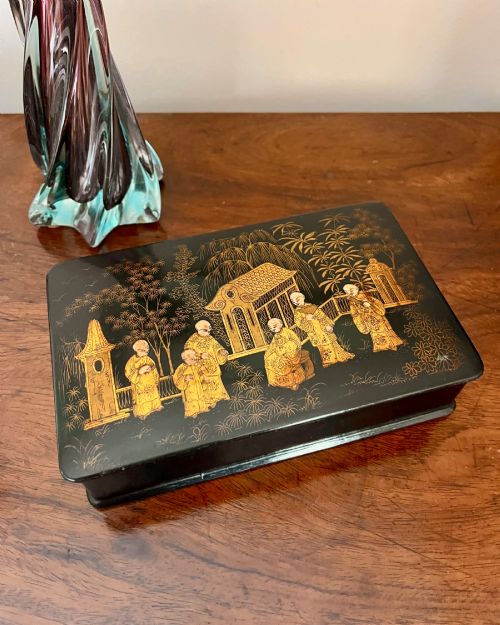
A gold lacquered trinket box brings together small lidded containers and cabinets finished in lacquer and metallic leaf. These items span the nineteenth century, including Georgian, Regency, Victorian, and Edwardian periods.
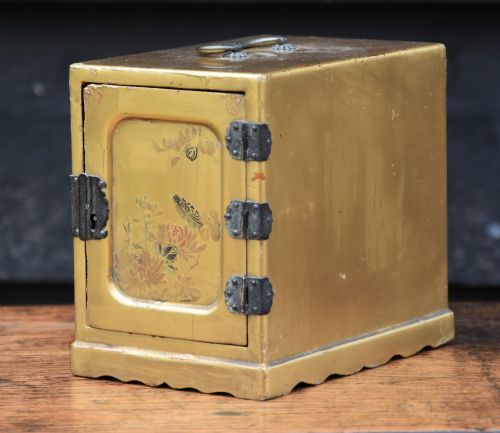
You are most likely to encounter nineteenth-century pieces alongside Meiji period Japanese examples and Kashmiri craftsmanship. Forms range from small keepsake cases and jewellery boxes to table cabinets and lidded pots.
The aesthetic leans heavily on Chinoiserie and Oriental design principles adapted for Western interiors. Makers utilised wood, papier-mâché, and metal cores to build these durable surfaces.
How they were made
The foundational structures rely on timber, metal, or papier-mâché shaped into boxes and trays. Artisans applied layers of lacquer to seal the base material before adding decoration.
Gold leaf and paint create the intricate surface designs characteristic of Chinoiserie and Japanese Meiji aesthetics. Brass hardware frequently provides functional closures and hinges on these containers.
Brighton Chain Pier boxes let Regency bathers smuggle their seaside trinkets home safely.
What varies in quality
The refinement of the surface lacquer and the precision of the hand-painted details determine the standing of each piece. Finer examples display careful application of gold leaf that integrates smoothly with the dark or coloured background.
Structural integrity of the underlying wood, papier-mâché, or metal directly impacts durability. Original brass fittings and intact hinges also separate standard utility containers from superior decorative works.
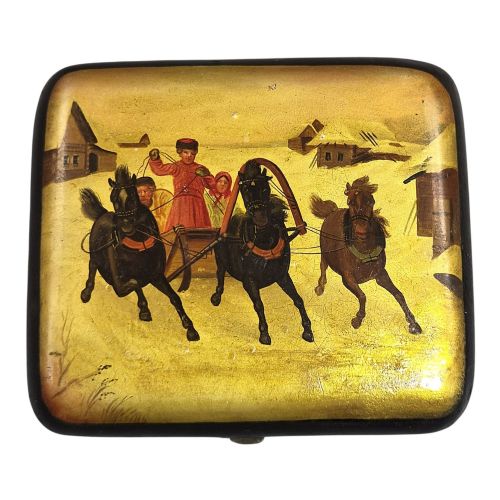
Vishnyakov Workshop
The Gold Lacquered Trinket Box Glossary
- Lacquer
- A durable resin finish applied in multiple coats to wooden or papier-mâché substrates. It hardens into a smooth, protective surface.
- Chinoiserie
- European artistic style reflecting Chinese and East Asian motifs. It flourished across Georgian and Victorian decorative arts.
- Meiji
- A period in Japanese history spanning the late nineteenth and early twentieth centuries. Exports from this era often feature detailed lacquerwork.
- Papier-mâché
- A composite material made of paper pulp or reinforced sheets mixed with binding adhesive. It was moulded into boxes and lacquered.
- Kodansu
- A traditional Japanese small cabinet with multiple internal drawers. These miniature pieces served to store precious items and documents.
Gold Lacquered Trinket Box: Frequently Asked Questions
What is a gold lacquered trinket box?
A gold lacquered trinket box is a small lidded container or cabinet finished with layered lacquer and metallic leaf decoration. These items were produced across the nineteenth century in various global styles.
They serve primarily to store jewellery, keepsakes, and small personal items while adding a decorative element to a room.
How do I care for a lacquered box?
Keep lacquered pieces out of direct sunlight and away from extreme temperature shifts to protect the finish. Dust them gently with a soft, dry cloth without chemical polishes.
Avoid placing damp items directly onto the interior surface to prevent moisture damage to the lacquer.
Where were these boxes made?
These boxes originate from diverse workshops across Europe and Asia. Examples include Japanese Meiji period items, Kashmiri lidded pots, and English Toleware or Chinoiserie pieces.
Trade routes and cross-cultural influences inspired European makers to adopt Eastern lacquering techniques.
How do I identify the period?
Dating relies on material construction, such as papier-mâché cores versus solid timbers, alongside stylistic markers. Georgian and Regency pieces often show distinct Chinoiserie interpretations.
Victorian and Edwardian examples incorporate broader global influences, including specific Japanese export marks and Kashmiri decorative traditions.