

19th Century Carver
When sourcing a 19th century carver, you are looking at single elbow chairs and matching dining sets built for comfort at the table or desk.
19th Century Carver
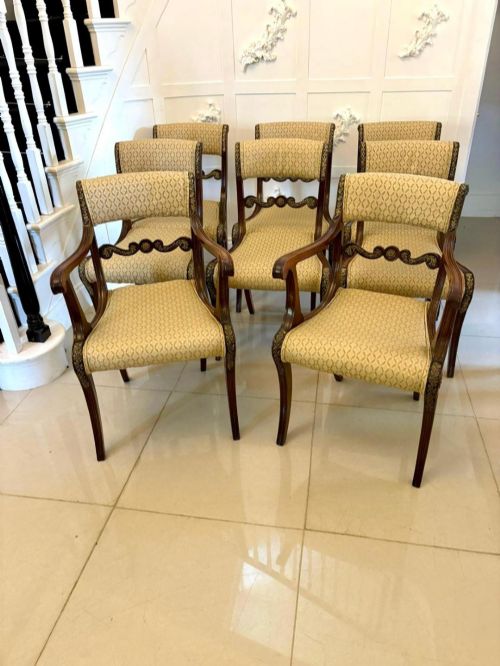
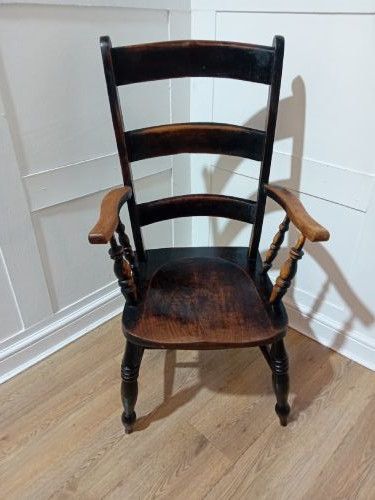
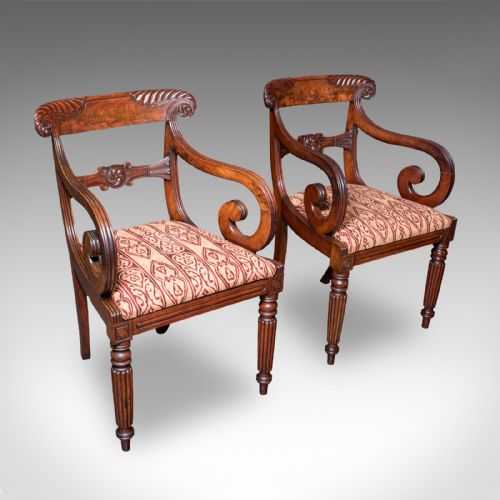
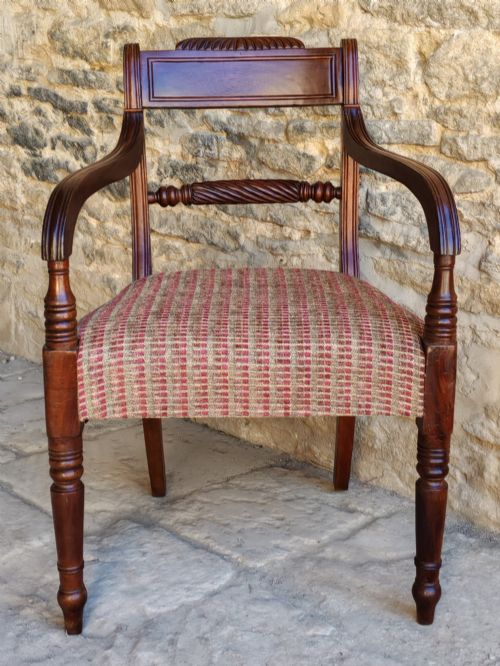
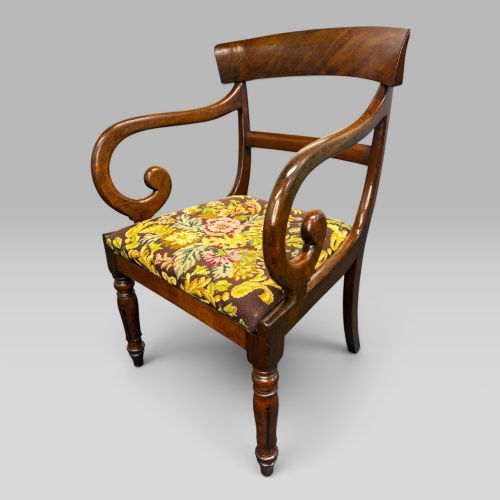
A 19th century carver spans formal mahogany dining armchairs from the Regency and Victorian periods alongside robust country elbow chairs made from vernacular timbers.
Origins range from English regional workshops in the Thames Valley and Lincolnshire to Scottish sets and continental examples, providing a broad scope of domestic seating.
How They Were Made
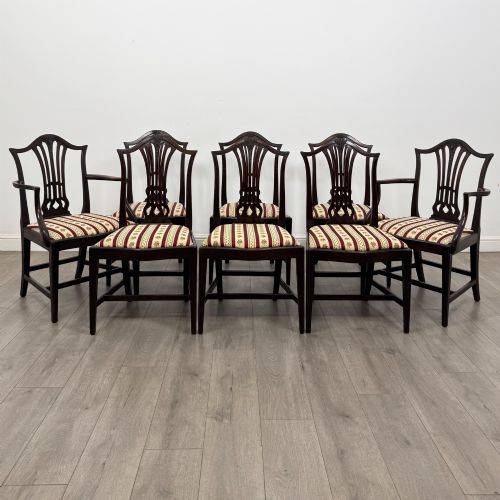
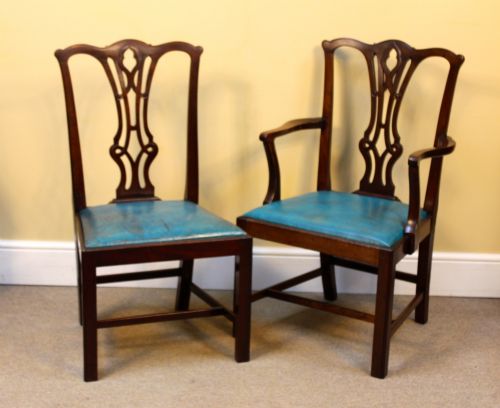
Cabinet makers utilised dense hardwoods like mahogany for formal dining and desk carvers, often employing curved splats, lyre backs, and upholstered drop-in seats covered in fabric, leather, or tapestry.
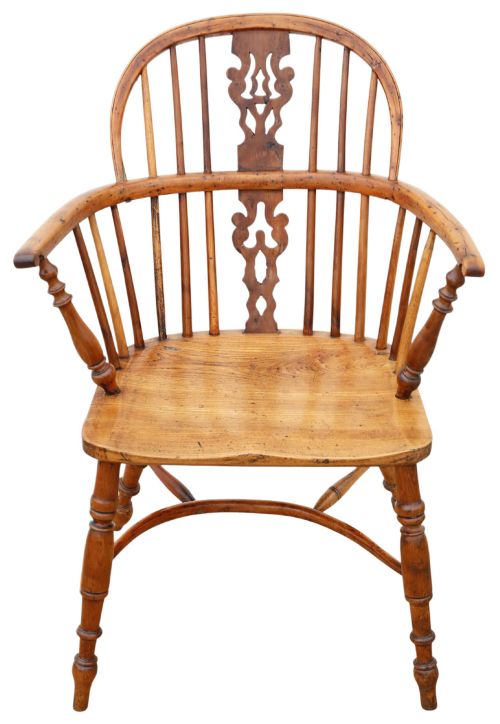
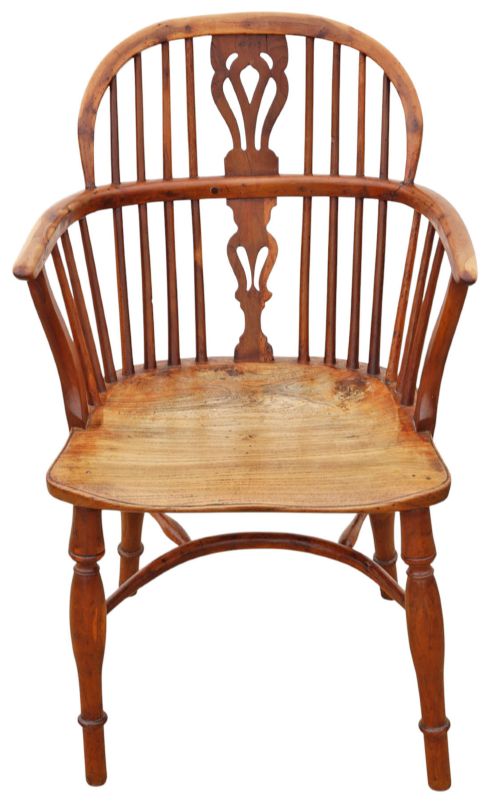
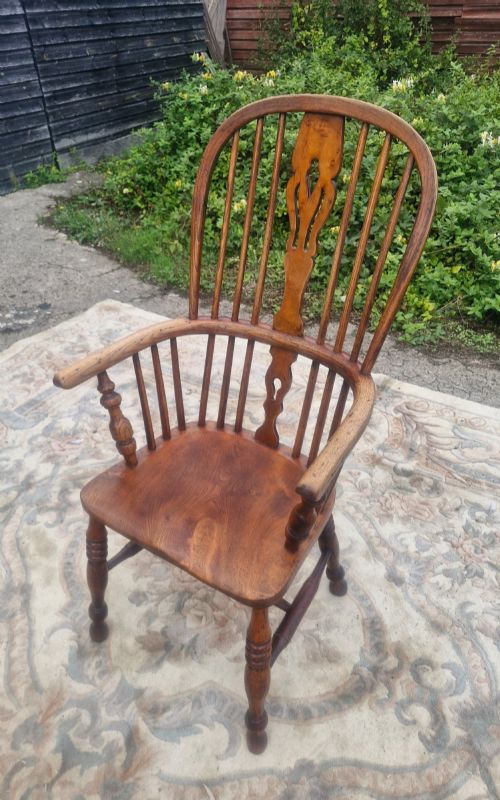
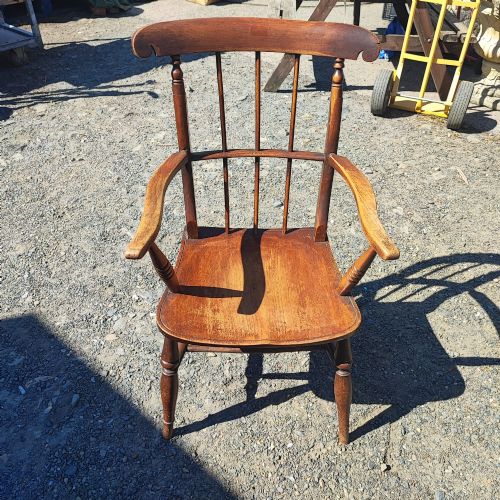
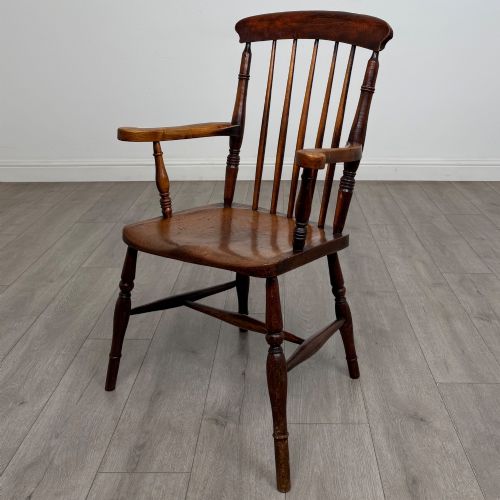
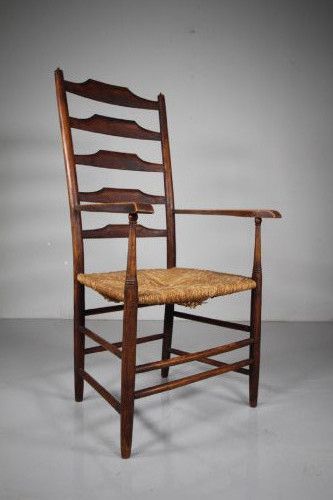
Country chairwrights turned to native woods including elm, ash, beech, yew, and laburnum, constructing Windsor and stick-back frames with steam-bent bows and pegged joints.
19th Century Carver Retail Price Guide 2026
Typical asking prices for 19th century carver among the pieces listed under this phrase on Sellingantiques today, from the lower quarter to the upper quarter. They describe what is for sale here now, not the wider market.
Carpentry mallets occasionally slip into the search results alongside the seating.
What Varies in Quality
The distinction between standard utility seating and top-tier exhibition pieces rests on the choice of timber selection, the crispness of carved details like shield backs and scroll arms, and the retention of original surface finishes.
Structural integrity depends on the tightness of traditional joinery, whether turned spindles remain firm within their seats, and the survival of matching grain patterns across large sets of dining chairs.
Philip Clissett·Cowtan & Sons
The 19th Century Carver Glossary
- Carver
- An armchair designed with elbow rests, traditionally placed at the head of a dining table or utilised at a desk.
- Windsor
- A traditional wooden chair featuring a solid carved wooden seat into which the legs, back spindles, and bow are separately inserted.
- Elbow Chair
- An alternative term for an armchair, commonly applied to seating with low side supports used in dining and reception rooms.
- Splats
- The vertical wooden strip placed centrally in the back of a chair, often shaped into vases, lyres, or openwork designs.
- Stick Back
- A chair construction method utilising plain turned wooden rods instead of a solid carved splat to form the backrest.
19th Century Carver: Frequently Asked Questions
What is a 19th century carver?
A 19th century carver is an armed wooden chair intended for use at the head of a dining table, as a desk chair, or as a standalone reception seat.
These pieces encompass both formal mahogany dining armchairs from the Regency and Victorian eras and sturdy vernacular country chairs made from elm and ash.
How were carver chairs used?
Historically, carvers served the master or mistress of the house at the dining table, offering wider seats and armrests compared to standard dining chairs.
They also found placement in libraries and offices as desk chairs or morning room seats for reading and writing.
How do I identify a Windsor carver?
A Windsor carver is recognised by its solid, thick wooden seat that acts as the central anchor for the entire construction.
The legs and back spindles are driven directly into bored holes in the seat slab, often paired with a steam-bent bow or hoop backrest.
Are carver chairs sold in sets?
While many carvers appear individually or as matched pairs for desks and reception rooms, they also form the armchaired portion of larger dining sets.
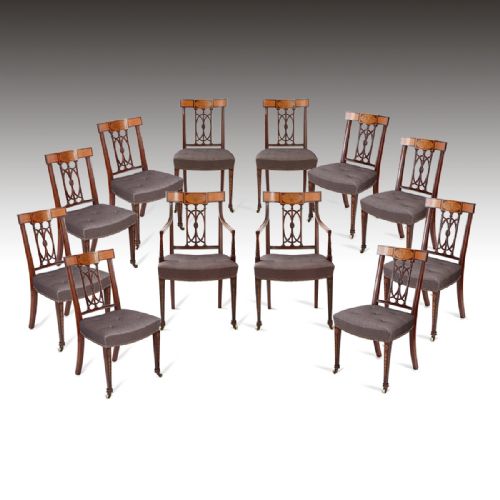
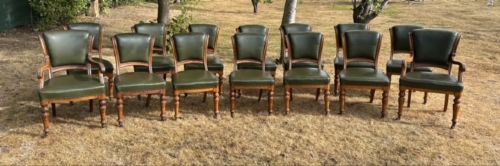
Larger dining sets typically include six or eight single chairs accompanied by one or two matching carvers for the table ends.