



Bar Back Armchair
A bar back armchair offers sturdy seating, combining structural wooden back rails with comfortable elbow supports seen across Georgian and Victorian periods.
Bar Back Armchair
When you search for a bar back armchair, you encounter seating developed across the 18th, 19th, and early 20th centuries in forms ranging from formal mahogany dining carvers to rustic country Windsor chairs.
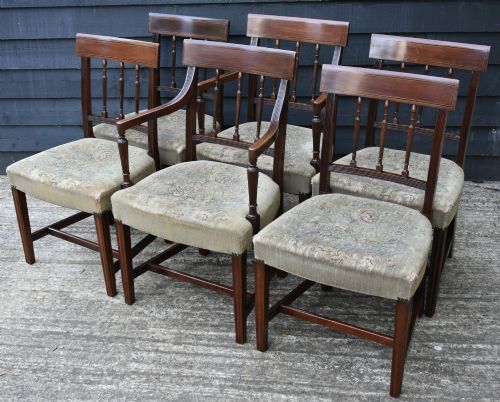
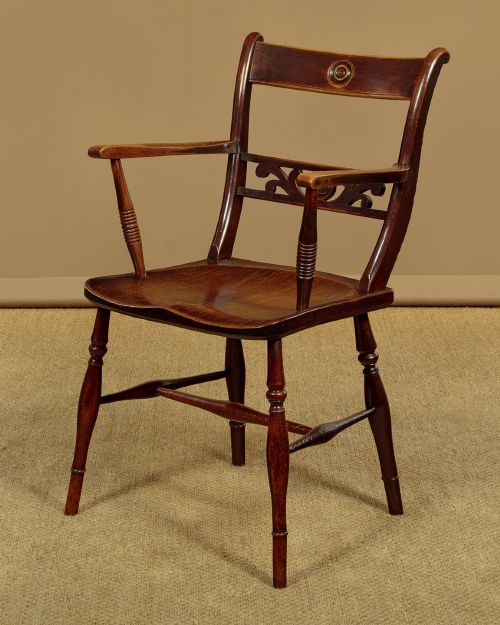
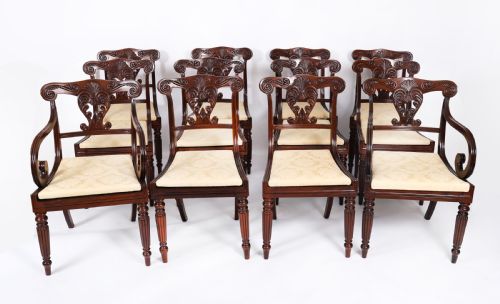
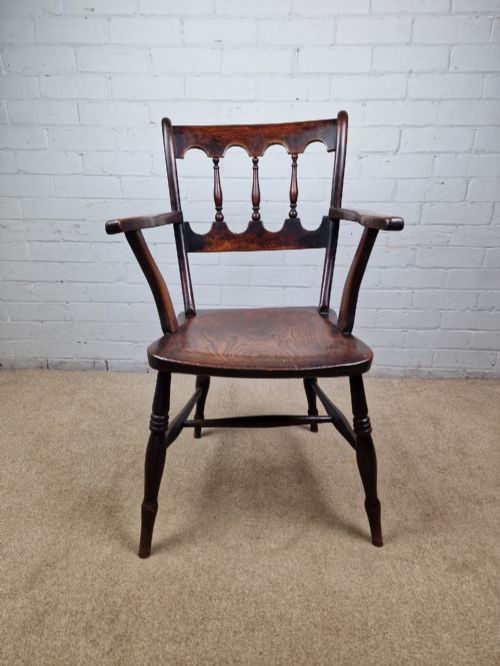
The pieces on this page appear predominantly as mahogany dining elbow chairs from the Regency and Georgian eras, alongside robust elm, beech, and birch country types including rocking variants.
Makers utilised the distinctive horizontal or curved wooden back rail to provide robust lumbar support while maintaining open aesthetics suitable for dining rooms and studies.
Materials and Construction
Cabinet makers and country joiners constructed these frames primarily from dense hardwoods like mahogany and oak, supplemented by resilient domestic timbers including elm, beech, and birch.
Seats often feature drop-in pads upholstered in fabric, leather, velvet, or tapestry, secured within traditional mortise and tenon joints designed to withstand heavy daily use.
Certain Windsor variants include bobbin turnings designed to amuse the eye while you rock.
Assessing Quality
Superior examples distinguish themselves through crisp timber carving on the back rail and well-proportioned scroll arms that integrate smoothly into the upright supports.
The integrity of the structural joinery and the selection of figured mahogany or mature fruitwood dictate the overall calibre of the piece.
The Bar Back Armchair Glossary
- Bar back
- A chair featuring one or more horizontal wooden slats across the upper backrest resembling a small rail or bar.
- Carver chair
- An armchair designed to match a set of dining chairs, typically placed at the head of a table.
- Elbow chair
- An alternative traditional term for an armchair, referencing the supportive side rests.
- Windsor
- A chair construction method where legs and back spindles are wedged directly into a solid sculpted wooden seat.
- Regency
- An English design style spanning the early 19th century, noted for classical neoclassical influences and clean lines.
Bar Back Armchair: Frequently Asked Questions
How are bar back armchairs used?
These chairs function primarily as end-of-table seating in dining rooms or as occasional reading chairs in studies.
Their sturdy elbow supports and supportive back rails provide comfort for prolonged sitting.
What woods were used?
Makers constructed formal examples from rich imported mahogany and oak.
Country variations relied on native timbers such as elm, beech, and birch for daily durability.
How do I date a chair?
Dating relies on identifying period styles, timber characteristics, and construction methods.
Georgian and Regency pieces display refined classical detailing, while Victorian and later examples show heavier proportions.
Are these chairs comfortable?
The curved wooden rails provide effective lumbar support during meals or desk work.
Many variants also include upholstered drop-in seats covered in leather, velvet, or fabric for added cushioning.