



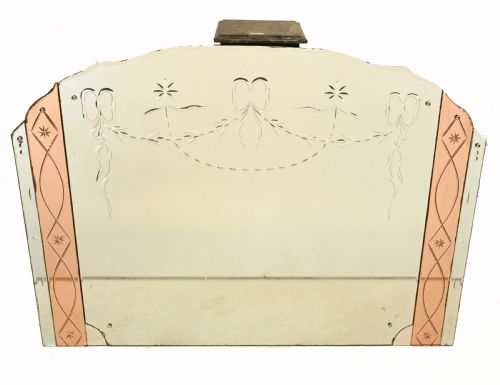

1930s Etched Glass Mirror
A 1930s etched glass mirror brings clean geometry and luminous glamour to a room through crisp acid-etched motifs and bevelled plates.
1930s Etched Glass Mirror
A 1930s etched glass mirror embodies the bold decorative spirit of the interwar years, appearing in circular, diamond, and rectangular formats designed for domestic display. Buyers seeking this phrase encounter wall mirrors, overmantel pieces, and mantle designs intended to catch the light in a hallway or principal reception room.
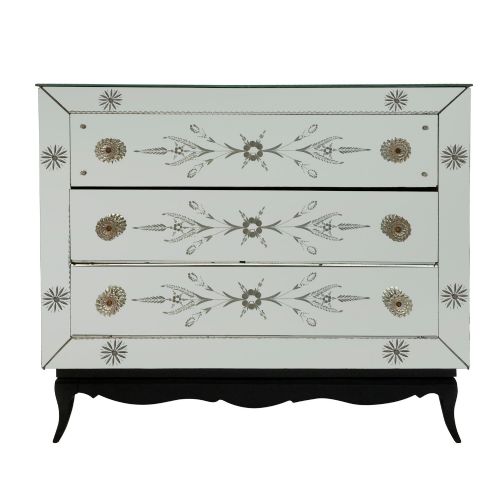
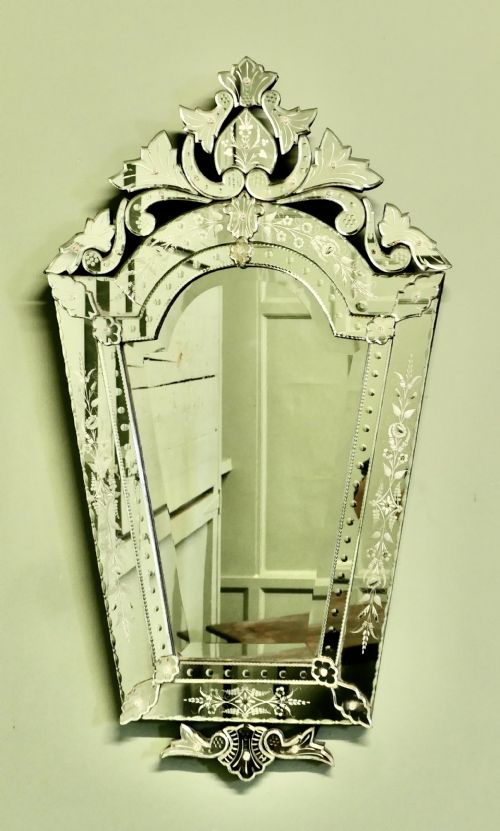
The selection on this page leans heavily into the Art Deco aesthetic alongside Venetian and French interpretations, capturing the era's fascination with reflective surfaces. Alongside standard wall mirrors, the evidence records related forms such as mirrored chests of drawers, trays, and fire screens that share the same characteristic glass construction.
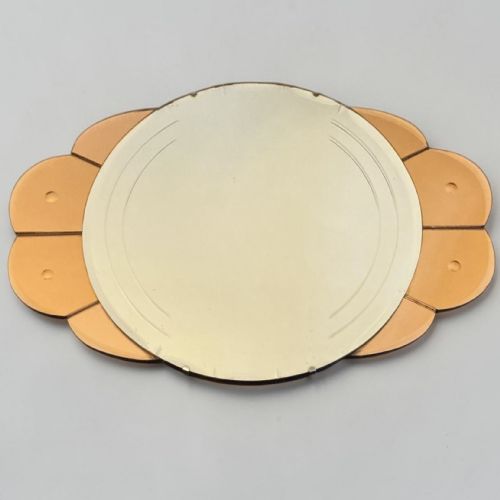
Origins span English and continental workshops, frequently employing peach-coloured glass or clear mirrored plates shaped into geometric silhouettes. These pieces serve as functional wall art, combining structural wood or metal backings with intricate surface decoration.
How these mirrors were constructed
Makers built these pieces using mirrored glass and standard glass plates mounted onto supportive wooden frames or secured with metal clips and brass fixings. The surface decoration relied on acid etching or embossing to carve floral, linear, or figurative motifs directly into the glass plate.
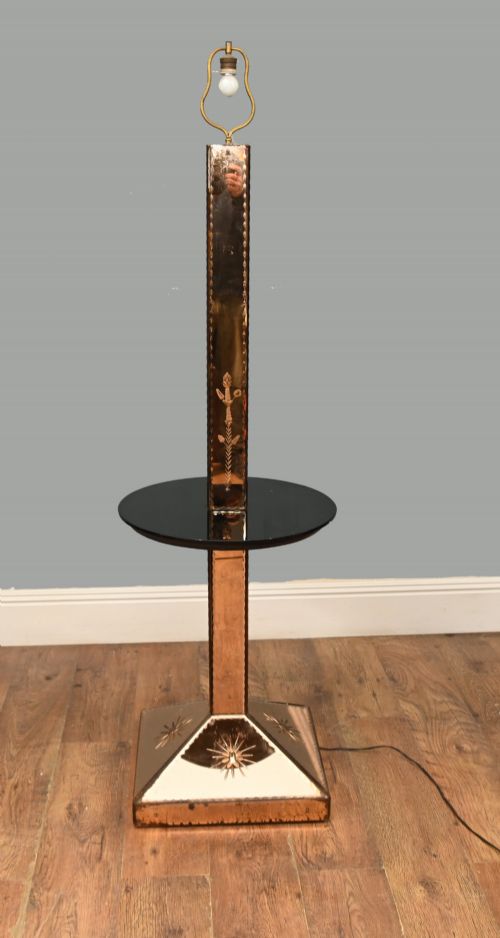
Many examples incorporate specialised materials such as peach-coloured glass and chrome accents to heighten the decorative contrast characteristic of the period. Heavy bevelled edges were hand-ground onto the glass plates to create angled light refractions around the perimeter of the frame.
Some mirrors were designed to double as fire screens, keeping unlit hearths glamorous.
What separates the finest examples
Quality in a 1930s etched glass mirror rests upon the depth and precision of the surface etching, where crisp, sharply defined lines demonstrate superior craftsmanship over shallow or blurred engraving. The integrity of the underlying silvering on the glass plate also dictates value, with even ageing remaining preferable to heavy, obscuring degradation.
The sophistication of the silhouette defines the upper tier of the range, particularly in pieces featuring complex diamond, circular, or multi-panel geometries rather than simple rectangular cuts. Superior examples often integrate contrasting materials like brass or specialised tinted glass with a harmonious structural balance.
The 1930s Etched Glass Mirror Glossary
- Etched glass
- Glass treated with acid or abrasive substances to create a frosted, recessed design on the clear or mirrored surface. This technique produces permanent decorative patterns that diffuse reflected light.
- Bevelled plate
- A glass mirror whose outer edges are cut and polished at an oblique angle to create a framed border effect. This process adds depth and catches light from multiple angles.
- Peach glass
- A tinted mirror glass variant with a warm pinkish-orange hue popular in interior decoration during the interwar decades. It imparts a softer, more atmospheric reflection than standard silvered glass.
- Overmantel mirror
- A large decorative mirror designed specifically to hang on the wall above a fireplace mantelpiece. These pieces often span the full width of the hearth structure.
- Fire screen
- A decorative panel placed in front of a fireplace opening when not in use, frequently constructed with mirrored glass and metal frames during this period.
1930s Etched Glass Mirror: Frequently Asked Questions
Where should I hang a 1930s etched mirror?
These mirrors work best on principal walls in hallways, sitting rooms, or above mantelpieces where they can reflect natural light and anchor the room's decorative scheme.
Ensure the wall fixings match the weight of the wooden or metal backing to support the glass safely.
How do I identify a 1930s piece?
Look for characteristic Art Deco geometries, Venetian influences, and specific material choices such as peach-coloured glass or heavy bevelled plates.
Construction details like period wooden backboards and brass fixings further confirm the era.
How do I clean an etched mirror safely?
Use a soft microfiber cloth and a gentle, ammonia-free glass cleaner applied to the cloth rather than directly onto the mirror surface.
Take care around the etched areas and the edges of the plate to prevent moisture seeping behind the silvering.
What is foxing on old mirrors?
Foxing refers to the small dark spots or cloudy patches that develop on the reflective silver backing of older glass over time.
This natural ageing process is often valued by collectors as evidence of authenticity.