




Vintage Cut Glass Mirror
These vintage cut glass mirror pieces bring brilliant reflection and period character to a room, spanning styles from Victorian to Art Deco.
Vintage Cut Glass Mirror
A vintage cut glass mirror selection covers wall-hanging plates, fire screens, trays and architectural panels spanning the nineteenth and twentieth centuries. Buyers encounter Victorian, Edwardian and Art Deco examples alongside Georgian Revival interpretations.
Wall mirrors dominate the selection, appearing in circular, rectangular and diamond formats. Pieces range from simple framed plates to elaborate Venetian constructions with ruby red borders and etched motifs.
How they were made
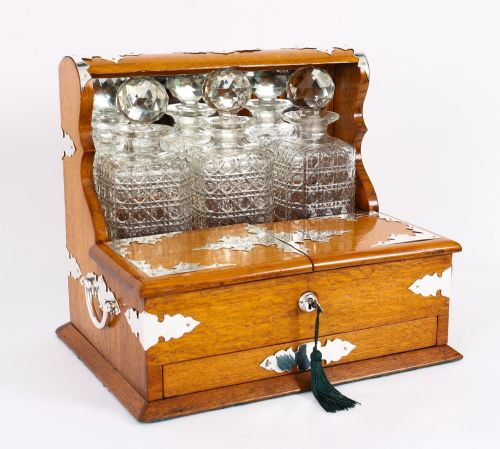
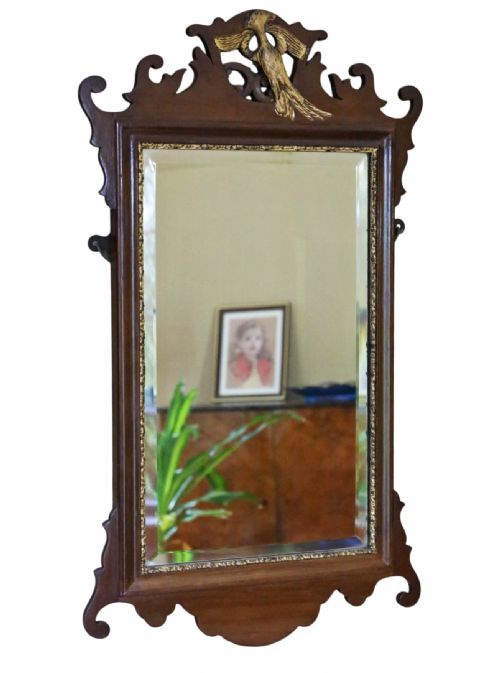
Craftsmen mounted mirror glass into wooden frames of oak, mahogany, walnut or ebonised timber, often incorporating brass or chrome metalwork. Some items utilise velvet coverings or integrated wooden cabinetry such as tantalus sets.
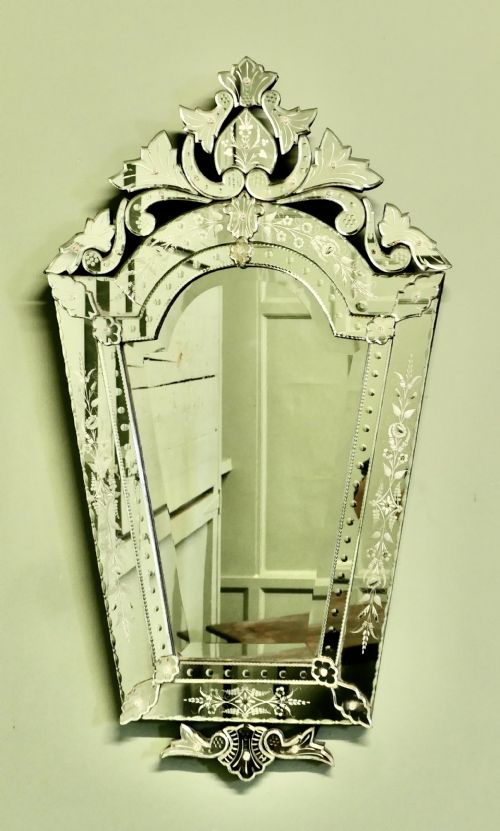
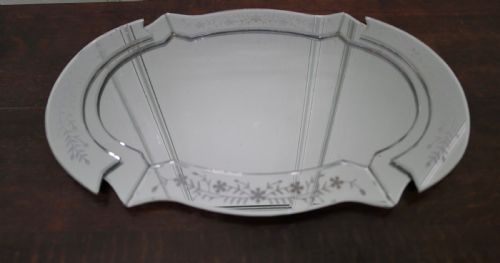
The glass plate itself received surface decoration through cutting, bevelring, etching and engraving techniques. Venetian plates feature distinct cut glass framing elements combined with hand-etched floral or geometric details.
Some mirrors double as dry bars with hidden decanters, perfect for secret nineteenth-century refreshments.
What varies in quality
Quality rests upon the depth and clarity of the glass cutting and the precision of the hand-etching on the plate. Finer examples display crisp bevels and intricate wheel-engraved motifs without distortion.
The construction of the surrounding frame, whether fret-cut mahogany, brass sunburst mounts or Venetian glass sections, dictates the overall execution and architectural presence of the object.
The Vintage Cut Glass Mirror Glossary
- Bevel
- An angled edge ground along the perimeter of the glass plate. This technique catches light and adds depth to the reflection.
- Etching
- A process of cutting designs into the glass surface using acid or mechanical tools. It creates frosted or opaque decorative patterns against clear glass.
- Tantalus
- A locked wooden drinks cabinet holding decanters visible through the glass or wood panels. They frequently incorporate nineteenth-century oak and brass fittings.
- Fire screen
- A decorative panel placed in front of an unused fireplace. These often utilise brass frames enclosing etched or mirrored glass.
Vintage Cut Glass Mirror: Frequently Asked Questions
Can I clean vintage mirror glass without damage?
Cleaning requires a soft microfibre cloth and mild soapy water applied sparingly to avoid seeping behind the glass plate. Harsh chemical sprays strip fragile silvering and damage antique wooden or brass frames.
Dry the edges thoroughly after wiping to prevent moisture pooling in the bevels or backing. Avoid abrasive pads that scratch both the old glass surface and the delicate etched details.
What defines an Art Deco mirror?
Art Deco mirrors display geometric forms such as circles, diamonds and sunbursts, popular during the 1920s and 1930s. They often feature frameless designs or polished chrome fittings alongside stepped glass sections.
The aesthetic focuses on clean lines and symmetrical arrangement rather than the ornate carving found in earlier Victorian or Georgian Revival pieces.
How do I identify Venetian mirror styles?
Venetian mirrors feature glass frames built from multiple cut and engraved glass sections fixed over a wooden backing. They frequently incorporate floral motifs, ruby red borders and applied crests.
These pieces rely on reflective glass elements rather than wood or metal to define their outer borders, creating a luminous wall display.