



1930s Bevelled Wall Mirror
These 1930s bevelled wall mirrors bring geometric brilliance and clean lines to a room, offering distinct period charm through angled glass edges.
1930s Bevelled Wall Mirror
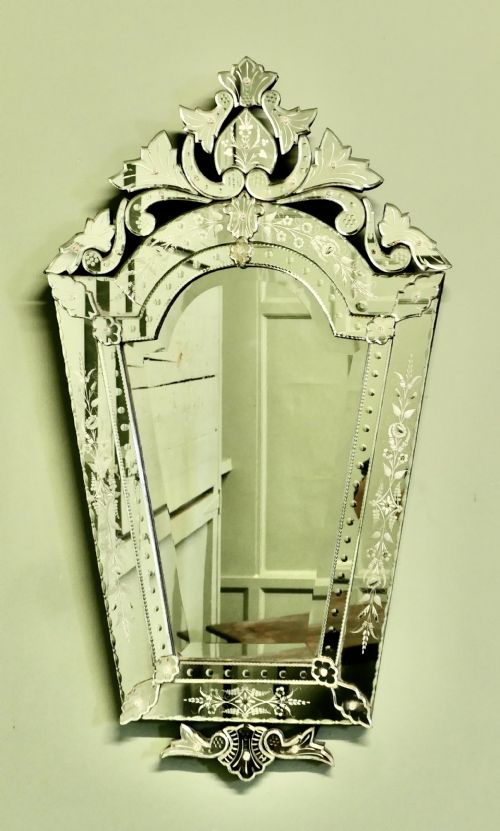
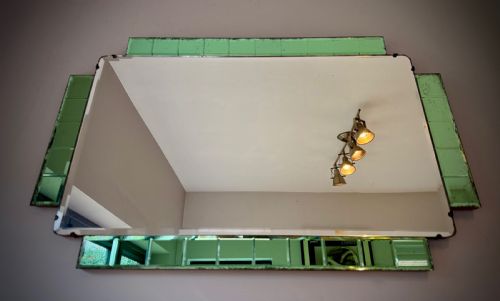
A 1930s bevelled wall mirror captures the essence of early twentieth-century design, appearing primarily in Art Deco and Venetian styles. These pieces combine functional glass with decorative framing or shaped plates, serving as striking focal points in domestic interiors.
The most common formats on this page are wall mirrors featuring distinct geometric cuts or shaped plates. Variations include items paired with leather frames, brass elements, or integrated clock faces.
How they were made
Makers utilised silvered glass and mirror glass alongside supporting structures formed from wood, chrome, and brass. Leather and metal components frequently served as framing or suspension straps, anchoring the heavier glass plates.
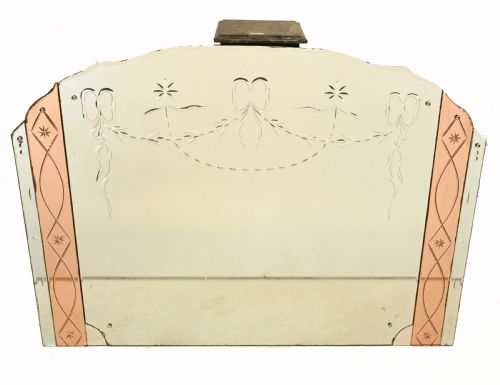
Techniques relied on precise cutting and hand-bevelling of the glass edges to catch and refract light at sharp angles. Artisans also applied etching and embossing directly onto the mirror surface to create patterned borders and decorative motifs.
One extraordinary piece even conceals a clock face within the glass, allowing you to check the time while inspecting your reflection.
What varies in quality
Quality rests in the complexity of the glasswork and the integrity of the underlying materials. Pieces featuring specialised additions like coloured glass panels or intricate etching demonstrate superior ambition compared to plain plates.
The preservation of the silvered backing and the crispness of the bevelled edge define the upper tier of these mirrors. Original structural materials, such as untouched leather straps or solid metal mounts, elevate an example above later alterations.
The 1930s Bevelled Wall Mirror Glossary
- Bevelled plate
- Glass with an angled edge ground down to a thinner perimeter. This technique creates a prismatic border that catches light.
- Silvered glass
- Glass coated on the reverse with a reflective metallic compound. This layer provides the underlying mirror finish.
- Foxed
- Age-related degradation of the silvered backing resulting in dark spots or misty patches. Collectors value this natural ageing as proof of period authenticity.
- Art Deco
- A design style dominant in the 1920s and 1930s characterised by geometric shapes, streamlined forms, and bold symmetry.
- Venetian mirror
- A style featuring decorative glass elements and engraved details across the frame and plate. These pieces often lack a traditional wooden or metal chassis.
1930s Bevelled Wall Mirror: Frequently Asked Questions
How do I hang a heavy wall mirror safely?
Ensure your fixings match the weight of the glass and the composition of your wall. Utilise proper wall anchors and brackets that support the frame or suspension points securely.
Check that any leather straps or metal chains used for hanging remain strong and stable before mounting the piece at eye level.
What causes dark spots on old mirrors?
Dark spots occur when moisture penetrates behind the glass and oxidises the silvered backing over decades. This natural process is known as foxing.
Such marks confirm the age of the glass and distinguish period originals from modern reproductions.
How should I clean vintage mirror glass?
Wipe the surface gently with a soft, lint-free cloth and a mild glass cleaner. Avoid spraying liquid directly onto the edges where moisture might seep behind the silvering.
Take extra care around bevelled borders and etched areas to prevent abrasive damage to the detailed surfaces.
Are these mirrors suitable for bathrooms?
High humidity can accelerate the degradation of original silvered backings and vintage metal frames. Placing them in damp environments risks expanding existing foxing.
Dry interior rooms provide the stable conditions necessary to preserve the materials and structure of period glass.