


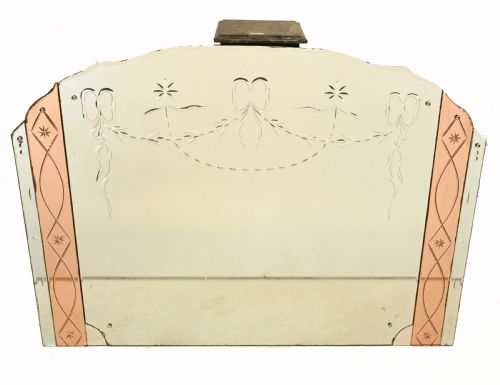

Art Deco Overmantel Mirror
An art deco overmantel mirror brings architectural geometry and period glamour to a chimney breast.
What They Are
An art deco overmantel mirror is a wall-hanging glass piece designed to sit above a fireplace, though many examples function equally well as principal wall mirrors in a hallway or living room. You will most frequently encounter rectangular, diamond, and multi-panel mirror formats dating from the nineteen twenties and nineteen thirties.
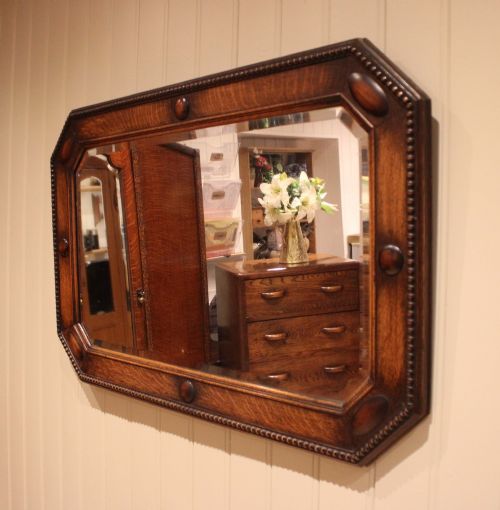
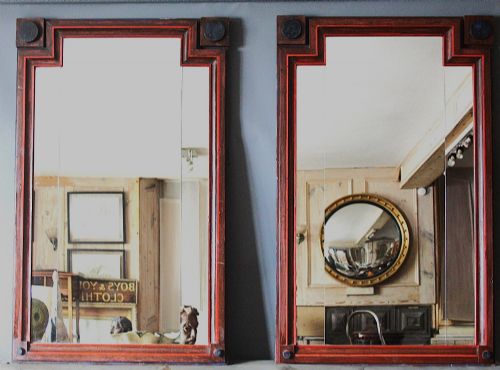
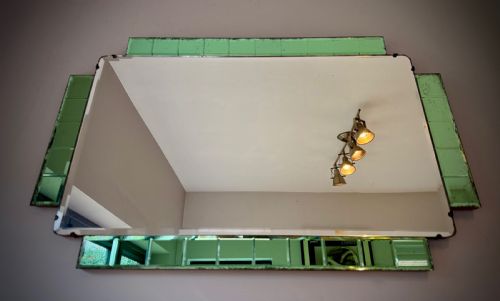
The objects available range from large English and French wall mirrors to specific overmantel variations incorporating wooden consoles or contrasting tinted glass sections. These pieces rely on clean geometric lines and striking silhouettes rather than intricate surface carving.
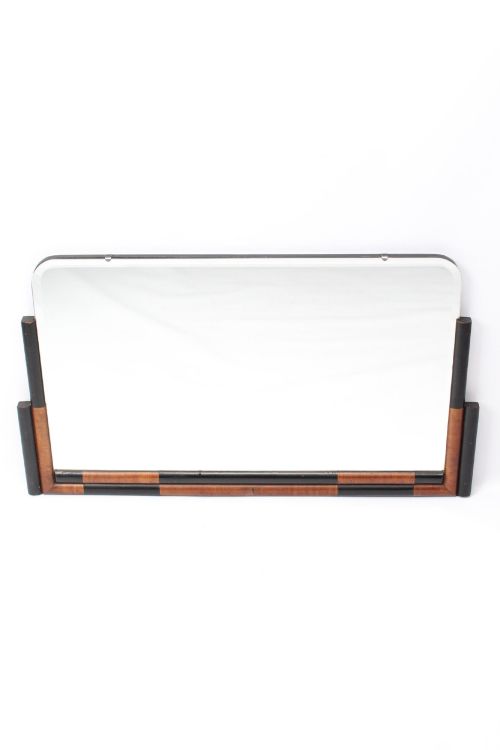
Makers utilised contrasting tones and layered shapes to create a sense of movement and visual width above the mantelpiece. Surviving examples often feature stepped crests, symmetrical side panels, and distinct geometric framing.
How They Were Made
Makers constructed these mirrors using solid and veneered timbers such as walnut alongside ebonised wood and gilt wood. The reflective surfaces combine standard mirror glass with coloured elements like peach glass, secured within sturdy wooden backing frames.
Details such as chrome fittings and applied paintwork provide additional contrast against the warm timber grains and metallic glass tones. Artisans bevelled the edges of individual glass segments to catch and refract the light from different angles.
Retail Price Guide 2026
Typical UK retail prices for art deco overmantel mirror, calculated from the Sellingantiques database of over a million retail prices indexed since 2003. This retail price guide relies exclusively on Sellingantiques data; no external sources or auction records are used, so the figures do not describe the wider market.
Listings feature pieces from the nineteen twenties and nineteen thirties utilising walnut, ebonised wood, peach glass, and chrome.
What Varies in Quality
Quality in these mirrors rests upon the ambition of the geometry and the harmonious integration of mixed materials. Pieces that combine peach glass with walnut or ebonised wood demonstrate a higher design aspiration than plain single-plate alternatives.
The sophistication of the construction distinguishes standard production from finer work, particularly where multi-panel diamond layouts or stepped wooden crests are involved. Better examples display precise joinery and balanced proportions that anchor a room without overwhelming the fireplace.
The Art Deco Overmantel Mirror Glossary
- Overmantel mirror
- A large wall mirror specifically proportioned to hang on the wall directly above a fireplace mantelpiece. These pieces frequently repeat the width of the fireplace surround.
- Peach glass
- Tinted mirror glass exhibiting a warm pinkish-orange hue, utilised in sections to create distinctive two-tone colour schemes.
- Ebonised wood
- Timber treated with a dark stain or chemical process to imitate the dense black appearance of ebony.
- Bevel
- An angled edge cut around the perimeter of the mirror glass to soften the profile and catch the ambient light.
Frequently Asked Questions
Where should I hang an overmantel mirror?
These mirrors traditionally anchor the space directly above a fireplace mantelpiece, where their horizontal or large vertical proportions balance the hearth below.
They also function effectively on principal living room or hallway walls where their geometric frames can catch and reflect natural light.
How do I date an art deco mirror?
Dating relies on the characteristic materials, geometry, and construction methods recorded from the nineteen twenties and nineteen thirties.
Look for combinations of walnut, ebonised wood, peach glass, and chrome framing that define the period aesthetic.
Can these mirrors be hung without a fireplace?
Despite their traditional name, many of these pieces serve as striking wall mirrors in rooms without fireplaces.
Their substantial scale and decorative glass panels allow them to act as standalone focal points on any large wall.
What maintenance do antique mirrors need?
Keep the glass clean using a soft cloth and a gentle cleaner, avoiding harsh chemicals that might seep behind the edges.
Ensure the hanging wire and wall fixings remain secure given the substantial weight of large wooden and glass frames.