

1930s Burr Walnut Table
When you search 1930s burr walnut table, you are looking for domestic furniture defined by figured wood veneers and Art Deco design.
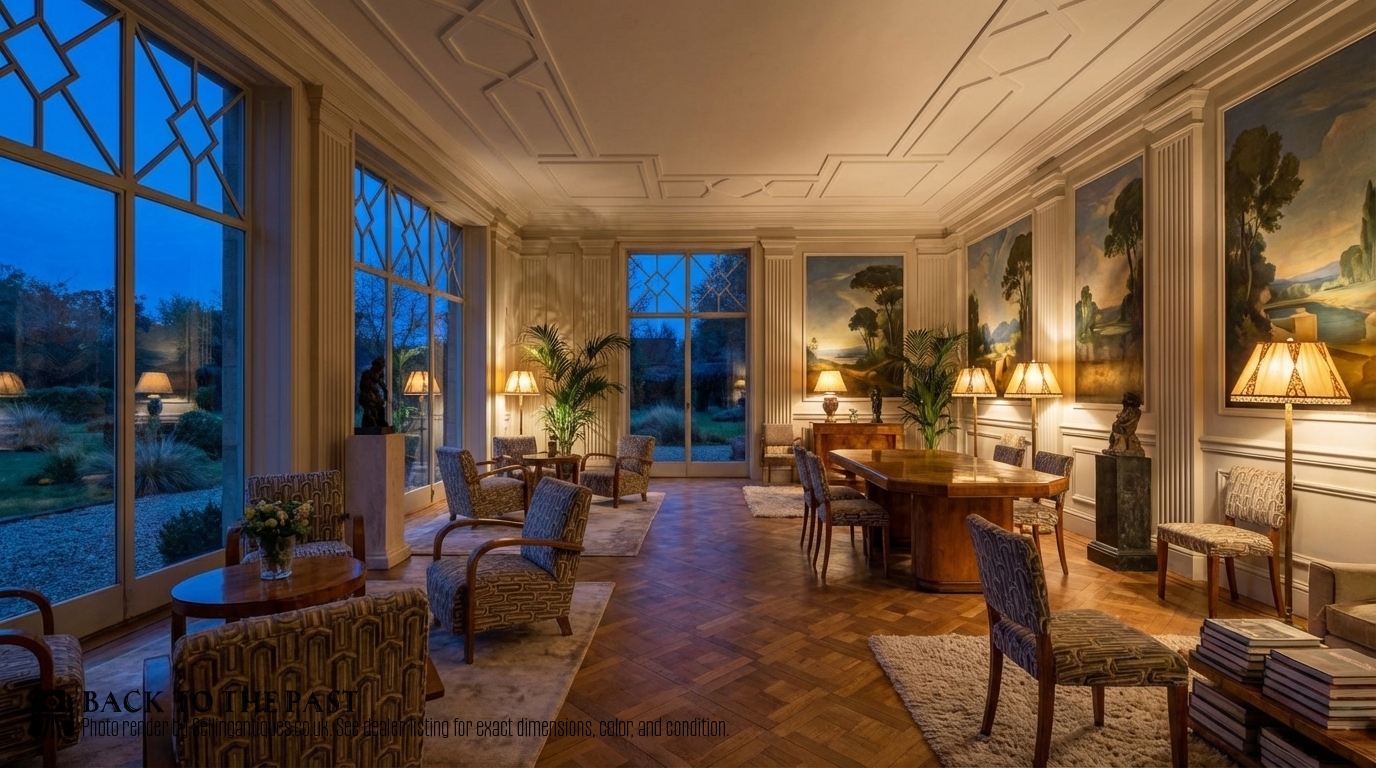
What 1930s burr walnut table pieces are
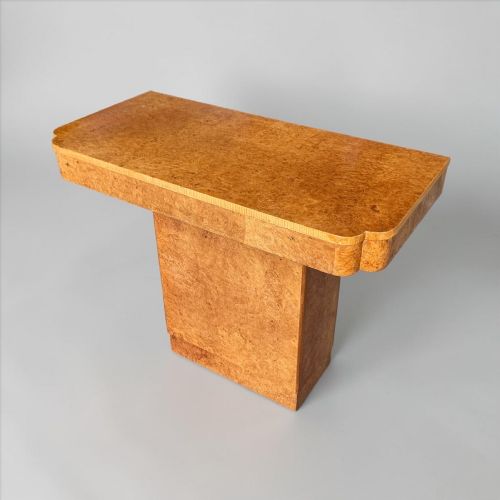
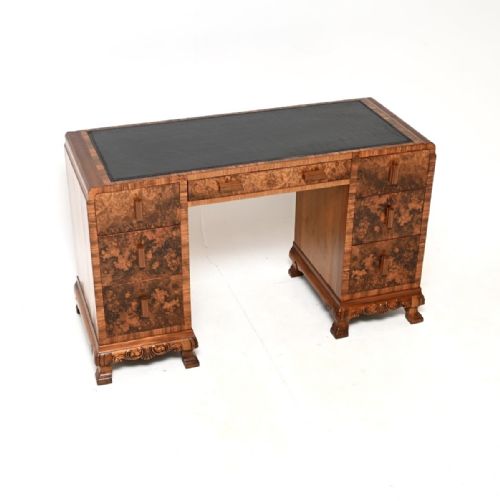
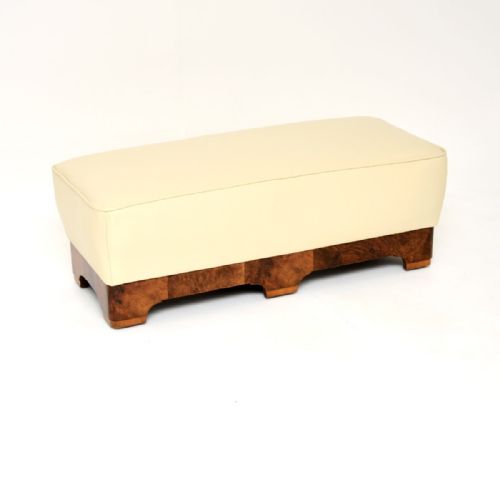
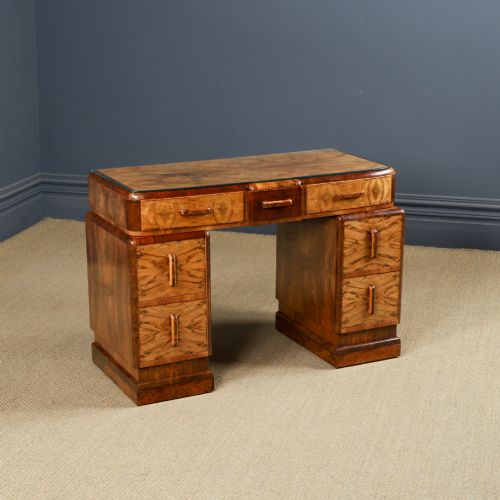
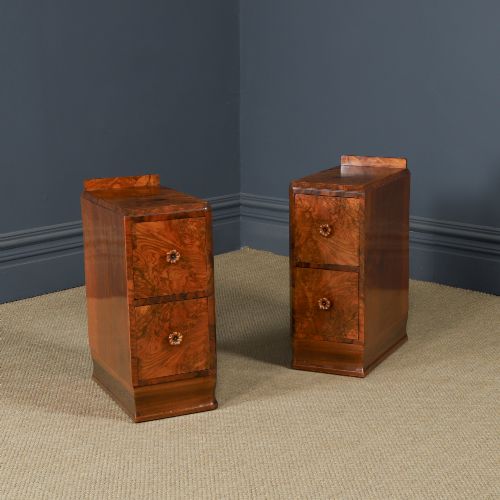
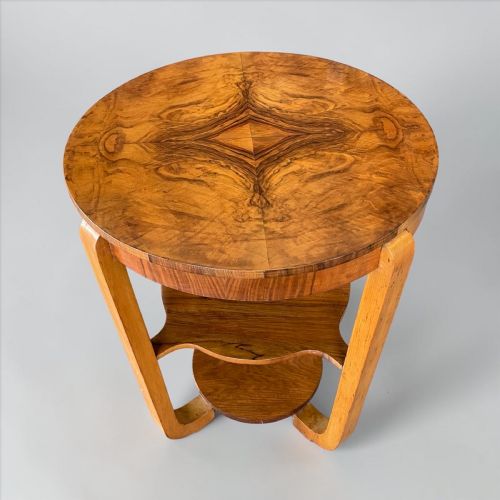
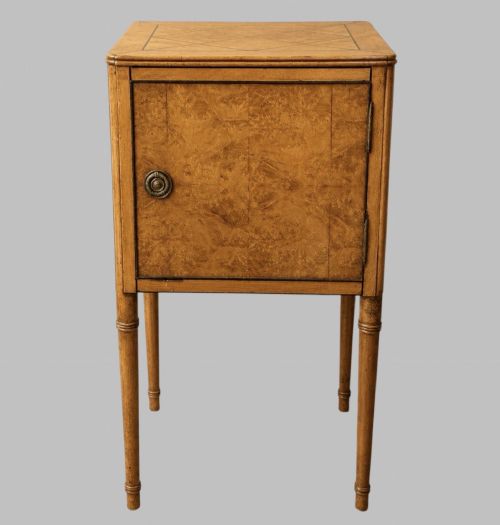
A 1930s burr walnut table comprises dining sets, coffee tables, dressing tables, library tables, and occasional tables originating primarily from the 1930 and Edwardian periods. These forms incorporate walnut, burr walnut veneer, hardwood, glass, and metal.
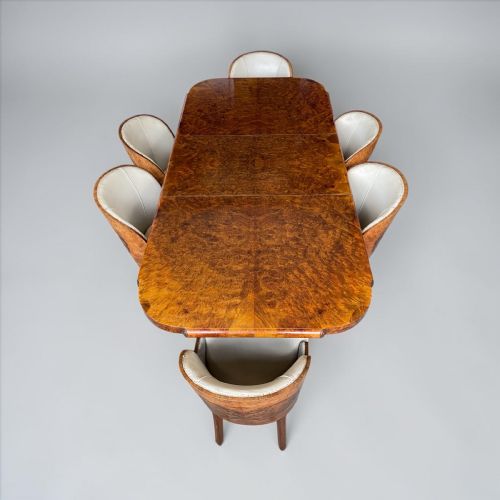
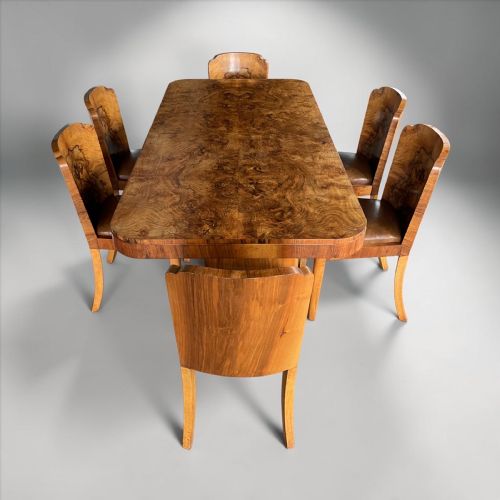
The most common examples on this page are dining tables, dining sets, coffee tables, and dressing tables designed in the Art Deco style.
How they were made
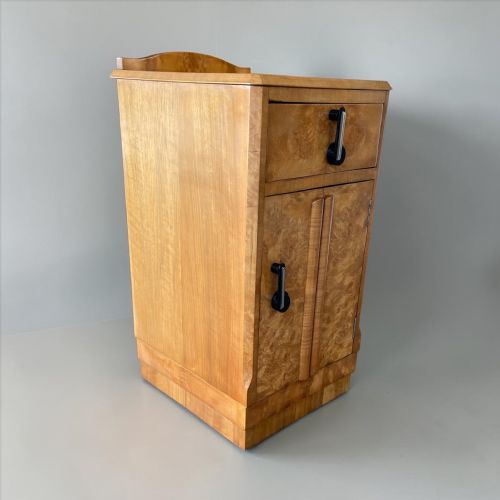
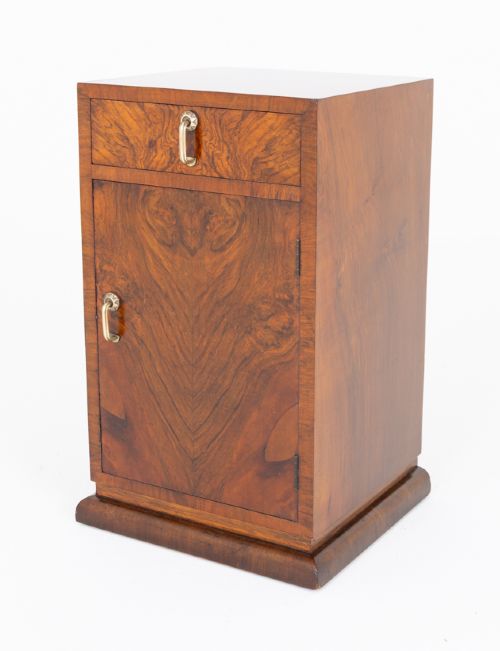
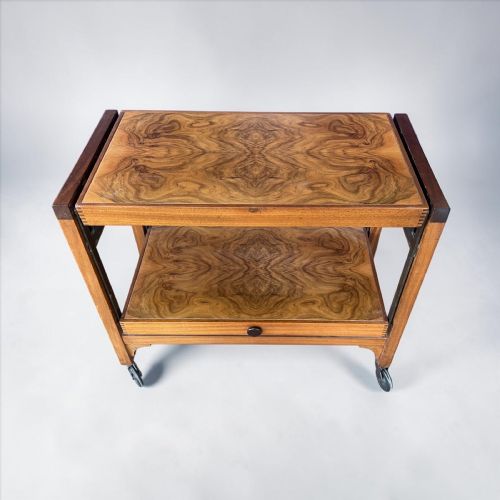
Construction relies on hardwood frames surfaced with burr walnut veneer and plain walnut, sometimes complemented by cross banding. Tables incorporate additional elements such as leather inserts, glass tops, and metal mounts.
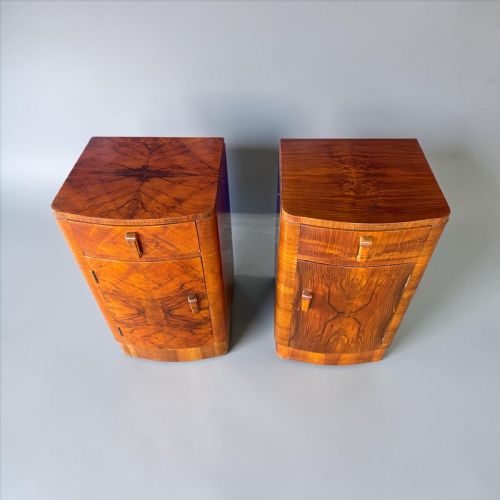
The decorative effect depends on the natural patterns of the burr walnut veneer, matched across tabletops and supported by pedestal or leg structures.
Retail Price Guide 2026
Typical UK retail prices for 1930s burr walnut table, calculated from the Sellingantiques database of over a million retail prices indexed since 2003. This retail price guide relies exclusively on Sellingantiques data; no external sources or auction records are used, so the figures do not describe the wider market.
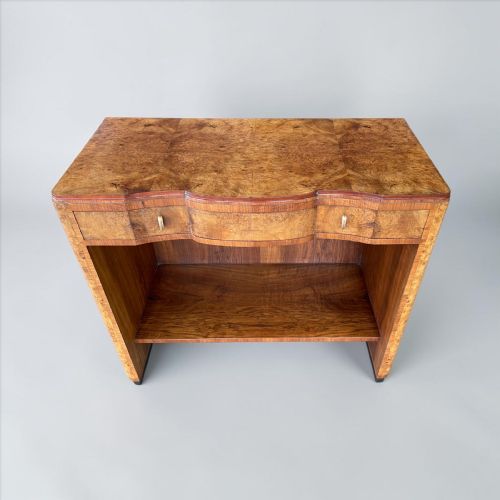
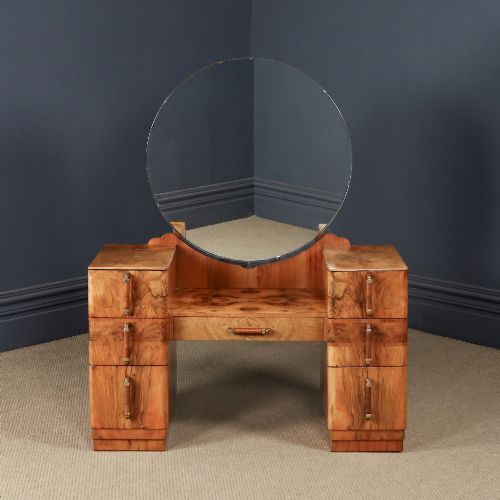
One dressing table comes equipped with its original mirror, ready for a 1930s reflection.
What varies in quality
Quality separates ordinary production from workshop output by maker attribution, such as pieces stamped by Hille London or designed by Maurice Adams. The handling of the burr walnut veneer and the cohesion of the Art Deco design dictate the visual standard.
Form and utility also differentiate the inventory, ranging from simple coffee tables and book tables to complete dining sets and fitted pedestal dressing tables with mirrors.
Maurice Adams·Hille London
The 1930s Burr Walnut Table Glossary
- Burr walnut
- A veneer sliced from walnut tree growths that produces intricate, swirling grain patterns. It forms the primary decorative surface for these tables.
- Art Deco
- A design style from the interwar period characterised by streamlined forms, geometric symmetry, and polished surfaces. It shapes the overall aesthetic of the dining and coffee tables seen here.
- Cross banding
- A narrow strip of veneer laid around the border of a tabletop with the grain running perpendicular to the centre. This technique frames the burr walnut panels.
- Pedestal table
- A table supported by a central pillar or column rather than four corner legs. This construction appears frequently on dressing tables and dining tables.
Frequently Asked Questions
What is a 1930s burr walnut table?
These pieces are wooden domestic furnishings surfaced with figured burr walnut veneer. They encompass dining sets, coffee tables, library tables, and dressing tables.
Most examples adhere to the Art Deco style of the period, combining functional forms with decorative wood grains.
How do I identify Art Deco style?
Art Deco furniture relies on clean geometric lines, symmetrical arrangements, and polished wood surfaces. It moves away from heavy Victorian ornamentation towards streamlined modernism.
On these tables, the style appears through clean silhouettes and the striking visual patterns of the burr walnut veneer.
Where were these tables used?
These tables served domestic interior spaces such as dining rooms, libraries, and bedrooms. Dining tables and chairs accommodated formal meals, while dressing tables were placed in bedrooms.
Smaller pieces like coffee tables and occasional tables functioned as reception room furnishings.
How do I care for burr walnut?
Burr walnut furniture requires protection from direct sunlight and excessive moisture to preserve the veneer. Regular dusting with a dry cloth maintains the polished surface without damaging the wood.
Avoiding heat sources prevents the veneer from lifting or cracking over time.