





18th Century Tabletop Chest
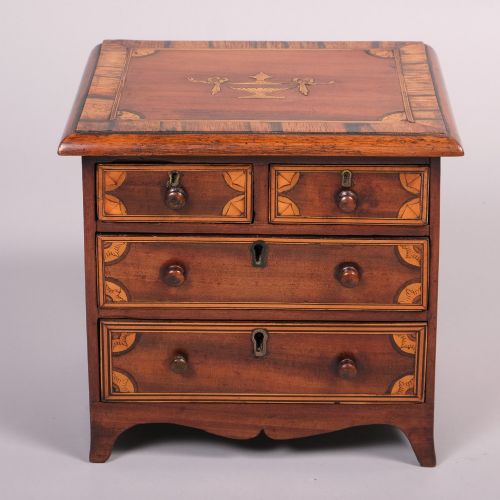
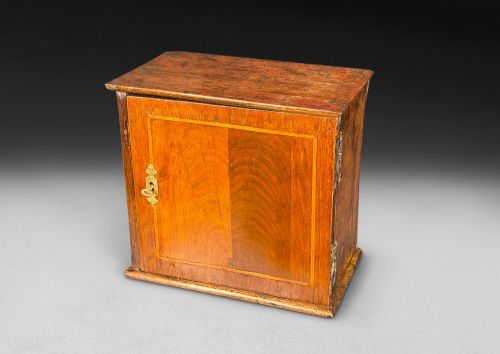
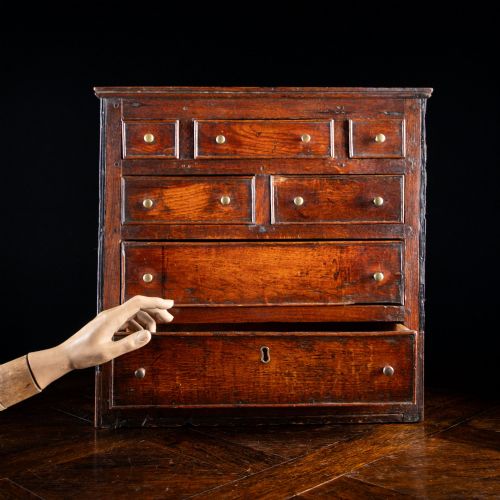
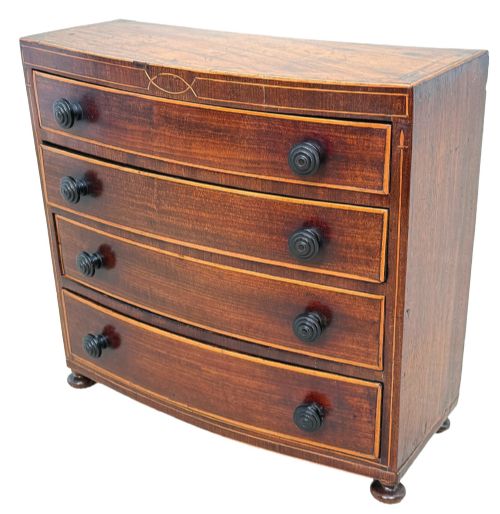
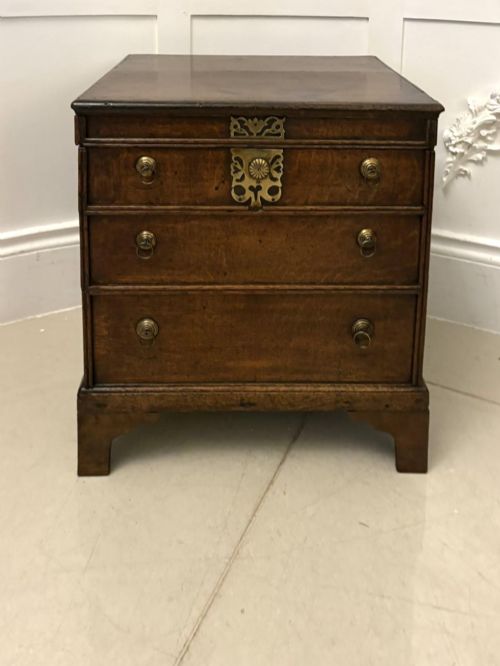
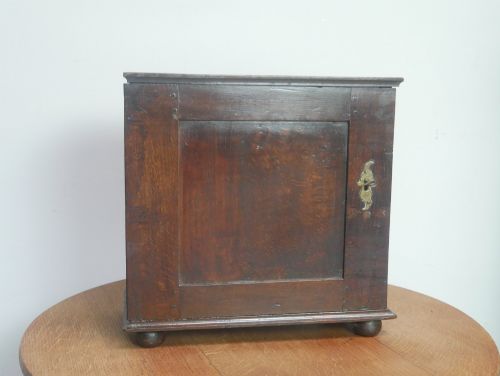
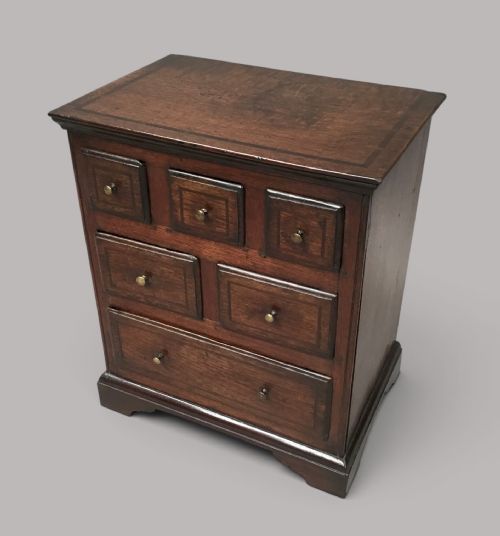
These 18th century tabletop chest pieces provide compact storage through miniature furniture, boxes, cabinets, and spice cupboards.
18th Century Tabletop Chest
An 18th century tabletop chest takes the form of miniature furniture, boxes, chests, collectors cabinets, and spice cupboards designed for small valuables or dry goods. Most examples encountered on this page date from the eighteenth century and the Georgian period, often reflecting regional British or continental styles.
The objects serve varied domestic functions, functioning as spice cupboards, jewelery cabinets, miniature court cupboards, or coffor bach pieces. These smaller receptacles sit upon tables or desks, offering secure and organised storage without occupying floor space.
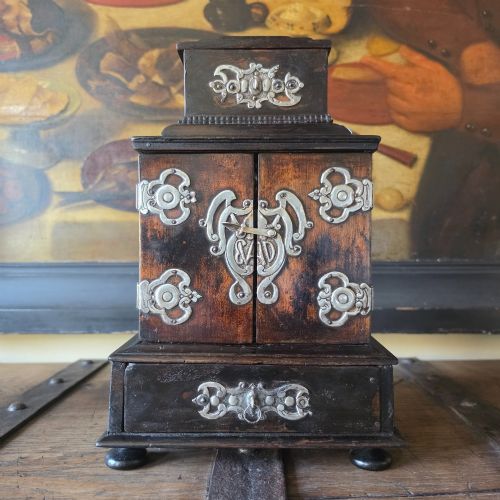
Makers produced these pieces in forms ranging from plain vernacular oak boxes to highly decorated Dutch marquetry and penwork cabinets. Buyers encounter simple Welsh vernacular formats alongside more elaborate mahogany collectors cabinets and kingwood coffre fort examples.
Materials and construction
Makers constructed these miniature chests using hardwoods such as oak, mahogany, walnut, kingwood, elm, and yew wood. Oak appears frequently in both plain and highly figured varieties, especially within regional British and Welsh vernacular pieces.
Metal components like brass handles, hinges, and lock plates provide structural reinforcement and decorative contrast to the timber surfaces. Iron fittings and silvered metal details also appear on specific continental and domestic boxes.
Surface treatments range from natural waxed patinas on elm and oak to intricate penwork and Dutch marquetry decoration. Cabinetmakers employed precise joinery techniques to scale down full-size chest proportions for tabletop use.
18th Century Tabletop Chest Retail Price Guide 2026
Typical asking prices for 18th century tabletop chest among the pieces listed under this phrase on Sellingantiques today, from the lower quarter to the upper quarter. They describe what is for sale here now, not the wider market.
Formats range from Welsh vernacular coffor bach pieces to refined Dutch marquetry and English penwork cabinets.
Judging quality in miniature chests
Quality rests in the choice of timber figure, the crispness of the secondary decoration, and the integrity of the original construction. Pieces featuring rich mahogany, figured walnut, or intricate penwork display higher ambition from the maker.
The refinement of miniature scaling separates standard utility boxes from exceptional cabinet work. Proportions that accurately mirror full-scale period furniture while maintaining functional drawers or doors demonstrate superior craftsmanship.
Surviving original hardware and undisturbed surface patinas elevate a piece significantly. Altered interiors, replaced brasses, or stripped finishes diminish the historic character of an 18th century tabletop chest.
The 18th Century Tabletop Chest Glossary
- Coffor Bach
- A small Welsh coffer or chest traditionally made in oak, often featuring a small drawer beneath the main lidded compartment.
- Collectors Cabinet
- A specialised miniature cabinet containing multiple small drawers intended for housing natural history specimens or small artefacts.
- Spice Cupboard
- A small wall-hanging or tabletop cupboard with a panelled door enclosing numerous tiny internal drawers for storing culinary spices.
- Coffre Fort
- A strongbox or reinforced miniature chest, frequently veneered in exotic timbers like kingwood and fitted with robust metal locking mechanisms.
- Penwork
- A surface decoration technique utilising fine ink drawing on wood, often finished with a protective clear coating.
- Apprentice Piece
- A small item of furniture created by a woodworker to demonstrate mastery of skills before achieving full guild membership.
18th Century Tabletop Chest: Frequently Asked Questions
What were tabletop chests used for?
These miniature pieces stored valuable commodities, documents, spices, and personal items like jewellery. Owners kept them in principal rooms or private chambers for secure, accessible storage.
Their compact scale allowed households to keep precious goods locked away safely before larger fitted furniture became common.
Where were these small chests made?
Production occurred across Britain, Wales, and continental Europe, particularly in regions with strong cabinetmaking traditions like the Netherlands. Local workshops utilised regional timbers available to them.
English and Welsh pieces heavily feature native oak and elm, while continental examples often showcase exotic veneers.
How do I date an 18th century chest?
Dating relies on timber selection, construction methods, and stylistic details aligned with periods like Early Georgian or the late eighteenth century. Hand-cut dovetails and timber movement characteristics provide clues to age.
Hardware styles and decorative techniques such as marquetry or penwork further narrow down the decade of creation.
How should I care for timber chests?
Keep wooden chests away from direct sunlight and fluctuating heat sources to prevent the timber from splitting or warping. Maintaining stable indoor humidity preserves the old wax finishes and structural joints.
Apply occasional traditional beeswax polish gently to nourish the dry wood surface without building up excessive residue.