



Tabletop Miniature Drawers
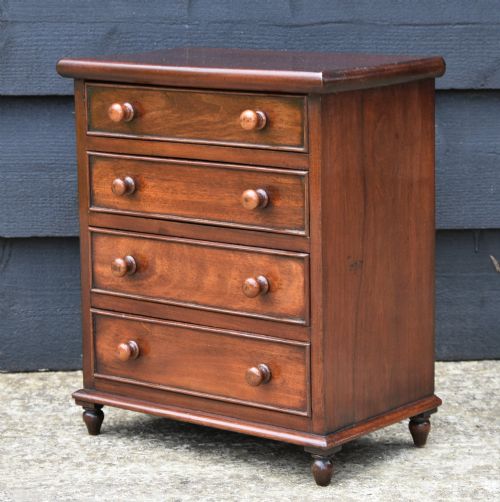
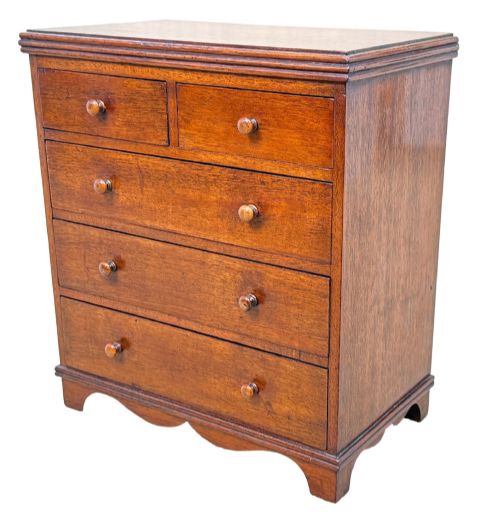
Tabletop miniature drawers are compact wooden storage pieces spanning the Georgian and Victorian eras, prized for their meticulous scaling and intimate utility.
Tabletop Miniature Drawers
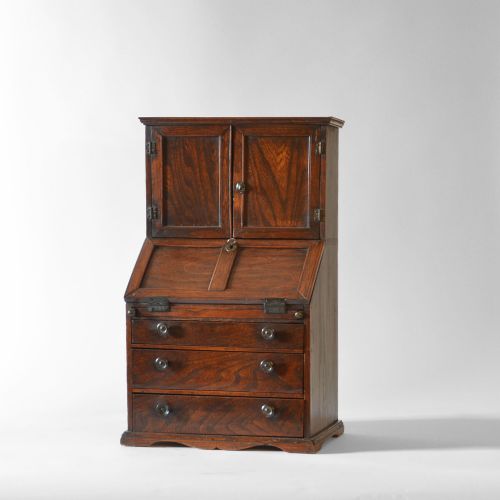
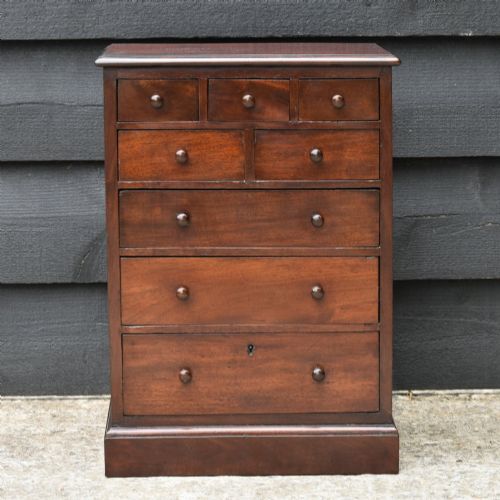
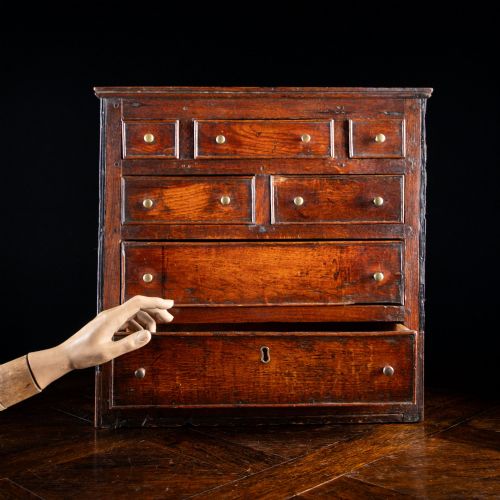
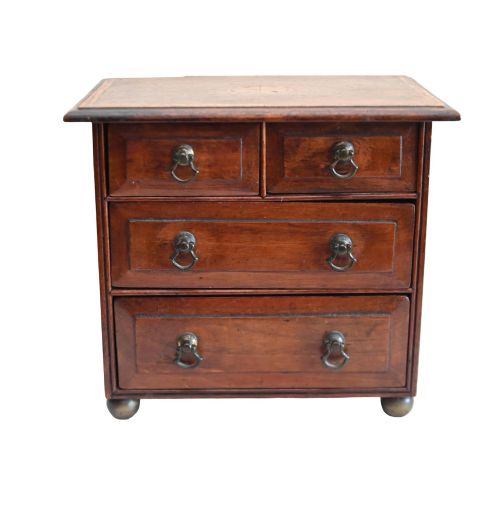
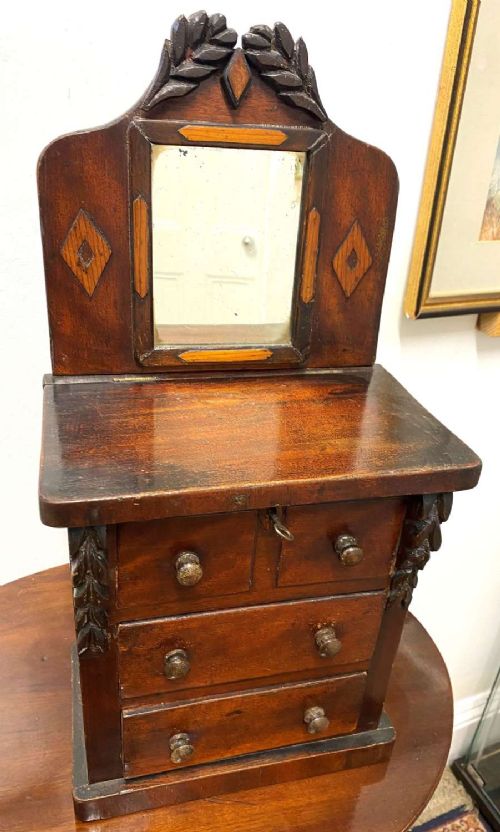
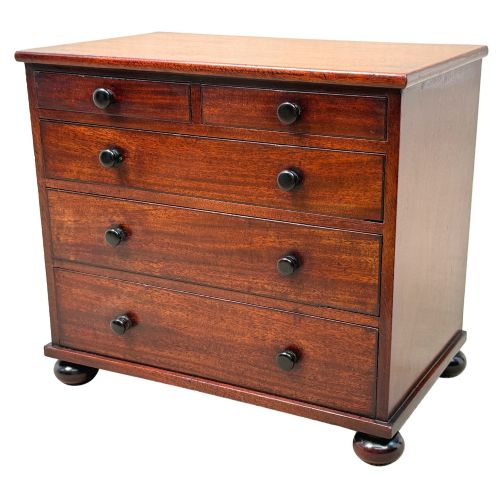
Tabletop miniature drawers encompass small-scale case furniture designed to sit on desks, dressing tables or counters for the containment of valuables, specimens and documents. The selection relies heavily on nineteenth-century Victorian pieces and eighteenth-century Georgian examples, alongside later Edwardian and twentieth-century interpretations.
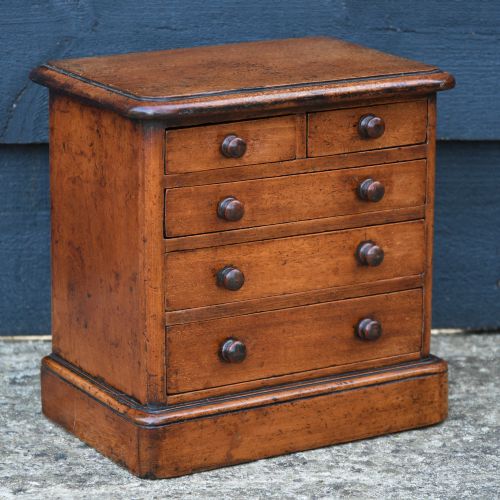
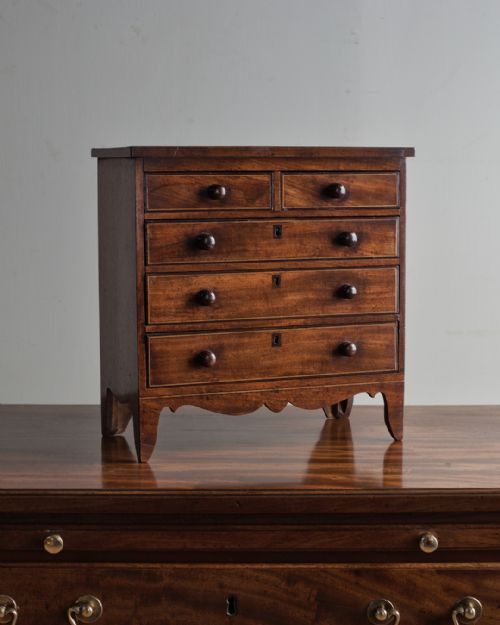
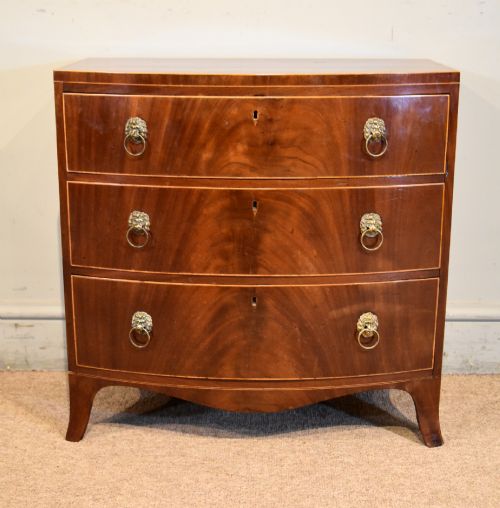
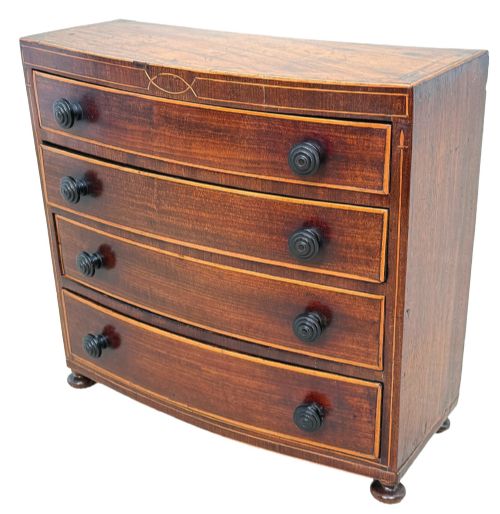
The dominant forms on this page include miniature chests of drawers, often referred to as apprentice pieces, alongside specialist storage such as collectors cabinets, specimen cabinets, spice drawers and jewellery boxes. These items replicate the full-scale furniture of their respective periods, from plain oak country pieces to refined mahogany bowfronts.
Origins span English workshops, Scottish regional pieces, Anglo-Indian hardwood chests and Japanese Meiji lacquer work. Buyers encounter various configurations, including straight fronts, serpentine shapes and glazed upper sections designed for display.
How they were made
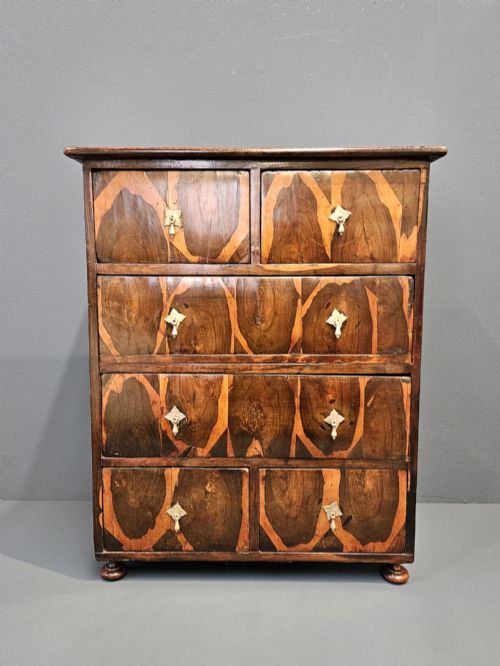
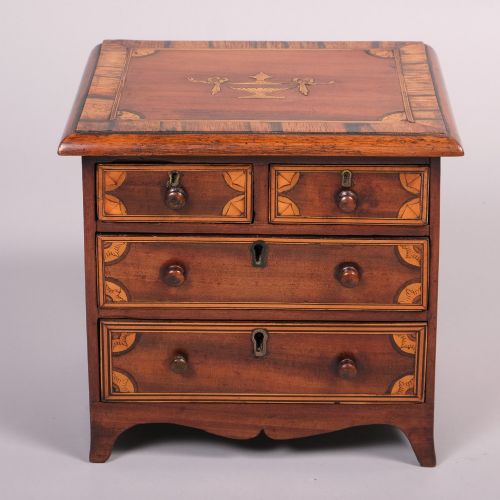
Cabinetmakers constructed these small pieces using dense timbers such as mahogany, oak, walnut and satinwood, frequently applying decorative veneers like burr walnut or marquetry. Secondary woods such as pine appear on internal drawer linings and secondary panels.
Hardware details involve cast brass drop handles, key escutcheons and working locks with small keys, while specialised dental and apothecary versions incorporate milk glass linings or specialised compartments. Surface treatments range from clear polish on figured grains to painted finishes and gilt lacquer.
Tabletop Miniature Drawers Retail Price Guide 2026
Typical asking prices for tabletop miniature drawers among the pieces listed under this phrase on Sellingantiques today, from the lower quarter to the upper quarter. They describe what is for sale here now, not the wider market.
What varies in quality
Quality rests on the fidelity of proportion and the crispness of the joinery, distinguishing careful cabinetwork from naive construction. The choice of timber grain, particularly figured mahogany or matched walnut veneers on the drawer fronts, marks out superior examples.
Internal execution matters as much as the exterior, evident in hand-cut dovetails on the drawer sides and the precise fit of the drawers within their carcase. Original brass hardware, functioning locks and intact secondary woods elevate the standing of a piece.
A. F. Lloyd, Bideford
The Tabletop Miniature Drawers Glossary
- Apprentice piece
- A small-scale item of furniture traditionally created by a trainee to demonstrate mastery of cabinetmaking techniques to a guild. These pieces mirror full-size chests and cabinets in miniature.
- Bowfront
- A curved front profile projecting outwards in a convex sweep. This style appears frequently on Georgian and Regency miniature chests.
- Collector cabinet
- A specialised piece containing multiple shallow drawers intended for the organisation of natural history specimens, coins or medals. They often feature locking doors to protect the contents.
- Serpentine
- A front contour characterised by a concave centre flanked by convex outer curves. This intricate shape requires skilled woodworking.
- Dovetail
- A joint formed by interlocking wedge-shaped fingers, used to secure drawer corners. Hand-cut dovetails indicate traditional period construction.
Tabletop Miniature Drawers: Frequently Asked Questions
What were tabletop miniature drawers used for?
These small chests served to store jewellery, documents, sewing equipment or personal collections of coins and natural history specimens. Their presence on a desk or dressing table provided secure storage close at hand.
Cabinetmakers also produced them as salesman samples to demonstrate designs to clients without transporting full-scale furniture.
How do I date a miniature chest of drawers?
Dating relies on identifying period characteristics in the timber, handles and construction methods. Georgian pieces often feature oak linings and cockbeading, while Victorian examples frequently employ mahogany and distinct lock types.
Secondary woods and the style of the bracket feet or plinth base offer further clues to the decade of manufacture.
Are apprentice pieces genuine?
Many nineteenth-century miniature chests carry the traditional attribution of apprentice pieces, created by young cabinetmakers testing their skills. While some bear direct evidence of this training context, others served simply as high-quality decorative items for domestic use.
Both categories represent authentic period woodworking executed at a reduced scale.
How should I care for antique miniature drawers?
Keep wooden pieces away from direct sunlight and sources of central heating to prevent the timber and veneers from drying out or splitting. An occasional application of traditional beeswax helps maintain the finish.
Handle drawers carefully, ensuring they are pulled straight out without tilting to avoid stressing the internal runners.