


18th Century Slant Desk
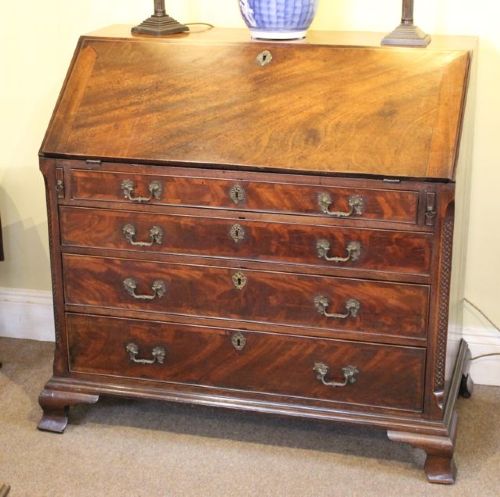
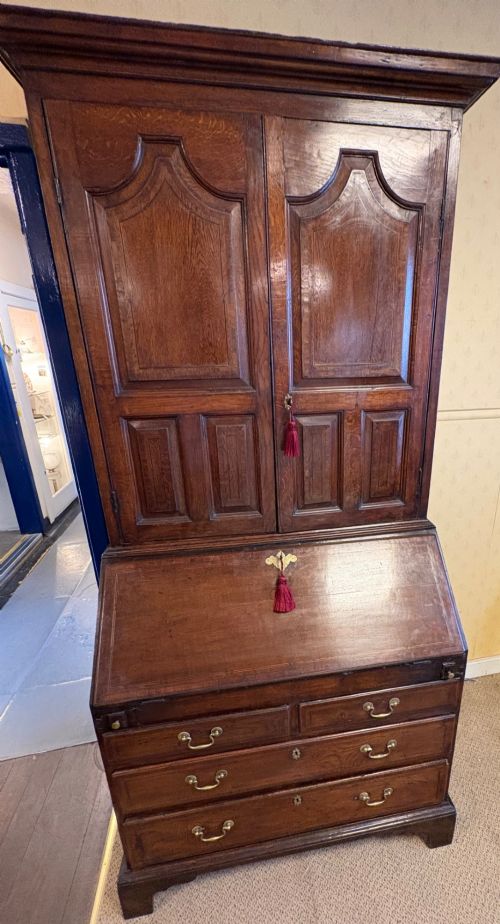
An 18th century slant desk brings immediate gravity to a room, offering a sloping fall front that opens to reveal fitted pigeonholes and drawers.
What these pieces are
The 18th century slant desk, commonly catalogued as a bureau, provides a practical writing surface that conceals private correspondence and papers when closed. These items emerge primarily from the Georgian period, maintaining a distinct presence in domestic interiors.
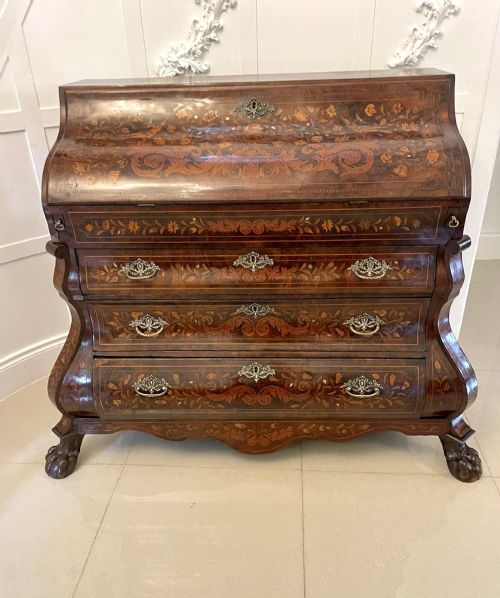
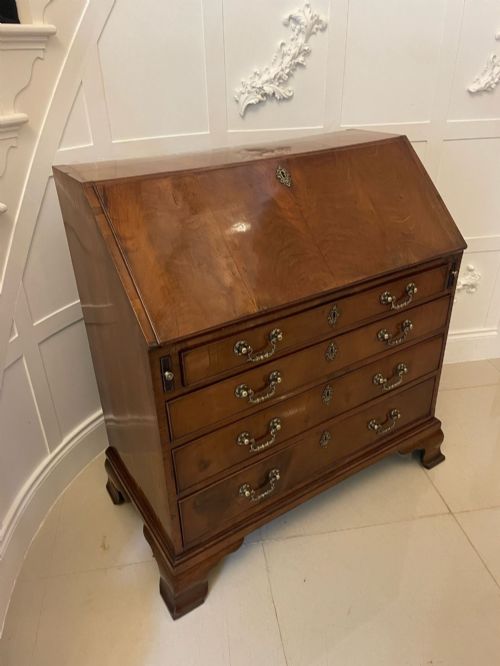
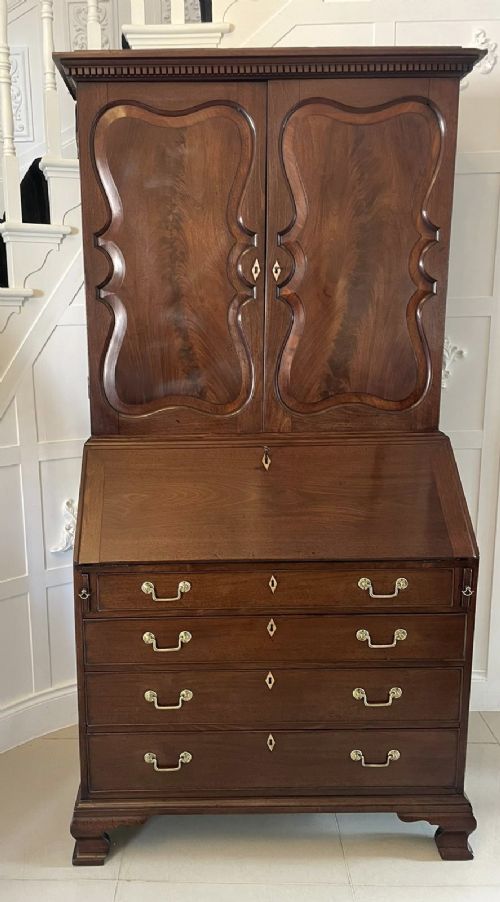
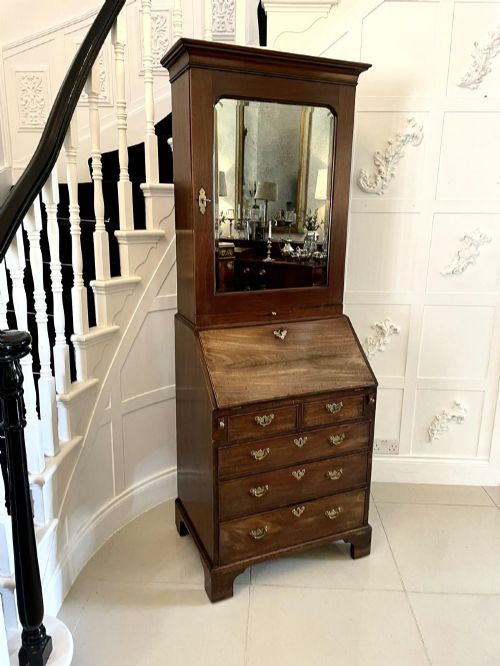
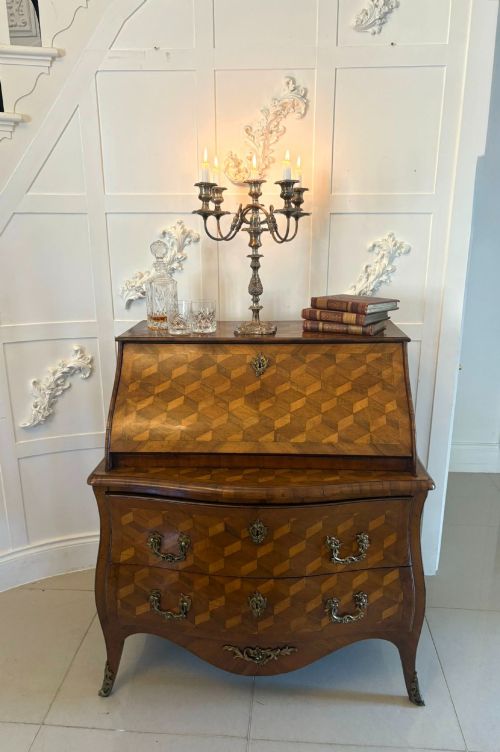
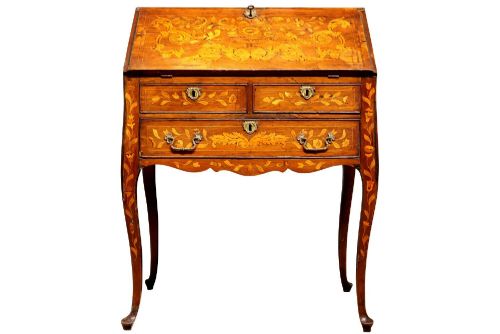
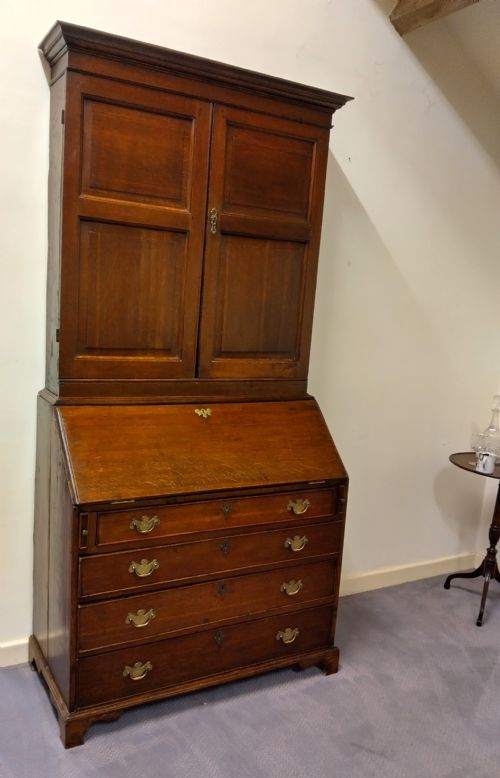
Examples on this page span several regional and stylistic interpretations, including Dutch Rococo and Georgian Chippendale. Forms range from freestanding cabinet bodies to pieces raised on a separate stand.
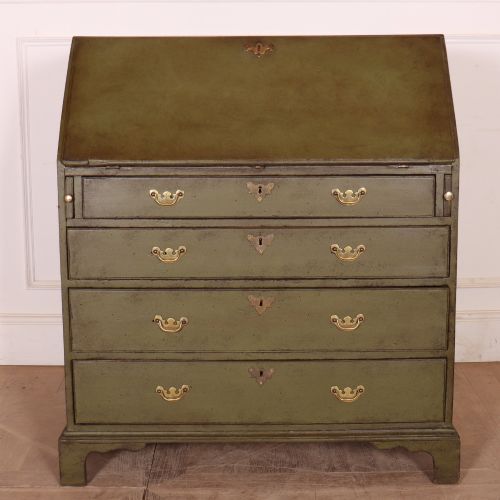
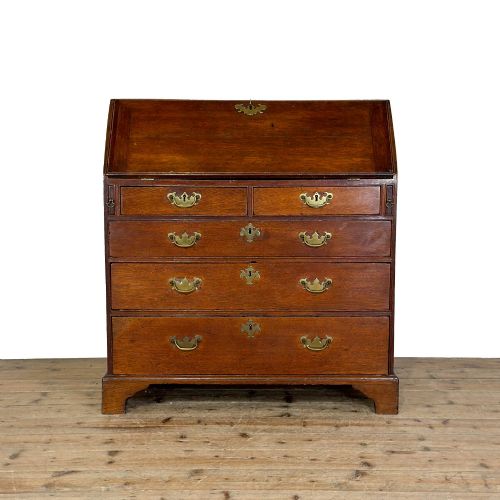
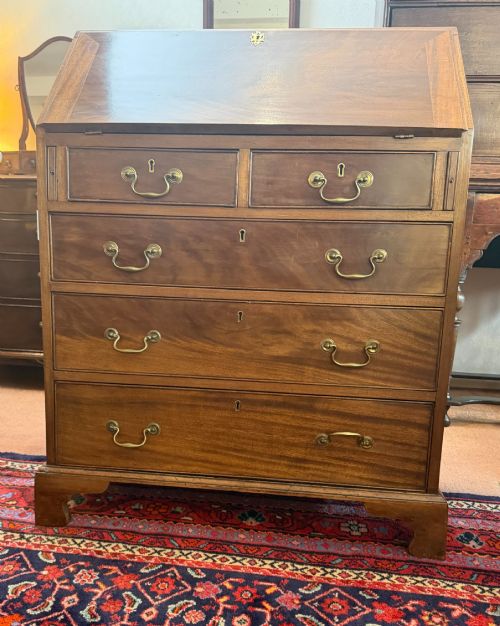
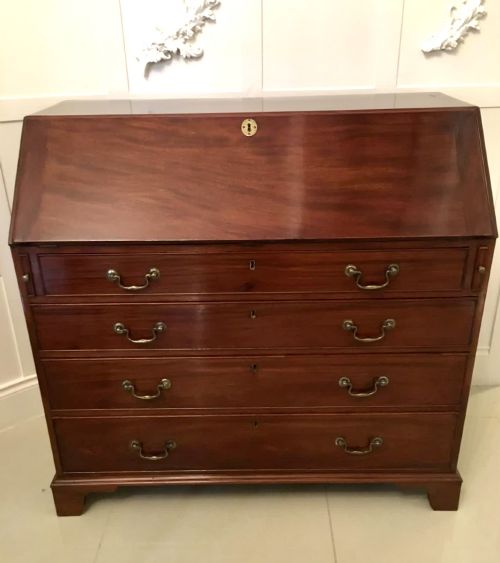
Woods such as oak and mahogany form the structural backbone of these pieces, alongside yew and padauk wood. Specialised variants include bombe shapes and surfaces finished with floral marquetry inlay or paint.
How they were made
Cabinetmakers constructed these writing desks using solid timbers and decorative veneers applied to secondary woods like pine. Techniques such as crossbanding frame the drawer fronts and fall flaps with contrasting grain directions.
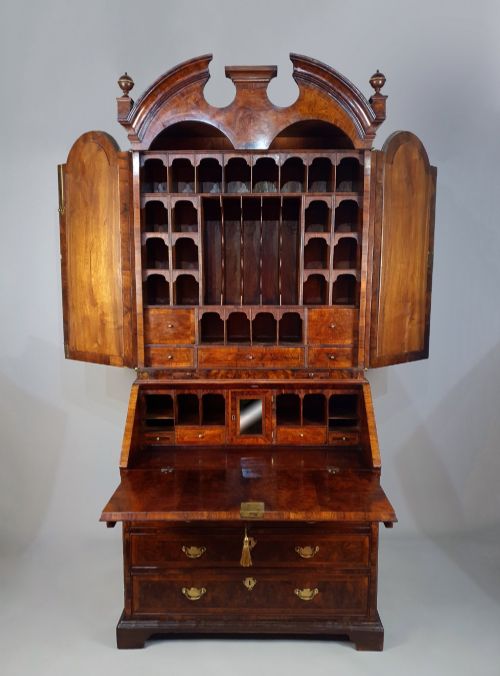
Interiors feature intricate joinery, including stepped configurations and secret drawers designed to secure valuables. Brass hardware, such as escutcheons and drop handles, secures the drawers and operates the cabinet doors.
Surface decoration relies on fine floral marquetry inlay utilising fruitwood and burr walnut, alongside hand-applied paint finishes. The structural carcass is joined with traditional dovetailing to ensure long-term stability.
Retail Price Guide 2026
Typical UK retail prices for 18th century slant desk, calculated from the Sellingantiques database of over a million retail prices indexed since 2003. This retail price guide relies exclusively on Sellingantiques data; no external sources or auction records are used, so the figures do not describe the wider market.
Stylistic influences represented here include Georgian Chippendale and Dutch Rococo.
What varies in quality
Quality rests upon the selection of timber and the ambition of the cabinetmaker's design. A dense, figured grain like padauk wood or burr walnut elevates the visual weight far beyond standard domestic oak.
The sophistication of the interior compartment defines the upper tier of execution. Stepped drawers and secret compartments demonstrate a higher standard of craftsmanship than plain, utilitarian pigeonholes.
The precision of floral marquetry inlay and the sculptural movement of a bombe shaped body separate ambitious metropolitan workshops from straightforward provincial joinery.
The 18th Century Slant Desk Glossary
- Bureau
- A writing cabinet featuring a sloping lid that opens to form a desk surface. This term is frequently used interchangeably with slant desk.
- Bombe
- A bulging, convex furniture shape swelling outward toward the base. This profile requires advanced woodworking skill to execute successfully.
- Crossbanding
- A decorative border of veneer laid around the perimeter of a panel with the grain running perpendicular to the centre. It frames the primary surface.
- Marquetry
- Fitted patterns of wood veneer and other materials applied to a structure to create pictorial designs. Floral motifs are typical of the period.
- Stepped interior
- An arrangement of internal small drawers and pigeonholes arranged in ascending tiers. This feature adds complexity to the desk well.
Frequently Asked Questions
What is a slant desk?
A slant desk is a traditional form of writing furniture featuring an angled hinged flap that pulls down to serve as a writing surface.
Beneath this flap lies an arrangement of small drawers and pigeonholes designed for stationery and correspondence.
How do I date an 18th century bureau?
Dating relies on examining construction methods, timber choices, and stylistic hardware characteristics. Secondary woods and dovetail configurations often provide reliable clues to the period of origin.
Regional traits and specific decorative techniques like marquetry further help narrow down the decade of manufacture.
Where were these desks placed?
These pieces traditionally served in private studies, libraries, or parlours where correspondence and household accounts were managed.
Because the fall front concealed unfinished letters and paperwork, the desk kept rooms looking tidy when visitors called.
What is a bureau on stand?
A bureau on stand elevates the main writing compartment upon a separate supporting frame with legs. This form lightens the visual mass of the furniture.
It represents a distinct variation from the standard box-form cabinet resting directly on bracket feet or a plinth.