


18th Century Pedestal Desk
An 18th century pedestal desk provides an imposing workspace with integrated storage drawers, sought after for period workspace interiors.
18th Century Pedestal Desk
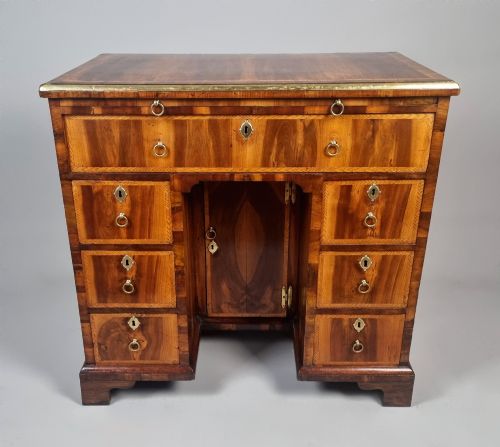
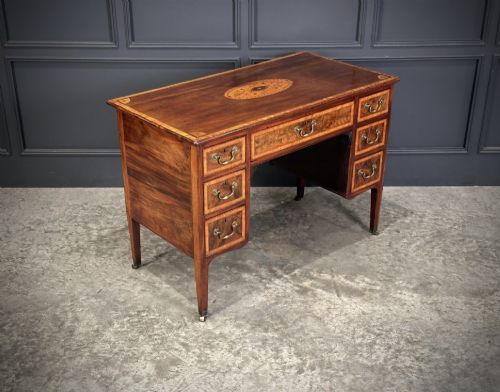
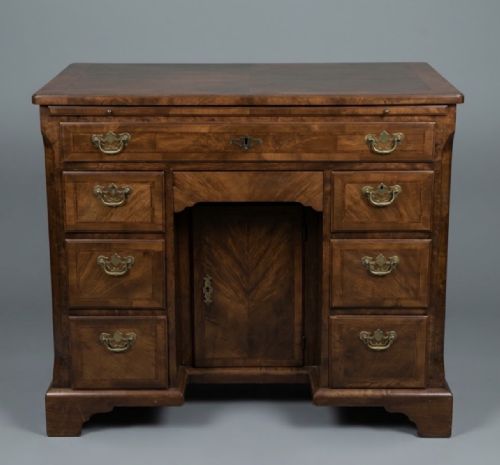
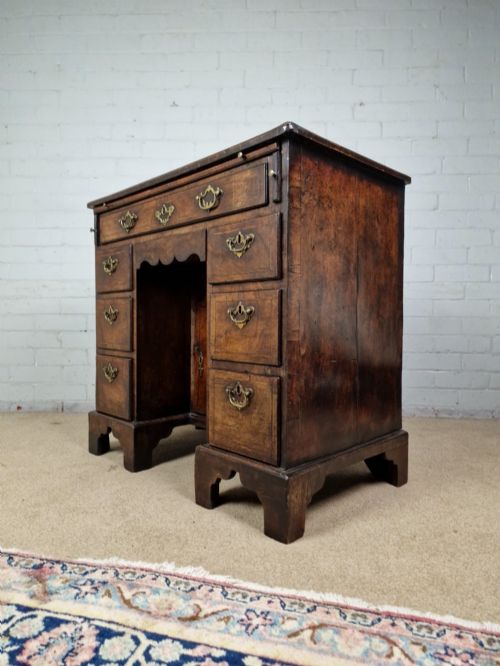
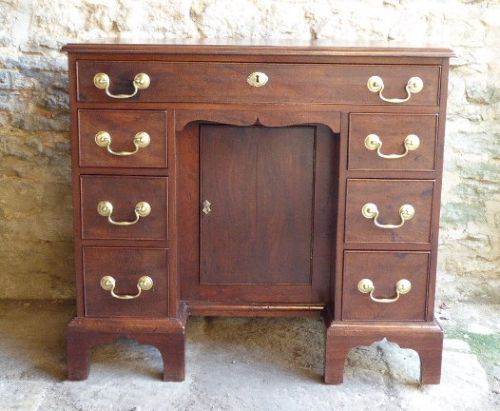
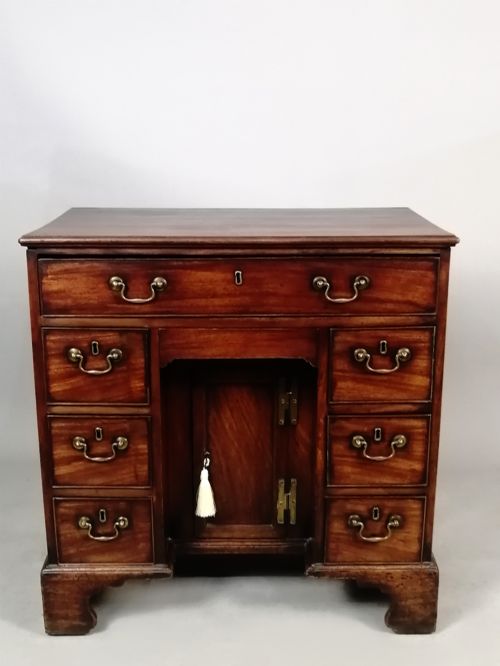
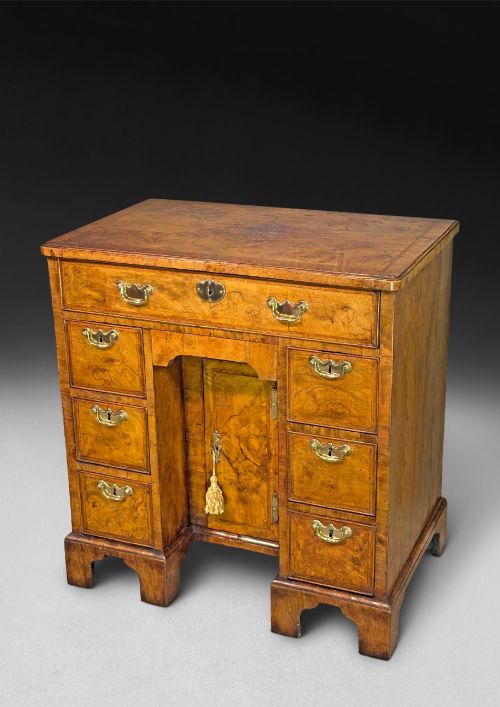
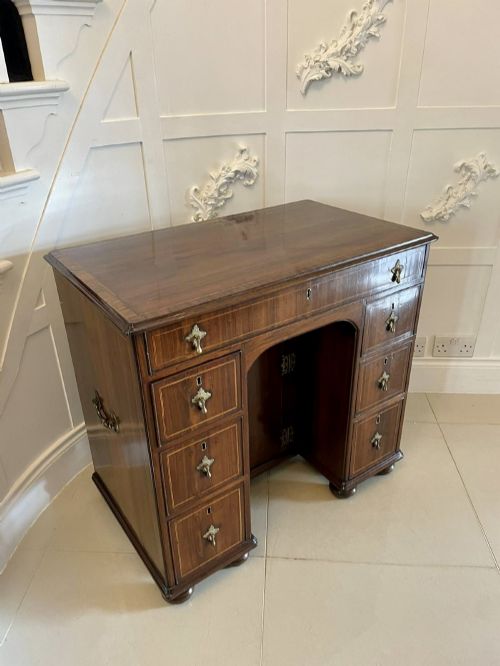
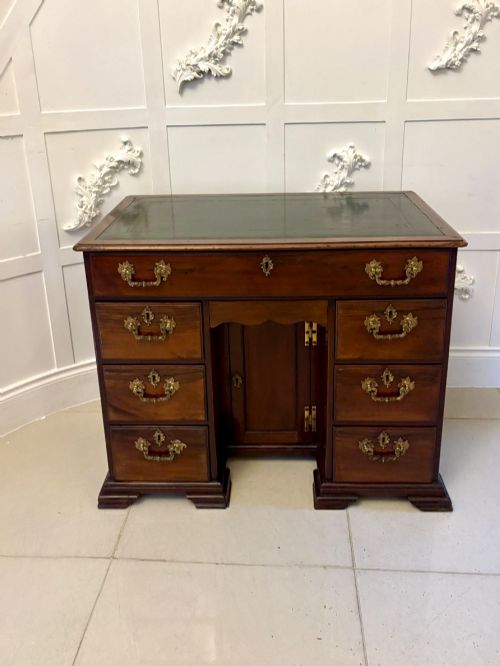
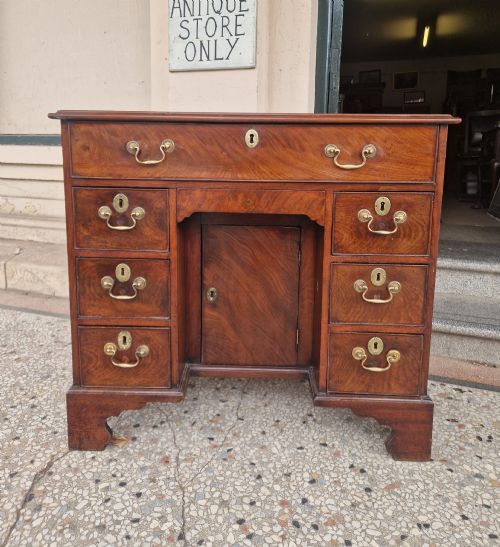
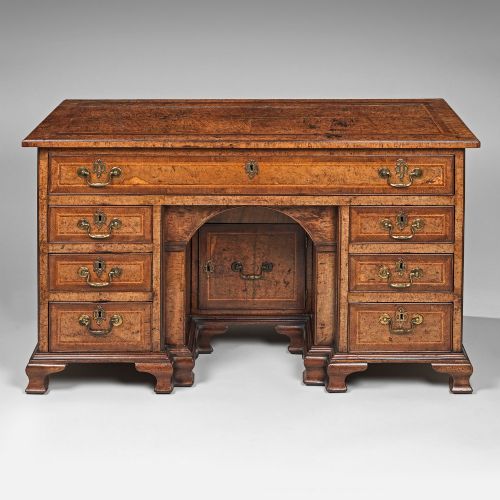
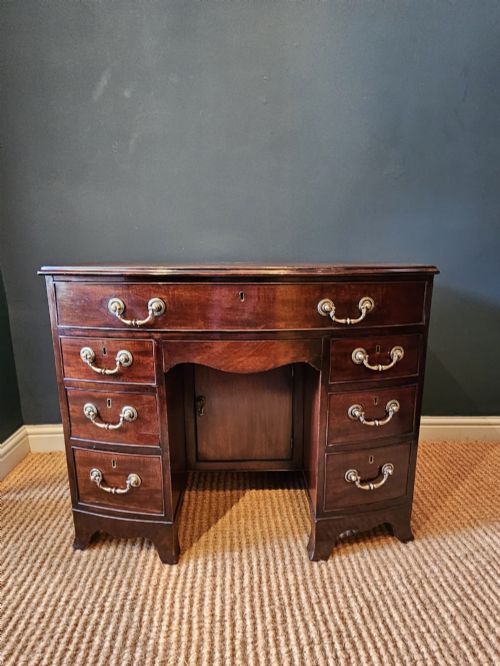
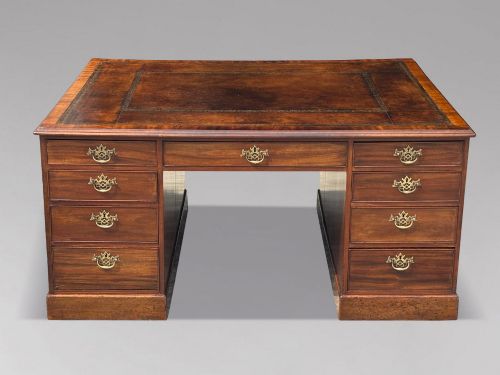
An 18th century pedestal desk typically takes the form of a kneehole desk or a partners desk, featuring banks of drawers beneath the work surface. The examples gathered here span the Georgian, Queen Anne, and George periods, alongside later Victorian interpretations.
Buyers will encounter compact kneehole desks as well as larger partners desks designed for dual-sided use. Materials range from native timbers to imported cabinet woods, reflecting the domestic and office spaces they originally inhabited.
Gradations in Execution
Quality rests in the selection of figured timbers, such as flame mahogany or burr walnut, and the crispness of any carved mouldings or bracket feet. The handling of secondary woods inside drawer linings reveals the care taken by the workshop.
Proportions also dictate distinction, with narrower or smaller scaled formats commanding attention for their domestic utility compared to heavier, standard formats.
Some kneehole desks include a concealed central drawer compartment historically used for hiding private ledgers.
Gillows of Lancaster
The 18th Century Pedestal Desk Glossary
- Kneehole desk
- A compact writing table featuring a central recess for the sitter's legs, flanked by two pedestals of small drawers.
- Partners desk
- A large pedestal desk designed with drawers and cupboards on both sides so two people can work facing each other.
- Flame mahogany
- A timber veneer showing a distinctive flickering flame pattern derived from wood cut where branches join the main trunk.
- Escutcheon
- A protective brass plate surrounding a keyhole on a drawer front or cupboard door.
- Burr walnut
- A prized wood grain marked by small knot clusters and swirling patterns formed from tree growths.
18th Century Pedestal Desk: Frequently Asked Questions
What is a kneehole desk?
A kneehole desk is a pedestal form featuring a recessed central space beneath the writing surface for the legs.
Flanking banks of small drawers provide storage for correspondence and writing materials in domestic settings.
How do I spot a partners desk?
A partners desk is built to be accessed from both sides with matching banks of drawers or cupboards.
This double-sided design allowed two people to work opposite one another in a library or study.
Which woods were used?
Cabinetmakers utilised mahogany, walnut, oak, and burr elm for these desks.
More ornate examples featured figured veneers like burr walnut or flame mahogany paired with brass hardware.
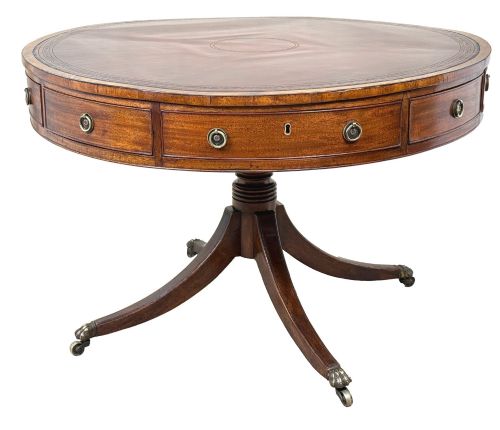
How do I care for leather inserts?
Leather writing surfaces require gentle dusting and occasional conditioning with appropriate leather balms to prevent drying.
Keep liquids away from the inset panel to avoid staining the surrounding timber and leather.