



Brown Timber Office Desk
A brown timber office desk brings working history into a modern room, offering solid mahogany, walnut or pine construction for daily use.
Brown Timber Office Desk
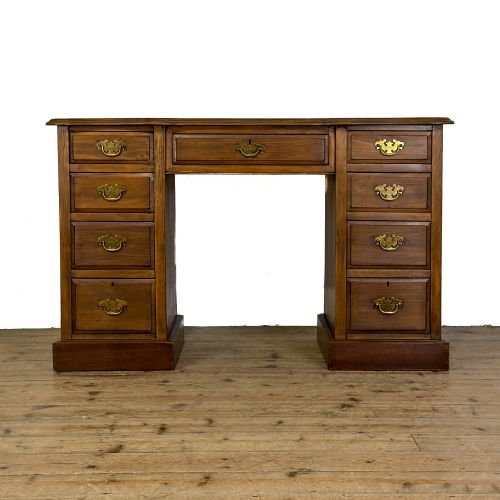
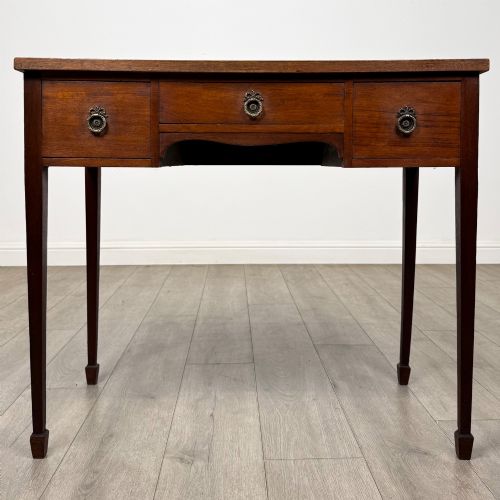
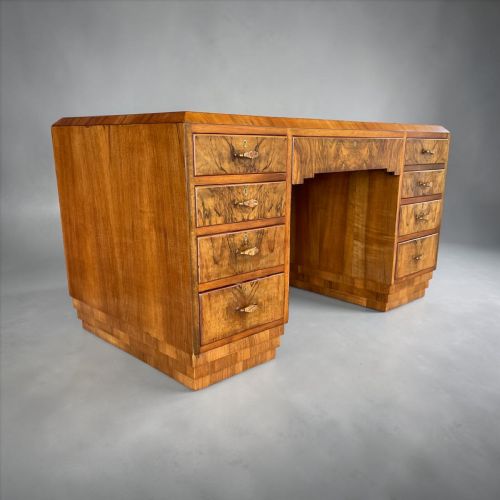
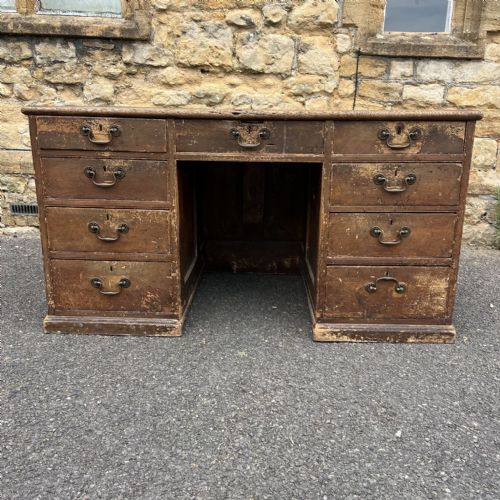
A brown timber office desk encompasses working furniture built from the nineteenth century through the twentieth century, covering Victorian, Edwardian, and Art Deco periods. Buyers looking for a brown timber office desk typically encounter mahogany, walnut, and oak pedestal or writing tables constructed for practical study and administration.
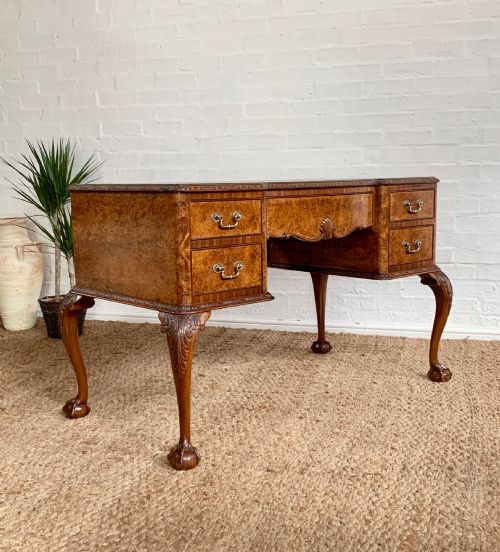
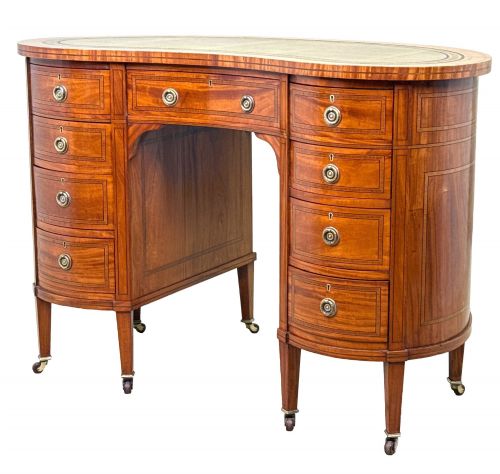
The selection ranges from large rolltop and kneehole configurations to kidney-shaped satinwood and serpentine fronted pieces. These workspace items bring traditional joinery and established proportions into modern interiors without losing their original utility.
How they were made
Cabinet makers utilised dense timbers such as mahogany, walnut, and oak to build the primary carcass and drawer structures. Secondary woods like pine frequently appear in internal drawer linings and hidden framing.
Surfaces were frequently finished with tooled leather writing inserts, complemented by cast brass handles and drawer pulls. Selected pieces incorporate burr walnut or satinwood veneers to provide decorative contrast across the drawer fronts and writing tops.
Mahogany and walnut dominate the listings across Victorian and Edwardian periods, supplemented by oak, pine, and satinwood.
What varies in quality
Construction standards differentiate simple utilitarian pieces from fine cabinet work through the precision of dovetail joints and the selection of timber figures. Superior examples display carefully matched veneers and robust internal framing that withstands decades of daily opening and closing.
The refinement of original hardware, such as solid brass locks and handles, distinguishes higher grade production. The preservation of original leather writing surfaces and polished finishes also influences the standing of individual examples.
Trollope & Sons
The Brown Timber Office Desk Glossary
- Kneehole desk
- A writing table featuring a central recess for the user's legs, flanked by pedestals of smaller drawers on both sides.
- Pedestal desk
- A heavy freestanding writing table supported by two vertical banks of drawers reaching down to the floor.
- Rolltop desk
- A writing desk fitted with a flexible slatted cylinder tambour that pulls down to conceal the pigeon holes and surface.
- Serpentine front
- A furniture face curving outward at the centre and inward toward the edges, creating a gentle undulating line.
- Dovetail
- A traditional interlocking joint formed by wedge-shaped fingers, securing drawer corners without relying on metal fasteners.
Brown Timber Office Desk: Frequently Asked Questions
What is a kneehole desk?
A kneehole desk is a freestanding workspace featuring a central leg space with stacks of drawers on either side.
This layout provides substantial storage while maintaining a comfortable seating position.
How do I care for a leather desk top?
Leather desk inserts require occasional cleaning with a damp cloth followed by a neutral leather cream.
Avoiding direct sunlight and excessive moisture preserves the gold tooling and supple texture of the hide.
Are these desks suitable for daily computer use?
These historical desks accommodate modern office equipment while adding traditional character to a workspace.
Their solid timber construction provides a stable platform for writing and computing alike.
How can I tell a Victorian desk from an Edwardian one?
Victorian pieces often utilise heavy solid mahogany with darker finishes and substantial brass hardware.
Edwardian examples frequently display lighter satinwood influences, simpler lines, or revival styles like Sheraton and Queen Anne.