

18th Century Painted Furniture
These pieces of 18th century painted furniture combine practical utility with decorative surface finishes that bring immediate character to an interior.

18th Century Painted Furniture
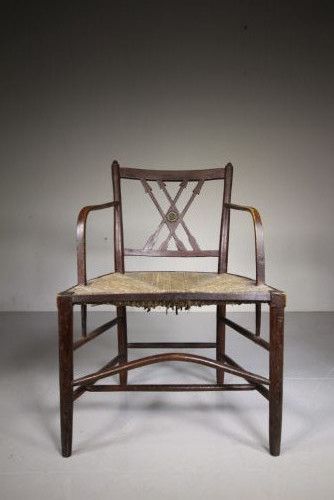
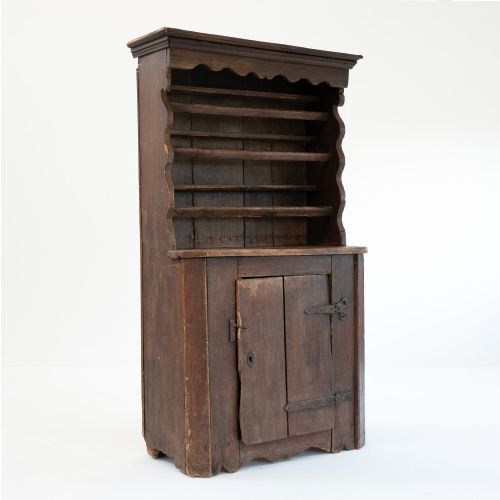
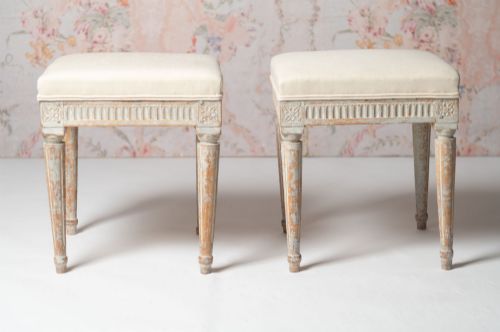
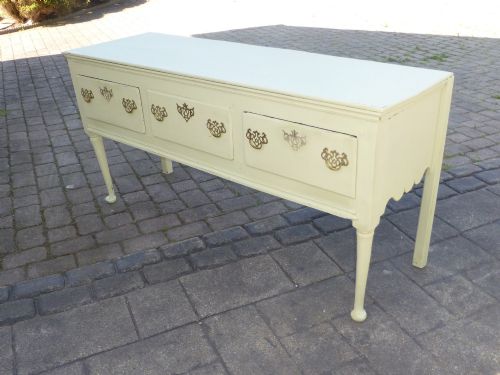
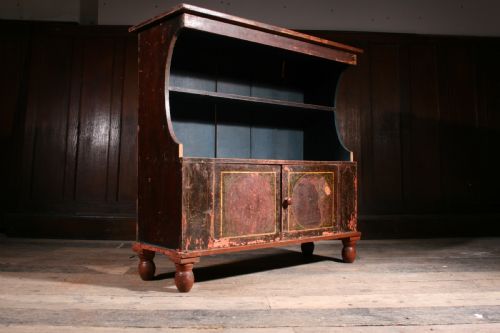
When you search for 18th century painted furniture, you encounter a varied selection of functional household objects spanning multiple European regions. The pieces range from substantial case furniture like dressers and commodes to seating, console tables, and corner cabinets.
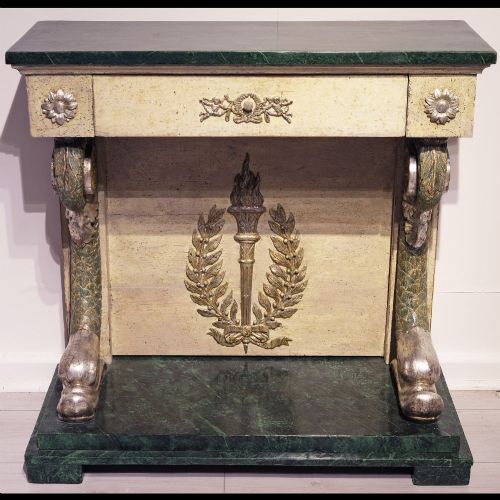
Georgian and George III examples appear frequently alongside continental forms such as Swedish Gustavian commodes, French Provincial buffets, and Italian neoclassical console tables. Pine, oak, and mahogany serve as the primary foundational woods beneath layers of paint, lacquer, and decorative finishes.
How they were made
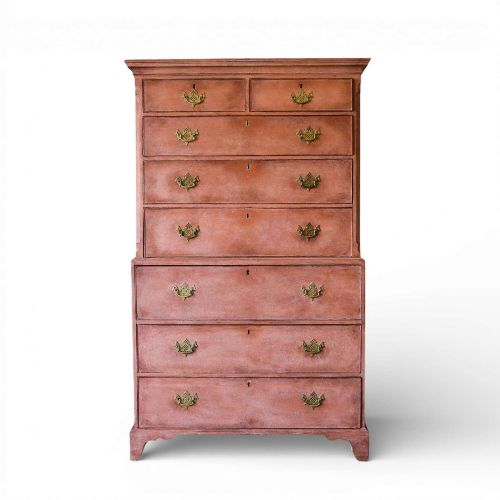
Craftsmen built these items using timber such as pine, oak, and mahogany, shaped into chests of drawers, bookcases, and tables. Surfaces received preparatory priming before coats of paint, lacquer, or faux finishes like faux porphyry and marbling were applied.
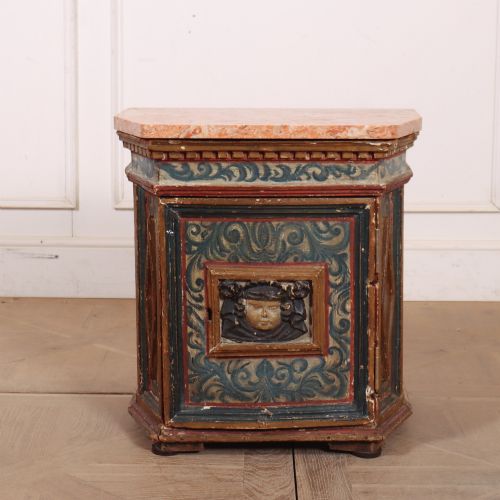
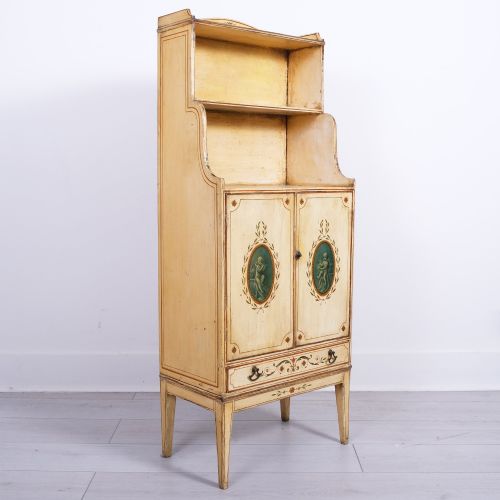
Secondary materials including brass hardware, iron fittings, and marble tops completed the construction. Artisans also employed techniques like trompe l'oeil and gilding to enrich the visual depth of the painted surfaces.
A tiny dolls child chair from 1796 proves that even miniature people needed proper furniture in the Hindeloopen style.
What varies in quality
The integrity of the underlying timber construction and the preservation of the original surface paint dictate the standing of a piece. Items retaining their untouched, early painted finishes command greater interest than those stripped or heavily repainted in later centuries.
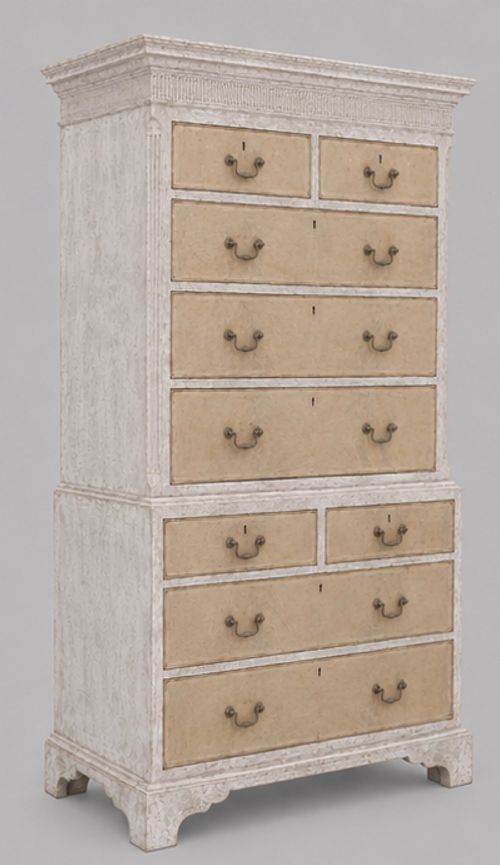
Proportion and execution set provincial country pieces apart from sophisticated urban workshops. Finer examples display harmonious regional styling, such as Swedish Gustavian restraint or Italian neoclassical detailing, executed with disciplined joinery and balanced hardware.
The 18th Century Painted Furniture Glossary
- Commode
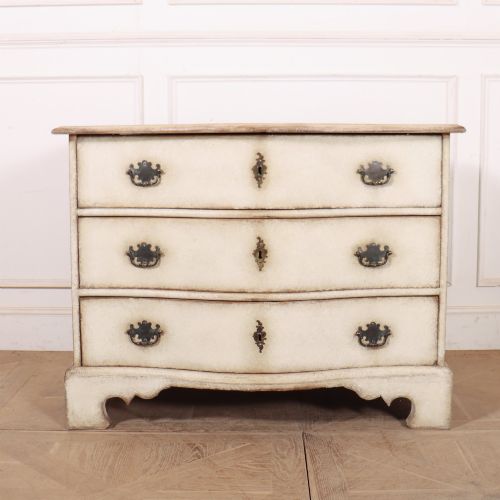
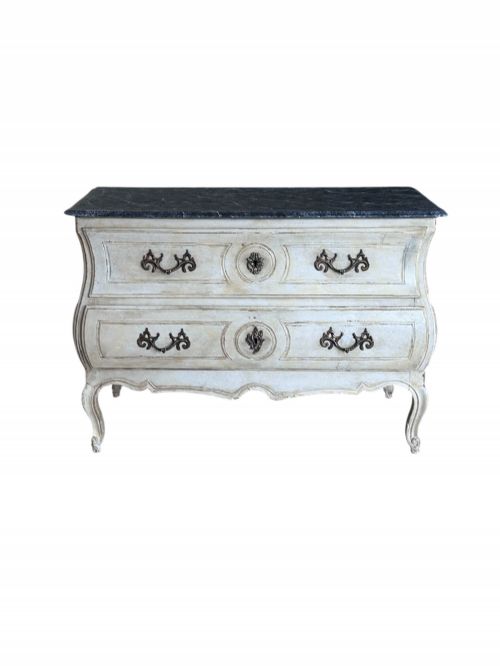
- A low chest of drawers or cabinet, commonly found in French and Italian 18th-century forms. These pieces often feature serpentine fronts and decorative painted surfaces.
- Gustavian
- The Swedish interpretation of neoclassical style, characterised by lighter proportions and pale, muted paint palettes. Pieces from this tradition date primarily from the late 18th century.
- Chinoiserie
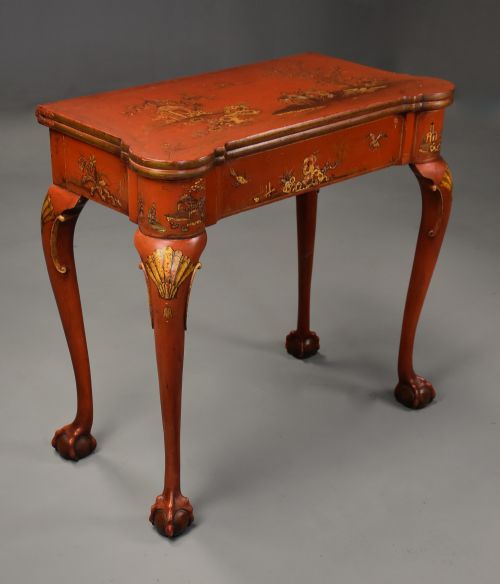
- European decorative style imitating Chinese artistic motifs, popular on lacquer cabinets, desks, and corner cupboards. It typically incorporates painted figures, landscapes, and gilt details.
- Bombe
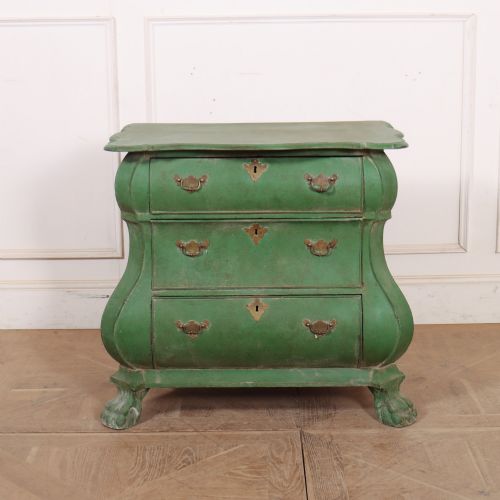
- A swelling, outward-curved contour found on the sides and fronts of certain continental case furniture. This curvilinear form requires advanced cabinetmaking skill.
- Trompe l'oeil
- An artistic technique designed to create optical illusions of three-dimensional objects or materials on a flat surface. It appears on occasional tables and panels from the period.
18th Century Painted Furniture: Frequently Asked Questions
How do I identify original paint?
Examine the surface under magnification to check for natural wear patterns, craquelure, and multiple underlying layers that correspond to age. Pigments and binders should show the chemical characteristics typical of historical periods rather than modern synthetics.
Look into crevices and behind hardware where later touch-ups or overpainting are less likely to reach. Original finishes typically exhibit harmonious integration with the underlying timber movement and wear.
Where were these pieces used?
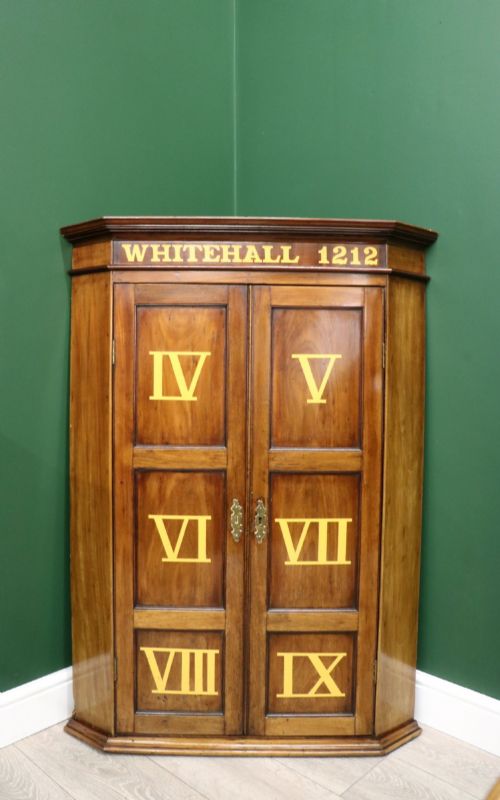
These items functioned across various domestic settings, from grand formal reception rooms to provincial kitchens and taverns. Items like corner cabinets, dressers, and commodes provided essential storage for household goods, while console tables and armchairs furnished public spaces.
Regional workshops in England, France, Italy, Sweden, and Germany tailored forms to local interior domestic habits. Consequently, Welsh dressers served rural dining needs, whereas Italian console tables occupied grand hall spaces.
How do I care for painted furniture?
Maintain stable relative humidity and temperature in the room to prevent the underlying wood from expanding or contracting, which causes paint to flake. Avoid placing pieces in direct sunlight, which fades historical pigments and damages delicate lacquer surfaces.
Dust gently with a dry, soft cloth and avoid modern chemical polishes, cleaning agents, or water. Professional conservators should handle any structural stabilisation or flaking paint consolidation.
What is a Gustavian commode?
A Gustavian commode is a Swedish neoclassical chest of drawers dating from the late 18th century. These pieces reflect French and Italian influences filtered through a distinct Scandinavian desire for restraint and light.
They typically feature pale grey, white, or cream painted finishes, fluted pilasters, and understated brass hardware. The form stands as a key example of Nordic adaptation of continental neoclassical design.