
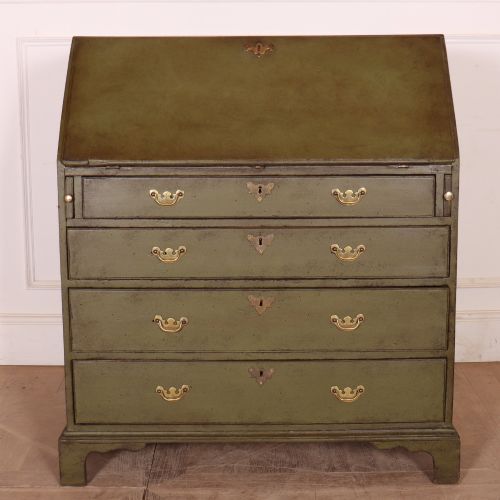
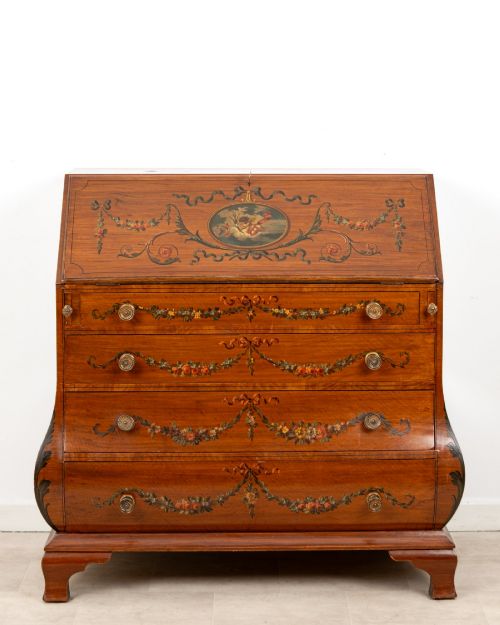


Painted Fall Front Bureau
A painted fall front bureau brings useful writing space and concealed storage together beneath a decorative surface.
Painted Fall Front Bureau
A painted fall front bureau provides a sloping writing flap that drops down to reveal internal compartments, pigeonholes and small drawers. These pieces range from compact Edwardian satinwood writing desks to taller bureau cabinets and bookcases.
The selections here span the eighteenth and nineteenth centuries, alongside later pieces from the early twentieth century. English country examples sit alongside Swedish country pieces and decorative Chinoiserie interpretations.
Buyers often encounter pine, satinwood and lacquered wooden carcasses finished with painted decoration. Formats vary from simple slant front desks to sophisticated bureau bookcases with glazed upper sections.
How they were made
Construction relies upon traditional timber framing in pine and satinwood, forming the main carcass and interior fitments of the writing compartment. Brass hardware typically secures the drop flap and internal drawers.
Surface decoration involves hand applied paint, lacquer and specialised finishes such as Vernis Martin techniques. Artisans applied these decorative layers over wooden surfaces to achieve Chinoiserie motifs or simple country painted schemes.
The listings here feature painted wood, pine, satinwood and glass across Georgian, Victorian and Edwardian periods.
What varies in quality
Quality shows in the refinement of the interior pigeonholes and the execution of the painted or lacquered exterior. Pieces with detailed Chinoiserie or finely painted satinwood demand greater skill than plain pine country items.
The proportion of the bureau and the preservation of the original painted surface determine the character of the piece. Intricate bureau bookcases demonstrate a higher level of cabinetry than simpler slant front desks.
The Painted Fall Front Bureau Glossary
- Fall front
- A hinged writing flap that drops down to a horizontal position for use as a desk. It conceals a fitted interior of small drawers and pigeonholes when closed.
- Bureau bookcase
- A combination furniture form featuring a sloping writing desk below and a glazed shelving cabinet above. It provides both workspace and display storage.
- Chinoiserie
- European decorative style inspired by Chinese artistic traditions, featuring painted or lacquered motifs of figures, landscapes and pagodas. It appears frequently on eighteenth and early twentieth century pieces.
- Vernis Martin
- A simulated Japanese lacquer finish developed in eighteenth century France, using multiple translucent varnish layers. It creates a rich, glossy surface on decorative furniture.
- Escritoire
- Alternative term for a writing desk or bureau. It often denotes a more refined cabinet piece used for correspondence.
Painted Fall Front Bureau: Frequently Asked Questions
What is a fall front bureau?
A fall front bureau is a writing desk featuring a hinged panel that lowers to create a flat writing surface. Inside, small compartments and drawers organise letters and writing materials.
Beneath the writing flap, standard drawers provide additional storage space for household items or papers.
How do I date an antique bureau?
Dating relies upon timber selection, construction methods and the style of the painted decoration. Eighteenth century pieces often show simpler country construction or detailed Chinoiserie work, while Edwardian examples favour satinwood.
Examining the secondary woods inside the drawers and the type of brass hardware helps confirm the period of manufacture.
Where should I place a bureau?
A bureau suits a living room, study or bedroom where its dual function as a desk and storage chest proves useful. The drop flap requires sufficient clearance when opened for writing.
Keeping the piece away from direct sunlight and heat sources protects the painted or lacquered surfaces from fading and cracking.