


Painted Bureau Desk
A painted bureau desk brings decorative surface work and a fitted writing interior into a room, offering both concealed storage and a working flap.
Painted Bureau Desk
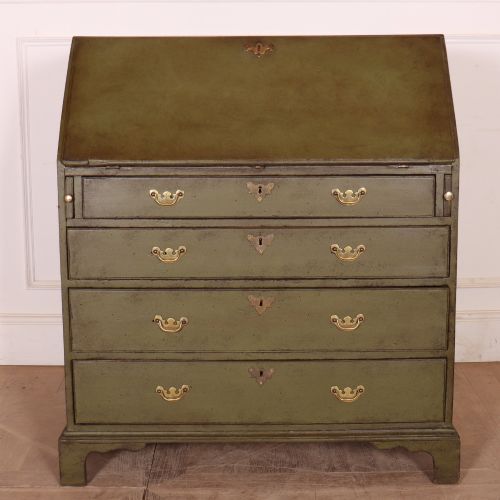
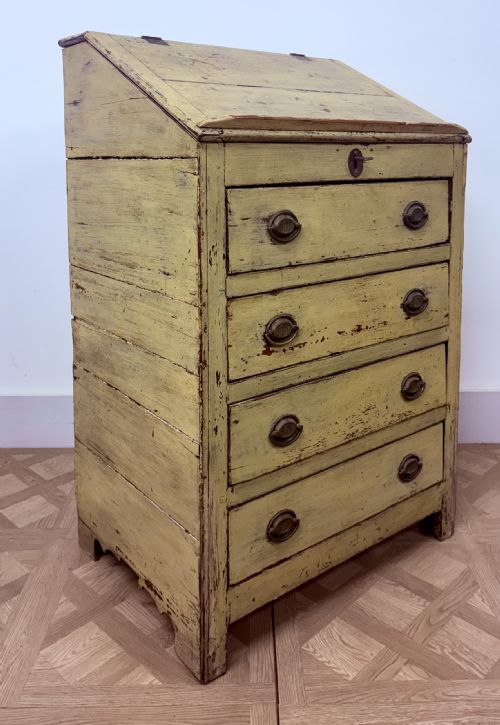
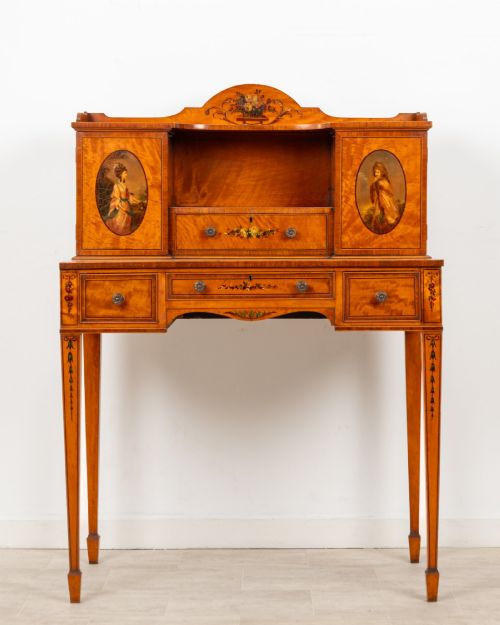
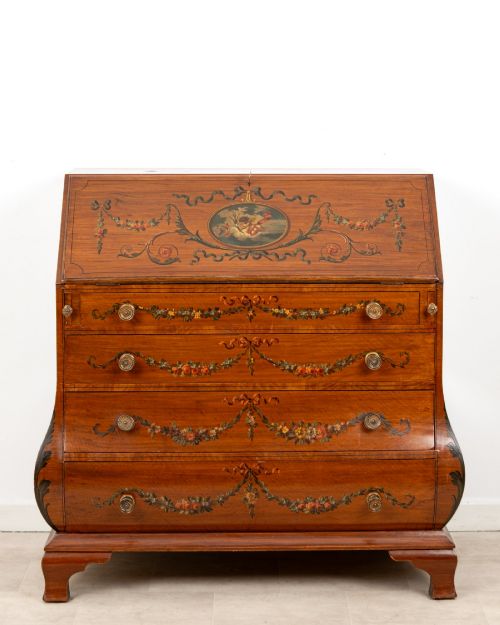
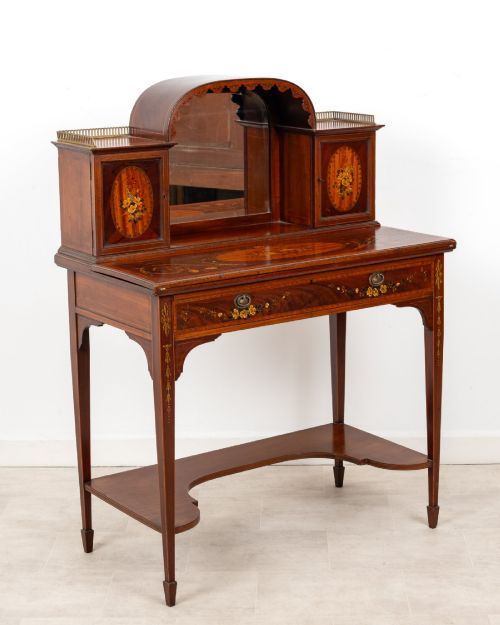
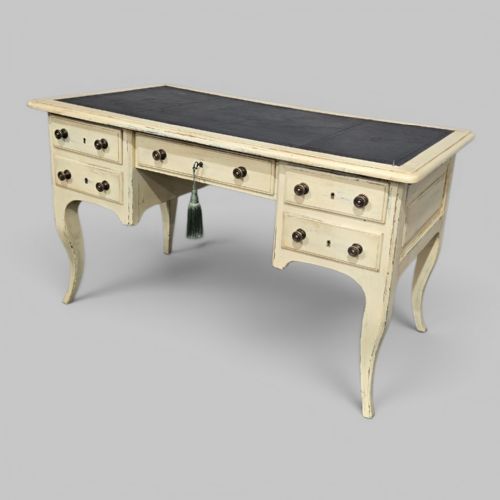
A painted bureau desk combines a sloped writing flap or drop front with drawers, compartments, and decorative surface painting, appearing in forms ranging from compact Edwardian satinwood tables to 18th-century English and Scandinavian pine pieces. Buyers searching for a painted bureau desk encounter formats that include freestanding writing desks, tall cabinets, and pieces with fitted superstructures.
The selections span Georgian and Victorian periods alongside Edwardian revivals, incorporating Scandinavian country pieces, French provincial styles, and Chinoiserie decorations. These items serve both as functional writing furniture and as painted display pieces within a home.
How they were made
Construction relies on woods such as satinwood, pine, mahogany, and birch, often paired with hand-applied paint, lacquer, or Vernis Martin panels. Artisans shaped these timbers into carcases and writing slopes, frequently applying decorative floral motifs, stencilling, or orientalist scenes directly onto the wood surface.
Hardware details involve brass handles, ormolu mounts, and glass elements on associated bookcases, while interiors conceal small drawers and pigeonholes accessed via the main writing flap or cylinder front.
Secret drawers tucked within these desks offered a private space for love letters, coin collections, or family recipes away from prying eyes.
What varies in quality
The refinement of the painted decoration distinguishes simpler provincial pine items from finely executed Edwardian satinwood or Georgian pieces with intricate floral panels. Execution of the internal fittings, such as secret drawers and stationary compartments, indicates the level of craftsmanship invested in the piece.
The integrity of the timber ground beneath the paint and the preservation of the original decorative surface dictate the standing of an individual desk within its period.
The Painted Bureau Desk Glossary
- Bureau
- A desk featuring a sloping hinged writing flap that opens to reveal internal compartments and small drawers. It often sits atop a chest of drawers.
- Satinwood
- A lustrous hardwood native to Ceylon and India, highly favoured in the Edwardian and Georgian periods for light-toned inlaid and painted furniture.
- Vernis Martin
- A type of translucent resin varnish developed in 18th-century France to replicate Asian lacquer work, frequently seen on fine cabinets and desks.
- Bonheur du Jour
- A light lady's writing desk featuring a small superstructure of shelves and drawers above the main work surface.
- Carlton House desk
- A distinctive horseshoe-shaped writing desk with a fitted superstructure of small drawers and compartments curving around the back of the top.
- Escritoire
- A writing cabinet or desk, often featuring a drop-down writing surface and internal pigeonholes.
Painted Bureau Desk: Frequently Asked Questions
What is a painted bureau desk?
A painted bureau desk is a writing cabinet featuring a sloping lid or drop front that covers internal stationery compartments, finished with decorative paintwork on the exterior.
These pieces range from compact Edwardian satinwood tables to substantial 18th-century Georgian and Scandinavian pine cabinets.
How were these desks used?
They served as private writing spaces where correspondence could be penned, with letters and documents stored securely behind the locked flap and internal drawers.
The surface and upper shelving also functioned as display areas for decorative objects in a parlour or drawing room.
Are these desks suitable for daily work?
The writing surface of a traditional bureau or slope desk offers ample room for modern correspondence, though the interior compartments are scaled for historical stationery.
Placing one in a study or living space provides both functional surface area and enclosed storage for smaller items.