
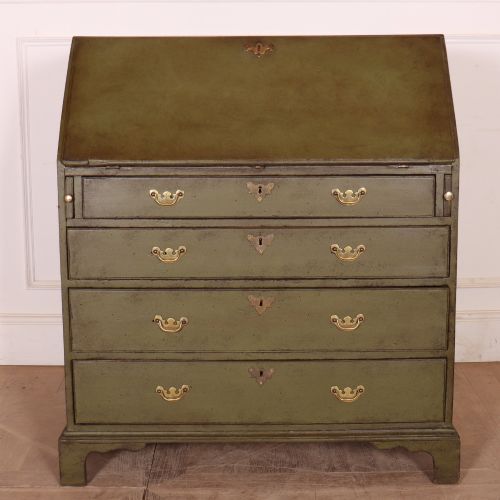
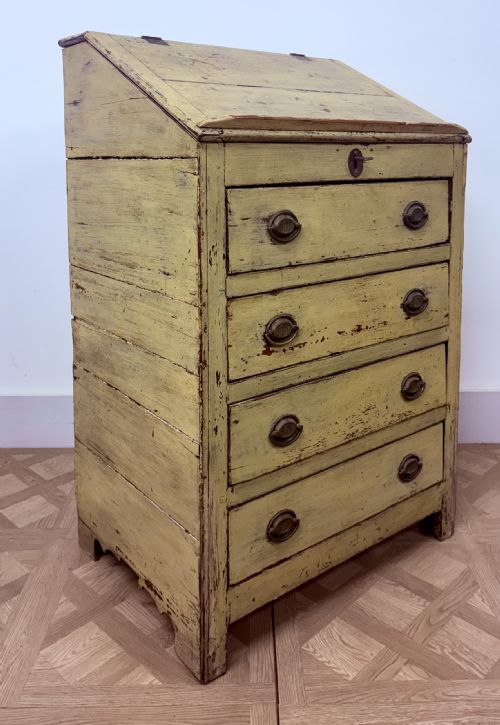


Georgian Painted Writing Bureau
A georgian painted writing bureau offers practical workspace combined with decorative surface art, making it a functional centrepiece for any study.
Georgian Painted Writing Bureau
When you search for a georgian painted writing bureau, you encounter a variety of forms including standard bureaux, bureau bookcases, secretaire tallboys, and related desks from the eighteenth and nineteenth centuries. These pieces combine a writing slope or fall-front desk with storage compartments and drawers underneath, often featuring decorative painted finishes.
The versions most commonly met on this page span the eighteenth century and the Georgian period, with George III examples and English country pieces appearing alongside later nineteenth-century interpretations. Makers and decorators applied techniques ranging from provincial hand-painted motifs to sophisticated satinwood finishes and Chinoiserie scenes.
Beyond standard bureaux, the selection extends to bureau bookcases and specialised writing furniture such as bonheur du jour tables and Carlton House desks. These variations provide diverse proportions and internal fittings while maintaining the core purpose of a dedicated writing cabinet.
Materials and construction
These items rely on timber foundations such as pine and various solid woods, frequently enhanced with satinwood veneers or decorative painted wood surfaces. Joinery methods of the period prioritised stability, housing writing slopes and internal drawers securely within the main carcase.
Surface decoration involves hand-painting and hand-decoration directly onto wood or prepared grounds, sometimes incorporating glass elements in upper bookcase sections and brass handles, hinges, or escutcheons for functional hardware.
Listings feature items constructed from pine, satinwood, and painted wood, accented with brass hardware and glass.
Distinctions in quality
The refinement of the painted decoration marks a primary distinction between pieces, ranging from simple provincial hand-painted motifs to intricate George III satinwood schemes or detailed Chinoiserie artwork. Finer examples display meticulous brushwork and cohesive colour palettes that integrate harmoniously with the underlying timber.
The sophistication of the internal fittings and cabinetwork also separates standard items from superior works. Well-executed pigeonholes, secret compartments, and secondary woods demonstrate the maker's skill and the overall ambition of the piece.
The Georgian Painted Writing Bureau Glossary
- Bureau
- A desk featuring a hinged sloping flap that opens to reveal a writing surface and small drawers. It typically sits atop a chest of drawer units.
- Secretaire
- A piece of furniture containing a drawer or compartment that pulls out or folds down to form a writing desk. It often conceals fitted pigeonholes inside.
- Chinoiserie
- European theatrical interpretations of Chinese and East Asian artistic traditions, popular in decoration. Painted schemes often depict imaginary landscapes and figures.
- Satinwood
- A durable, hard timber with a natural golden lustre and satin-like sheen, frequently used for fine veneers and inlay during the eighteenth century.
- Bonheur du jour
- A light lady's writing desk featuring a small set of drawers or shelves on the top surface. It emerged during the eighteenth century as a refined piece for private correspondence.
Georgian Painted Writing Bureau: Frequently Asked Questions
What is a bureau bookcase?
A bureau bookcase combines a sloping writing desk at the bottom with enclosed shelving or cabinet space above, usually protected by glass doors.
This form allowed owners to store books and writing materials within a single tall piece of furniture, saving floor space in period rooms.
How were painted finishes applied?
Decorators applied pigments directly to wood surfaces or prepared grounds using hand-painting techniques, sometimes sealing them with clear protective varnishes.
Provincial pieces often featured simpler folk art designs, whereas high-status items displayed elaborate Chinoiserie scenes or delicate floral motifs.
Where were these desks used?
Owners placed these items in private studies, libraries, drawing rooms, and bedrooms for managing correspondence and personal accounts.
The lockable fall-front flap kept confidential letters and documents secure when the desk was unattended.
How do I care for painted wood?
Maintain painted wooden furniture by keeping it away from direct sunlight and maintaining stable indoor humidity levels to prevent paint flaking.
Dust gently with a dry, soft cloth and avoid chemical polishes that can degrade historic painted surfaces.