
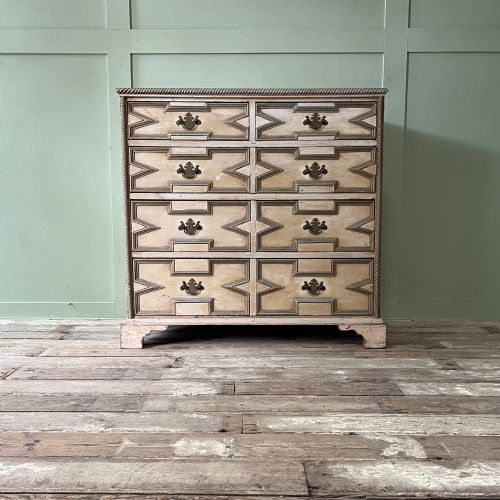
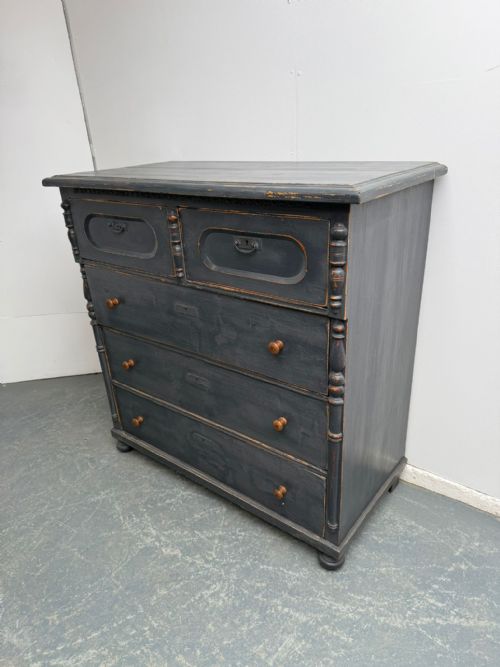

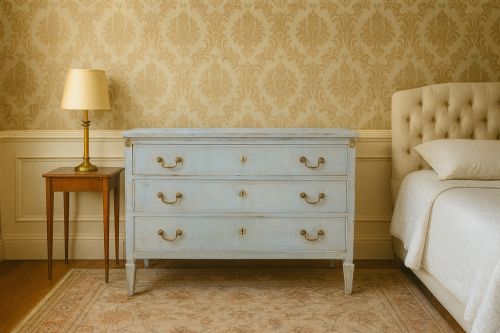


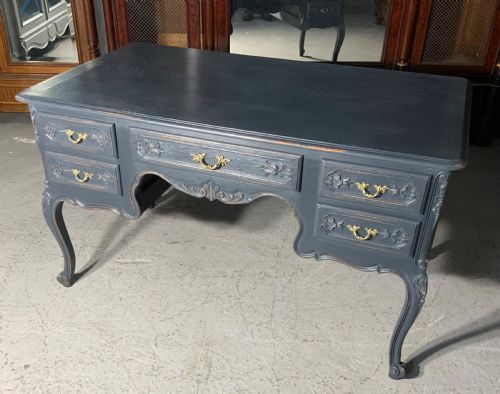


Grey Painted Bureau
A grey painted bureau brings understated continental character and practical writing space to a room, offering time-worn charm alongside daily utility.
Grey Painted Bureau
A grey painted bureau combines a fitted writing compartment with storage, emerging in regional European styles and later British interpretations. These pieces range from compact writing desks to taller bureau bookcases with fitted interiors.
The versions most commonly met here span eighteenth and nineteenth-century European workshops, often finished in pale or grey painted treatments. Such items reflect Scandinavian country taste, Swedish Gustavian design, and classic provincial cabinet-making.
Buyers seeking a grey painted bureau often encounter related forms like painted chests of drawers, writing desks, and bureau cabinets. Each format provides enclosed storage while retaining the distinctive painted patina characteristic of these periods.
How they were made
Construction relies primarily on pine and softwood carcasses, joined using traditional methods suited to painted furniture. Cabinet-makers shaped panels and drawers from timber that accepted layered pigments and oils well.
Surface finishes involve historic paint layers applied over wood, frequently building up subtle tones of grey through successive coats. Iron and brass hardware, including handles and key escutcheons, complete the construction details.
Listings feature eighteenth and nineteenth-century periods, incorporating materials such as pine, painted wood, brass, and iron across various European styles.
What varies in quality
Quality rests upon the proportion and balance of the cabinet work, from the crispness of the mouldings to the integration of the writing flap. Superior examples display refined proportions and harmonious structural lines.
The integrity and depth of the painted surface dictate much of the character, distinguishing period finishes from later interventions. Original construction methods and untouched secondary timbers elevate the standing of a piece.
Sir Clough Williams-Ellis
The Grey Painted Bureau Glossary
- Gustavian
- The Swedish neoclassical style developed during the late eighteenth century, known for restrained ornamentation and pale painted finishes. It draws inspiration from French court taste interpreted through a Scandinavian lens.
- Bureau bookcase
- A dual-purpose piece featuring a sloping writing flap above drawers, surmounted by a glazed or panelled cabinet. This form maximises vertical storage and workspace.
- Softwood
- Timbers from conifers such as pine, widely utilised across Scandinavian and continental European painted furniture. It provides a stable base for decorative paint layers.
- Commode
- A low chest of drawers originating in France, often adopted into Dutch and Swedish cabinet-making traditions. These items frequently feature serpentine fronts or bombé shaping.
- Patina
- The surface appearance acquired by wood and paint over decades of use and light exposure. This quality reflects age and honest handling.
Grey Painted Bureau: Frequently Asked Questions
What is a grey painted bureau?
A grey painted bureau is a traditional writing cabinet finished in historic or decorative grey paint. These pieces typically feature a fall-front writing slope enclosing small drawers and pigeonholes.
Such items serve as functional desks while introducing muted continental colour to interior spaces.
How do I date an antique bureau?
Dating relies on examining construction techniques, timber types, and hardware fixings. Hand-cut dovetails and original secondary woods offer clues to the period of manufacture.
Stylistic markers, such as neoclassical Gustavian motifs or Victorian proportions, further help narrow down the age.
Where were these pieces made?
Many examples originate from Scandinavian workshops, particularly Sweden and Denmark, alongside English and French provincial centres. Regional preferences heavily influenced the specific forms and decorative schemes.
Local cabinet-makers utilised readily available timber like pine to construct these practical furnishings.
How do I care for painted furniture?
Maintain painted surfaces by dusting gently with a dry, soft cloth and avoiding harsh chemical cleaners. Keeping pieces away from direct heat sources and strong sunlight preserves the historic finish.
Stable indoor humidity prevents timber movement that can affect both the wood and the paint layer.