


Green Painted Bureau
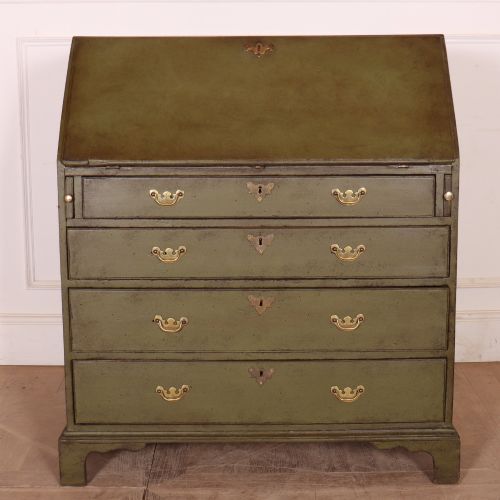
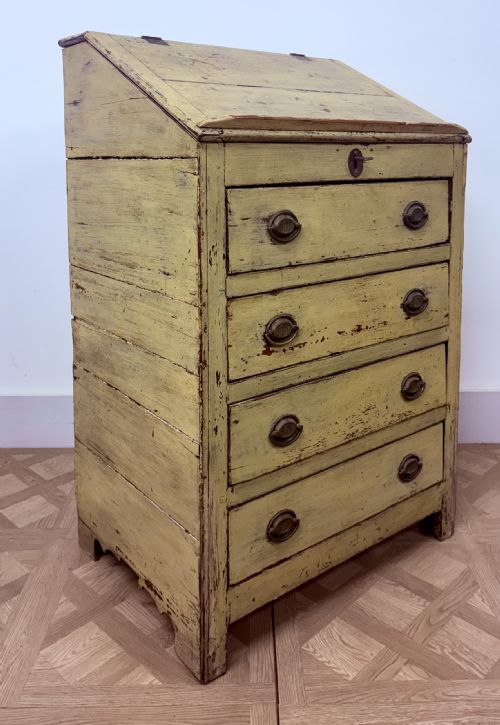
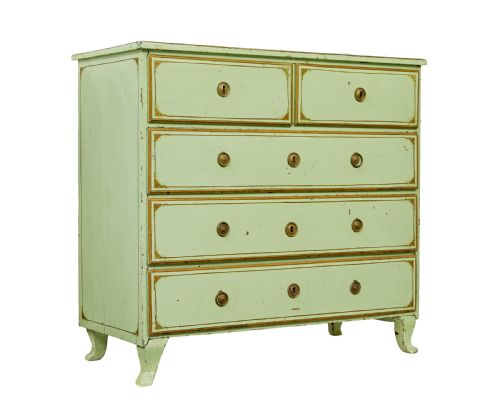
These green painted bureau pieces bring useful writing space and painted character into a room.
Green Painted Bureau
A green painted bureau brings together writing surfaces, storage drawers, and painted wooden finishes that appear across eighteenth century, nineteenth century, and twentieth century examples. Buyers searching this phrase generally find form variations including drop-front desks, chests of drawers with writing slopes, secretaires, writing cabinets, and freestanding desks.
The pieces on this page span English and Scandinavian country traditions alongside Georgian, Edwardian, Rococo Revival, and Victorian styles. While some examples take the form of standard chests fitted with slopes, others offer fitted writing compartments and decorative painted wood surfaces.
How they were made
Makers constructed these pieces primarily from solid pine, satinwood, and general wood timbers, often incorporating brass hardware, glass, and leather writing inserts. The structural carcasses rely on traditional joinery suitable for drawers and writing cabinets.
Surfaces received applied paint finishes, sometimes complemented by decorative inlay work rather than plain timber veneers. Paint layers vary from provincial hand-painted treatments to more formal Edwardian decorated schemes.
An archive entry records a particularly striking antique oak black painted Gothic Green man bureau, proving dark folklore occasionally creeps into green painted storage.
What varies in quality
Quality in these pieces rests upon the integrity of the timber carcass and the execution of the painted or inlaid surface. Better examples display balanced proportions and careful integration of the writing slope or drop-front mechanism within the chest structure.
The distinction between standard provincial work and finer items lies in the crispness of the secondary materials, such as brass pulls and leather inserts, and the condition of the painted finish over time.
The Green Painted Bureau Glossary
- Bureau
- A writing desk with a sloping hinged lid that covers a compartment of drawers and pigeonholes. This form often combines storage drawers below with a workspace above.
- Secretaire
- A cabinet or desk featuring a pull-down writing flap that conceals small drawers and pigeonholes. It frequently takes the outward appearance of a standard chest of drawers.
- Satinwood
- A durable hardwood with a lustrous, satin-like sheen used for fine furniture decoration and inlay. Edwardian makers utilised this timber for lighter, more refined writing desks.
- Writing slope
- An inclined desk surface designed for writing letters or documents. It appears either as a standalone box or integrated into the top section of a chest of drawers.
- Bonheur du jour
- A light lady's writing desk featuring a tiered superstructure with small drawers and shelves above the main writing surface.
Green Painted Bureau: Frequently Asked Questions
What is a green painted bureau?
A green painted bureau is a writing desk featuring a painted wooden surface, often combining a drop-front lid or writing slope with storage drawers beneath.
These pieces range from eighteenth century provincial items to Edwardian satinwood writing desks and Scandinavian painted pine furniture.
How were these desks used?
These pieces served as dedicated domestic writing furniture where correspondence was kept, read, and written. The enclosed compartments provided secure storage for paper, ink, and personal documents.
The lower drawers functioned simultaneously for household storage, making the furniture practical for everyday room use.
How do I style one at home?
A green painted bureau works well as a focal point in a living room, bedroom, or home study. The painted finish allows the piece to contrast with natural wood tones or complement neutral walls.
Keep the writing flap clear of clutter to showcase the painted surface while retaining the functional workspace.
How do I date a painted bureau?
Dating relies on examining the timber construction, hardware, and stylistic details of the piece. Georgian and eighteenth century examples typically feature different proportions and joinery compared to Edwardian or 1920s pieces.
The style of paint application and secondary materials like brass or leather also offer clues to the period of manufacture.