
Antique Slant Front
An antique slant front is a working surface that folds down to reveal pigeonholes and drawers, serving as a handsome writing desk.
Antique Slant Front
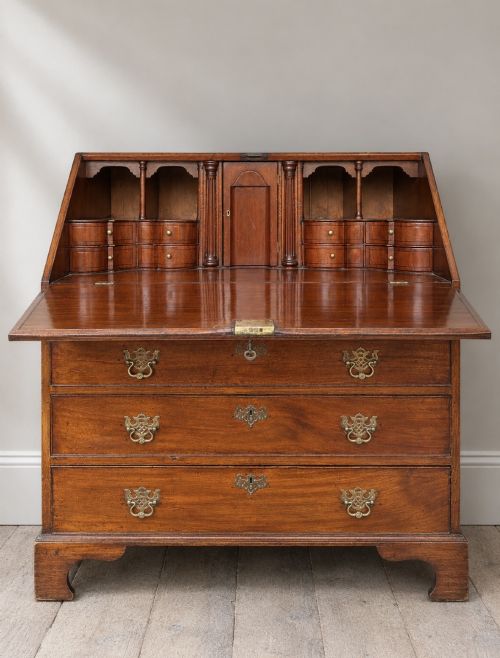
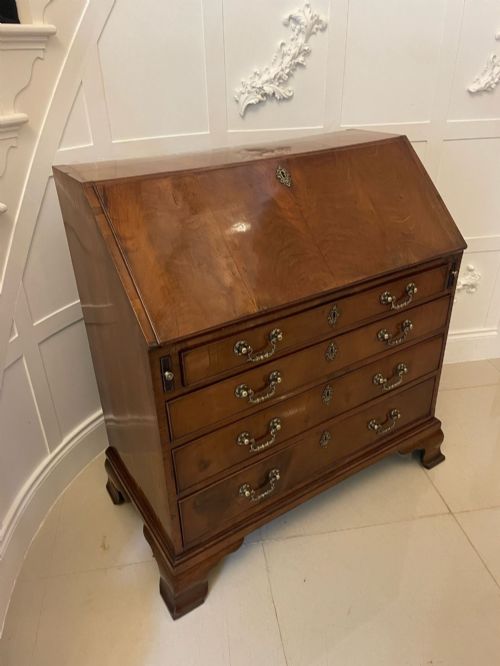
An antique slant front encompasses writing furniture where a hinged flap opens at an angle to create a writing surface. These pieces span centuries of craftsmanship, ranging from compact table-top versions to large library bookcase combinations.
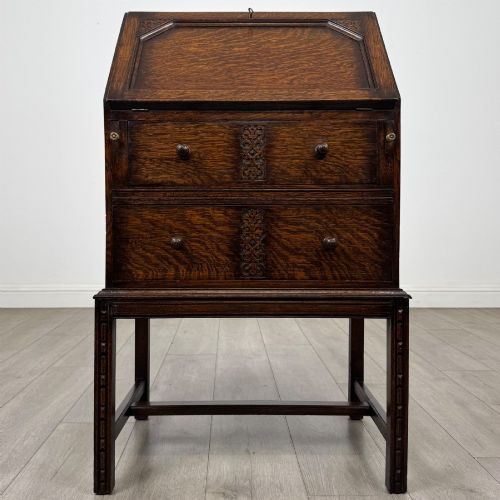
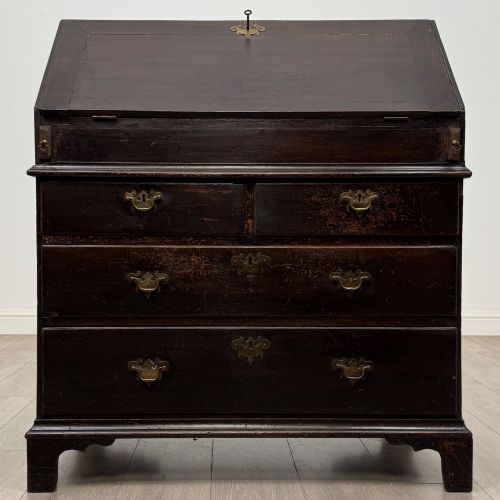
The most common examples on this page are mahogany, oak and walnut bureaux and bureau bookcases dating from the eighteenth and nineteenth centuries. Makers built these forms to keep correspondence and personal documents secure behind locked drop-front panels.
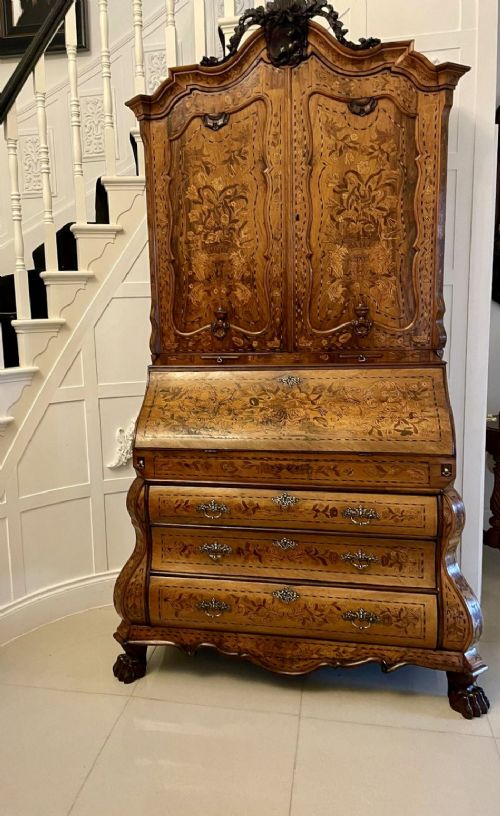
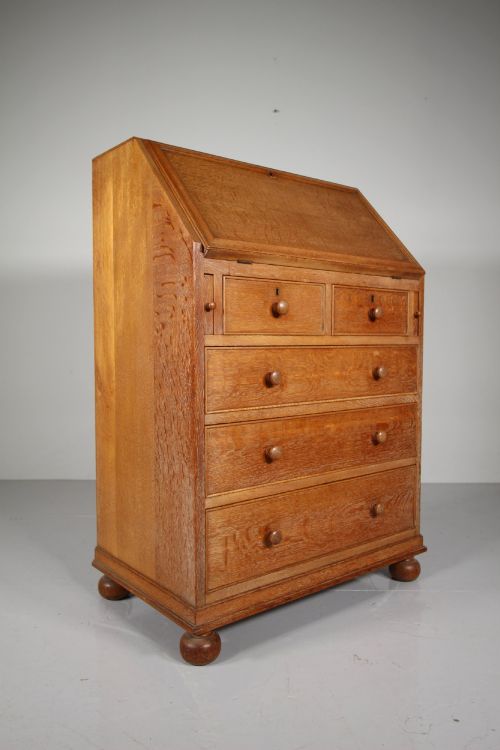
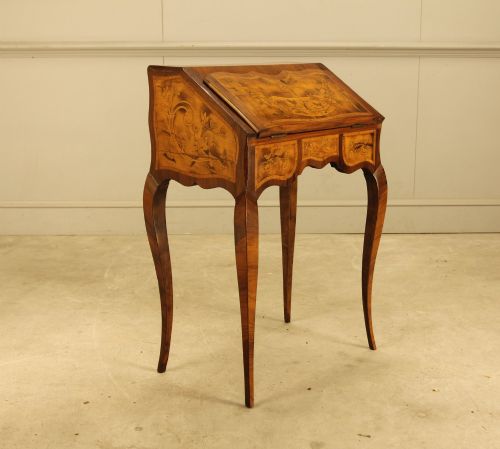
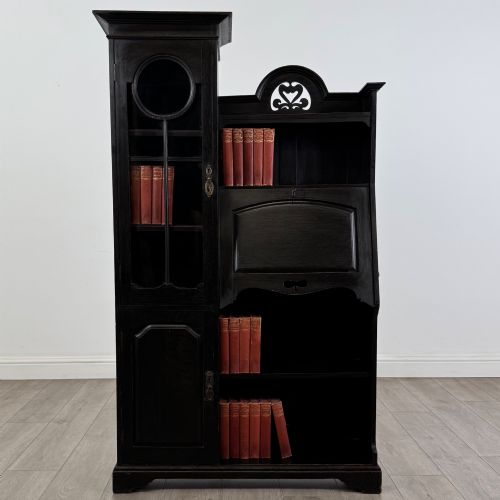
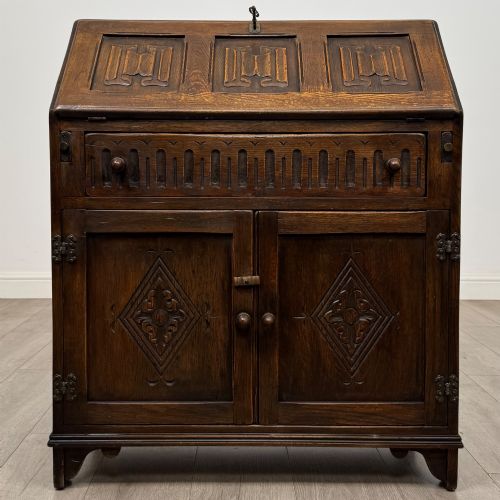
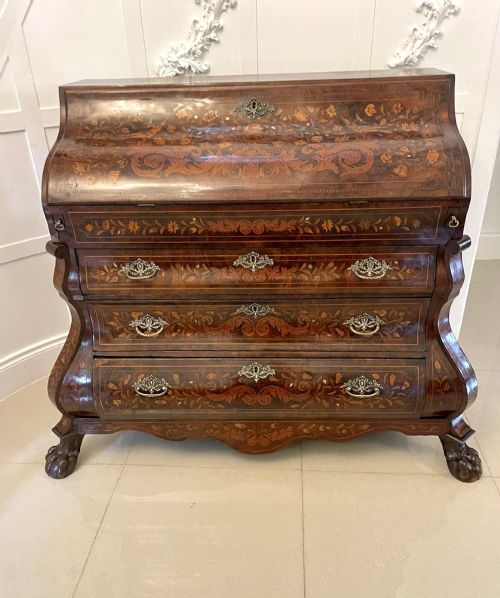
Regional variations and stylistic revivals add further diversity, including Edwardian oak models and French bombe shapes with floral marquetry. Buyers encounter everything from modest provincial oak items to elaborate George II figured mahogany pieces.
How they were made
Cabinetmakers utilised timber like oak, mahogany, walnut and yew wood, often applying veneers in burr walnut or satinwood for decorative effect. Brass handles, key escutcheons and sometimes ormolu mounts finished the exterior structure.
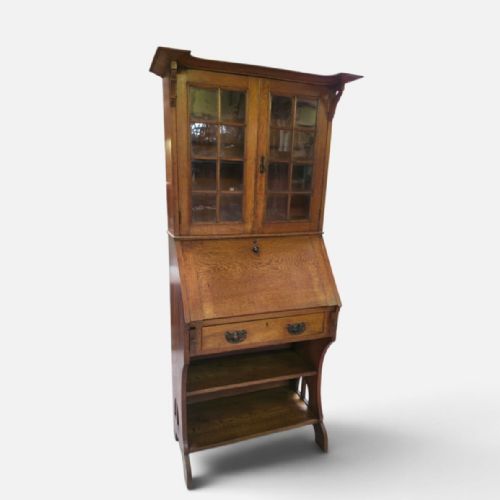
Construction involved dovetailing drawer boxes and housing internal nests of small drawers and pigeonholes behind the main writing flap. Glass panel doors appear on the upper sections of taller bureau bookcase variations.
The selection covers periods from the seventeenth century through the Georgian and Victorian eras up to Edwardian and nineteen-twenties designs.
What varies in quality
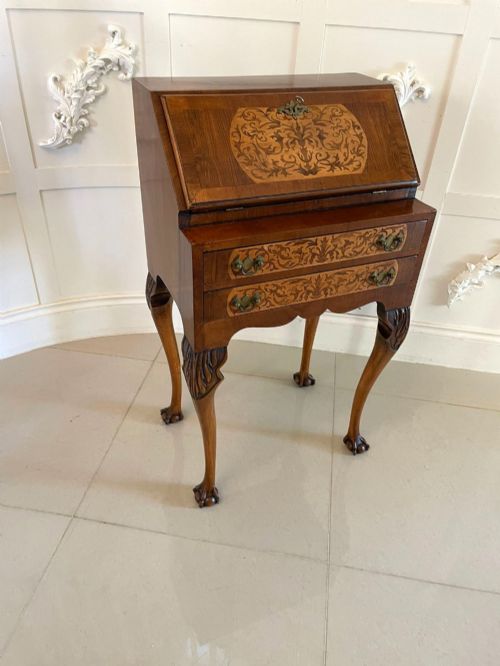
The choice of timber grain defines the visual appeal, with figured mahogany and burr walnut showing intricate natural patterns across the drop-front and drawer faces. Marquetry inlay work and parquetry detail require precise hand-cutting to achieve clean geometric or floral designs.
Internal complexity separates simpler provincial pieces from sophisticated urban examples fitted with stepped pigeonholes, secret compartments and sliding wells. The quality of the original brass hardware and the crispness of carved details like bracket feet or carved green man motifs also distinguish finer pieces.
Gillows·Heals of London
The Antique Slant Front Glossary
- Bureau
- A writing desk with a sloping hinged lid that covers compartments for papers. It forms the core shape of these listings.
- Bombe
- A piece of furniture featuring a convex, bulging shape on the front and sides. This French-influenced contour appears on walnut and marquetry examples.
- Marquetry
- Decorative veneer work formed by fitted pieces of different coloured woods to create floral or pictorial patterns. Craftsmen applied this technique to eighteenth-century bureau surfaces.
- Bracket foot
- A simple architectural foot shaped like an L-bracket, supporting the corners of case furniture. Georgian cabinetmakers utilised this support frequently.
- Davenport
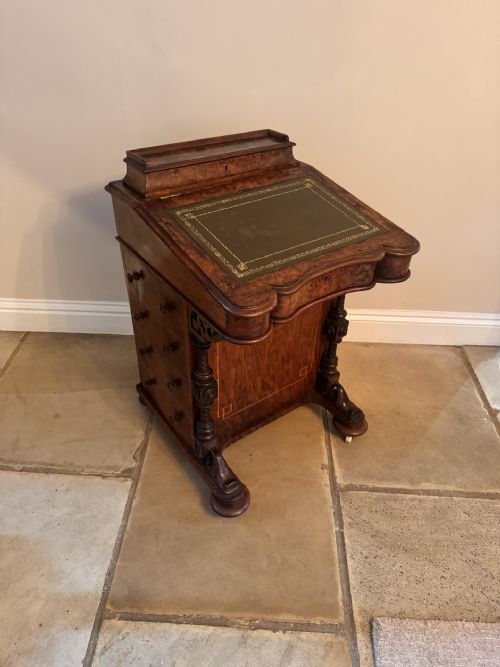
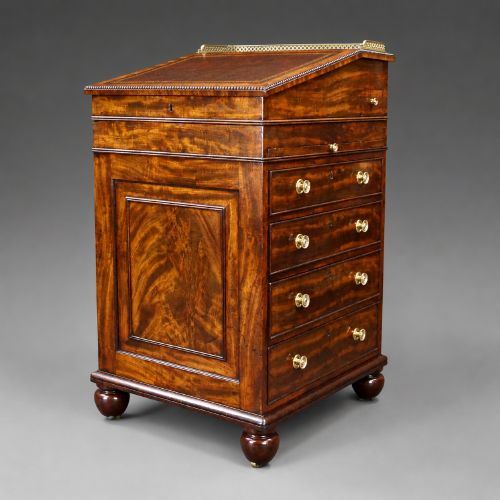
- A small compact writing desk with a sloping top and drawers to the side. These appear alongside traditional slant front forms in later nineteenth-century periods.
Antique Slant Front: Frequently Asked Questions
What is a slant front desk?
A slant front desk is a piece of furniture featuring a hinged, sloping board that folds down to provide a flat writing surface. Beneath this lid, makers arranged small drawers and pigeonholes for organising letters.
These desks were designed for domestic study and household administration. They keep writing materials contained and out of sight when closed.
How do I date an antique bureau?
Dating relies on observing the choice of wood, hardware construction, and overall decorative style. Eighteenth-century pieces frequently employ solid oak or mahogany with bracket feet, while later Victorian and Edwardian examples introduce machine-sawn elements and different veneers.
Examining the drawer construction and internal secondary timbers provides further clues to the period of manufacture. Stylistic revivals also emulate earlier centuries, requiring careful inspection of the joinery.
Where were these pieces used?
They originated as practical writing cabinets for private homes, merchants and country houses. Owners kept personal correspondence, account books and valuable documents stored securely inside.
In modern rooms, they function well in studies, living rooms or bedrooms as working desks with built-in storage. Their vertical height makes them space-efficient options for storing books and papers.
What is a bureau bookcase?
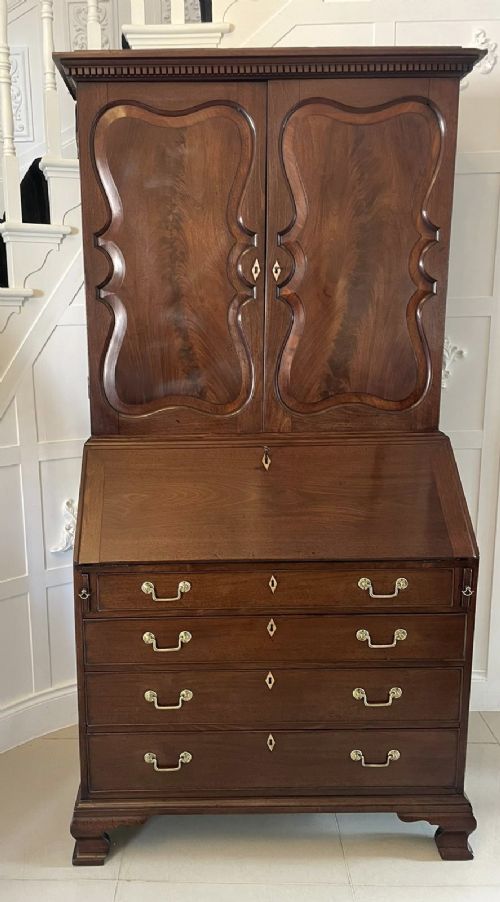
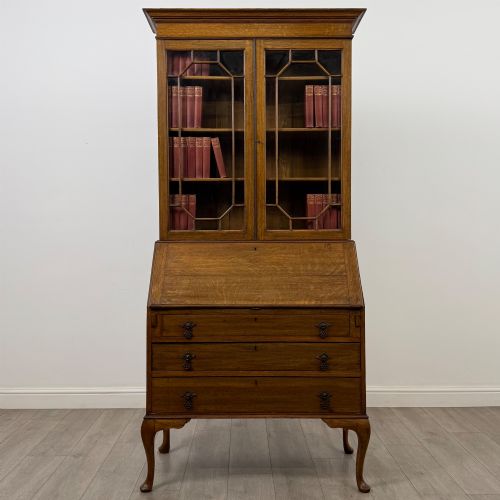
A bureau bookcase combines a sloping front desk base with a glazed or panelled shelving cabinet built on top. This upper section houses books and decorative objects behind glass doors.
They represent taller, more substantial forms of household furniture. Cabinetmakers constructed them in two interlocking parts to facilitate transport and placement in large rooms.