


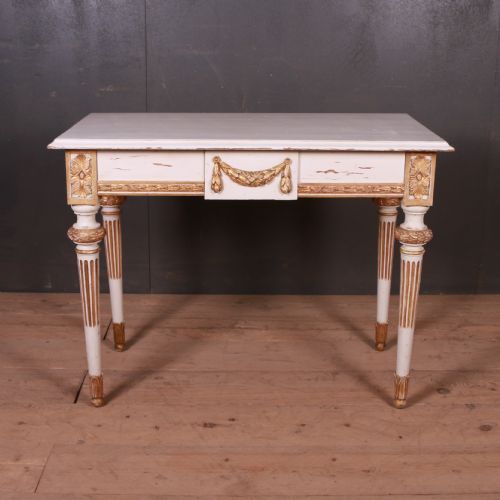
Gustavian Style Desk
A gustavian style desk brings understated Nordic elegance into a room with pale painted surfaces and clean neoclassical lines.
Gustavian Style Desk
A gustavian style desk encompasses practical writing furniture rooted in Scandinavian country traditions and Swedish design. Buyers searching for a gustavian style desk encounter pieces originating primarily from the nineteenth century alongside eighteenth-century examples and early twentieth-century interpretations.
The selections on this page span writing tables, escritoires, and larger bureau bookcases designed for functional workspace and storage. Pine and softwood forms dominate the inventory, often finished in muted painted coats rather than polished hardwood grains.
Geographic origins lean heavily toward Sweden, with occasional Danish counterparts appearing among the side tables and occasional pieces. These items translate formal royal aesthetics into accessible domestic furniture suited to daily use.
Materials and construction
Makers constructed these pieces chiefly from pine and softwood, selecting timber that accepted layered paint applications readily. Carpenters built sturdy carcases joined with traditional methods, keeping structural frames straightforward and robust.
Surfaces received multiple coats of paint, frequently scraped or distressed over time to reveal underlying tones and textures. Brass hardware occasionally provided subtle contrast against the pale painted wood without dominating the composition.
Some tables bear the cheerful ghost of long-gone inkwells and hurried correspondence.
Judging quality and craftsmanship
Quality rests upon the integrity of the original timber frame and the authenticity of the surface finish. Superior examples display harmonious proportions and restrained neoclassical detailing executed with clean lines rather than heavy ornamentation.
The character of the paint layer dictates much of the visual appeal, where aged patination and natural wear carry greater aesthetic weight than sterile modern repainting. Well-proportioned drawer construction and sound joinery mark the difference between everyday utility and finer cabinet work.
The Gustavian Style Desk Glossary
- Escritoire
- A writing desk with a sloping lid or fall front that conceals compartments for letters and papers. This form provides a neat enclosed workspace.
- Bureau bookcase
- A combination of a sloping writing desk below and shelving enclosed by doors above. It serves as a dual-purpose storage and writing unit.
- Scraped pine
- Timber treated with a technique that partially reveals earlier paint layers beneath the surface. This finish accentuates the age of the wood.
- Softwood
- Timber derived from conifers such as pine, widely utilised in northern European regional furniture. It offers a lighter weight than dense hardwoods.
Gustavian Style Desk: Frequently Asked Questions
How do I date a painted Swedish desk?
Dating relies on examining construction methods, timber types, and the composition of the paint layers. Nineteenth-century pieces often show specific joinery traits and characteristic wear patterns.
Secondary woods, backboards, and interior drawer construction help distinguish eighteenth-century origins from later nineteenth and early twentieth-century interpretations.
Where were these desks made?
The pieces originate predominantly from Sweden, reflecting regional interpretations of neoclassical style. Scandinavian country workshops produced these functional items for local homes.
Some examples also emerge from neighbouring Denmark, sharing similar painted softwood construction and restrained design vocabularies.
How should I care for painted pine furniture?
Maintain painted surfaces by dusting with a dry or slightly damp cloth without harsh chemical cleaners. Avoid placing timber pieces in direct sunlight or near extreme heat sources.
Stable indoor humidity prevents the softwood from drying out and protects the integrity of historic paint layers.